Needle Felted Sheep: Wool Made of Wool
4 min read Beginner
We may earn a commission from links on this page, at no extra cost to you. As an Amazon Associate I earn from qualifying purchases. Learn more.
The one animal where the material and the subject are the same thing. How to build the body, and why curly locks beat any amount of needling for the fleece.
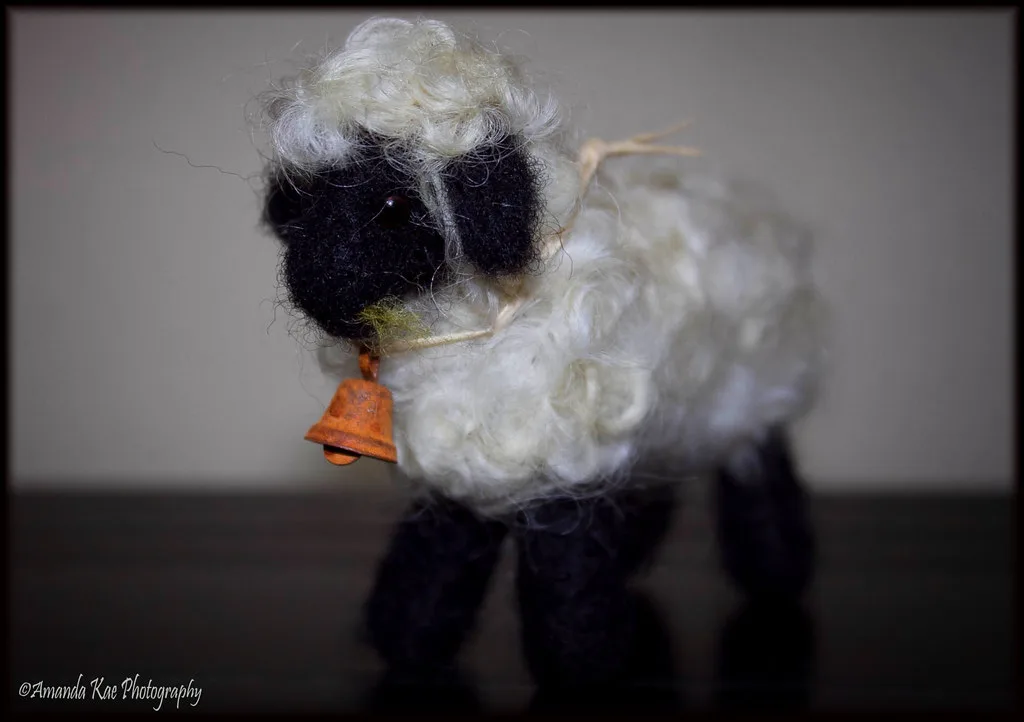
Every needle felted animal is made of wool, but a sheep is the only one where that is the point. You are using fleece to depict fleece, which means the surface can be genuinely accurate rather than merely suggestive — and that is why a well-made felted sheep is one of the most convincing things in the craft.
What you need
- Core wool — 25–40 g
- Cream or undyed corriedale for the body surface
- Black or dark brown wool for the face and legs
- Wool locks — wensleydale or teeswater, about 10 g
- 38 and 40 gauge needles, foam pad
- Pipe cleaners or wire if the sheep is to stand on thin legs
The proportions
Sheep are built quite differently from the dogs and cats most people felt first.
- Body: a deep, almost rectangular barrel. Broad across the back, flat-sided, level along the top.
- Head: small, narrow and long, carried low — the top of the head at about shoulder height, not above it.
- Legs: short and straight, set at the four corners of the barrel.
- Ears: out to the sides, not up. This alone fixes most sheep that look wrong.
Building it
- Body. Roll core wool into a firm barrel about 9 cm long, flattening the sides and levelling the back against the mat. Keep it deep — sheep are chunky.
- Legs. Either four separate firm sausages attached at the corners, or wire wrapped in core wool if you want thin standing legs. Sheep legs are short: about a third of the body height.
- Head. A small elongated wedge, narrower than the neck, with a slightly rounded forehead and a blunt muzzle. Needle it firm and cover it in black or dark brown before attaching.
- Attach the head low and pointing slightly forward and down, with a short thick neck. Cover the join with black.
- Ears. Two small flat leaf shapes, attached horizontally at the sides of the head just behind the eyes.
- Face. Two small dark eyes set at the sides, a narrow muzzle with two tiny nostril dents, and a subtle roman curve to the profile.
- Cover the body in cream wool. It will barely show, but a dark core under a white fleece looks grey between the locks.
The fleece
Now the part that matters.
- Start at the back legs and work forwards, so each row of locks overlaps the attachment point of the row behind.
- Hold a lock by its curl, lay the cut end flat on the body, and needle only that end in — three or four strokes with a 38 gauge needle.
- Never needle the curl. One pass through a ringlet flattens it permanently and it cannot be recovered.
- Overlap generously. Gaps look like mange. It is better to run short of body than short of coverage.
- Leave the face and legs bare — that contrast between smooth dark head and woolly body is the whole silhouette of a sheep.
- Trim last, with the sheep standing up, checking the outline from a metre away.
If you have no locks, the fallback is to needle cream wool on loosely and then work the surface with a wire brush or a reverse-barb needle to raise a nap. It reads as a sheep at a distance and not close up. The alternatives are discussed in needle felting fur.
Breeds worth making
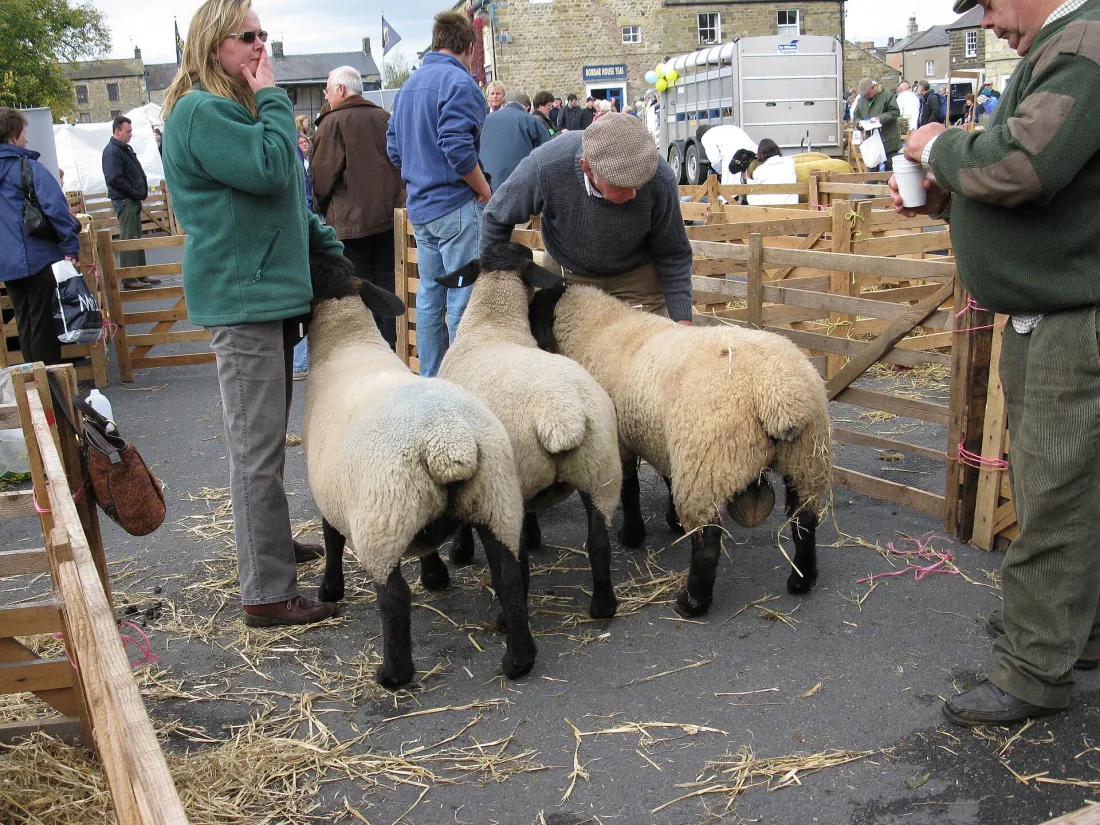
- Suffolk. Black face and legs, cream fleece, no horns. The default and the most recognisable.
- Herdwick. Grey-brown fleece, pale cream face and legs, sturdy body. Lambs are born black and lighten with age, which makes a good pair.
- Jacob. White with irregular dark patches and, if you are ambitious, four horns.
- Valais blacknose. Black face and knees, enormous curly white fleece, spiral horns. Extremely popular and the best possible use of long locks.
- Ram. Add horns of wire wrapped in wool, curling back and round below the ears, and a heavier neck.
Lambs
A lamb is not a small sheep — the proportions differ. Long thin legs, short body, a head that is large relative to everything else, and ears that stick straight out. Use short soft wool rather than long locks, and give it a slightly knock-kneed stance. A ewe with two lambs is a better piece than any of the three alone.
Displaying them
- A flock of three or five in graded sizes on a shelf.
- On a small base of green wool with felted mushrooms or tufts of grass.
- As Christmas ornaments with a ribbon, alongside a felted angel.
- Very small versions — 3 cm, no locks, just cream wool — make good bag charms.
Undyed corriedale is the natural material here: it is already the colour of a sheep, which is one dyeing step nobody needs to take.
The rest of the farmyard is built the same way and mostly differs at the head. A needle felted cow keeps this body and swaps the fleece for a smooth coat and a broad muzzle pad; a needle felted pig shortens the legs, drops the neck and turns the snout into a flat disc you needle on last.
Frequently asked questions
How do you needle felt a sheep?
Build a firm cream body and four short legs, make a narrow dark head and attach it low and forward, then cover the body in curly wool locks attached by their cut ends in overlapping rows from the back legs forward.
What wool should I use for a sheep fleece?
Wensleydale or teeswater locks give the most realistic fleece by a wide margin. If you have none, use curly or crimpy carded wool needled loosely and then teased up with a brush — but locks are what make it look like a real sheep.
Why does my felted sheep look like a dog?
The head is too big and set too high. Sheep have small narrow heads carried low and forward, with the top of the skull roughly level with the shoulders and the muzzle pointing slightly down.
How do you make a felted lamb?
Same construction, different proportions: legs disproportionately long and thin, body short, head large relative to the body, ears sticking out sideways. Use short soft locks or plain cream wool rather than long curls.
Topics
Image credits
- A needle felted sheep — Amanda Kae's Photoz (BY)
- Suffolk sheep with dark faces and woolly bodies — Jane Cooper Orkney (BY SA 4.0)