Nuno Felting Problems: Why the Wool Won't Attach, and Other Fixes
9 min read
We may earn a commission from links on this page, at no extra cost to you. As an Amazon Associate I earn from qualifying purchases. Learn more.
A symptom-by-symptom troubleshooting guide for nuno felting: wool that will not migrate through silk, wool that lifts after drying, bald patches, uneven ruffles, wavy edges, color bleeding, fabric that is not really silk, and how much nuno shrinks.
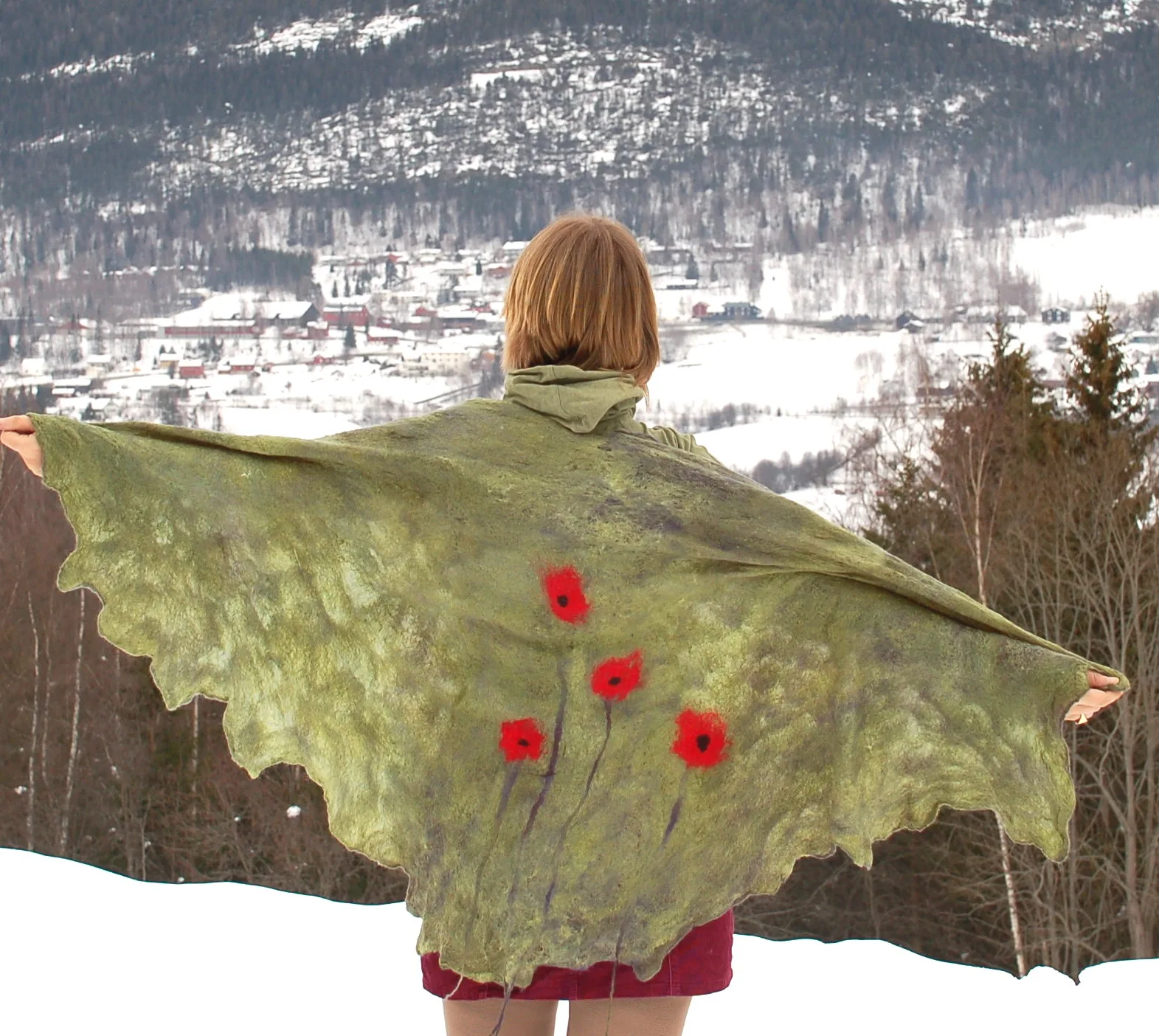
When merino will not attach to silk, the fibers have not traveled through the weave to tangle on the other side. Nothing else holds a nuno piece together: no glue, no stitching, only wool that has passed between the threads and felted to itself on the back. Turn the piece over and look. If you cannot see a fine fuzz of wool on the reverse, the bond has not started, however long you have been rolling.
The fixes below go by symptom. They assume you know the basic method from nuno felting for beginners and have chosen a fabric from the best fabrics for nuno felting.
Quick diagnosis: what is going wrong with my nuno felt?
| Symptom | Likely cause | Fix |
|---|---|---|
| No fuzz on the back after 20 minutes | Weave too tight, fabric finish, coarse wool | Light test, hot prewash, wool of 19.5 micron or finer |
| Wool forms a skin that slides on the fabric | Wool layer too thick, or hard pressure too early | Thinner veil; rub lightly until fibers show on the back |
| Wool lifts or peels after drying | Migration started but was not completed | Rewet, resoap, rub and roll again; pinch test before rinsing |
| Bald patches or holes | Gaps in the layout, wool dragged by the net | Patch with wisps while wet; lift the net often |
| Ruffles bunched in some places, flat in others | Uneven wool, rolling in one direction only | Even layout; roll from all four sides and measure both ways |
| Wavy, fluted edges | Bare fabric at the border, or fibers laid across the edge | Wool to the edge, laid parallel to it; straighten while wet |
| Finished piece far smaller than planned | No sample; kept fulling | Felt an 8 in sample and size the layout from it |
| Color running into the wool or the water | Dye not set in fabric or wool | Prewash hot until the water runs clear |
| Fabric frayed or rubbed through | Rough rubbing on bare silk; fabric too fine | Always rub through netting; switch to rolling sooner |
Why won't my wool attach to the silk fabric?
Check these five causes in order; the first two cannot be fixed by working longer.
1. The fabric is too dense
Hold the fabric up to a window. You should see separate gaps between the threads, not just a glow of light. If the weave looks solid, the wool cannot get through, and no amount of rubbing will change that. Light silk chiffon, georgette and silk gauze pass the test; satin, taffeta and most dress-weight crepes fail it. Habotai is on the line: 5 momme habotai (often labeled 5 mm, which is a weight, not a thickness) usually works with patience, 8 momme often does not.
2. The wool is too coarse
Use merino of 18 to 19.5 micron for silk. A superfine merino slips through a fine weave easily; at 21 micron it still works on open cotton gauze, but at 23 micron and above it struggles on any silk. Wool labeled just "merino" deserves a sample first. If it will not felt even to itself, see why won't my wool felt.
3. The wool layer is too thick
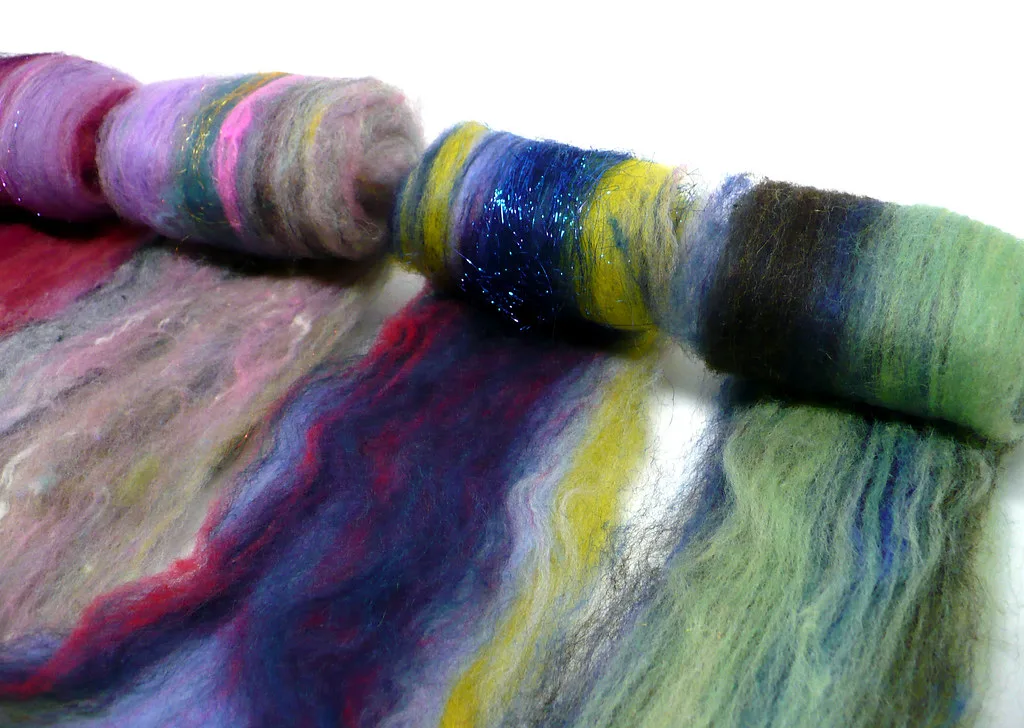
A nuno layer is a veil you can see the fabric through. As a guide, a single layer weighs about ⅕ oz (5–7 g) per square foot of fabric, which is how a full-length scarf can take only 1–1½ oz (30–45 g) of wool. A thick layer felts to itself on top before its lower fibers reach the fabric, leaving a sheet of felt lying on the silk.
4. You pressed hard too early
Hard rubbing or rolling at the start tangles the top fibers into a skin, and a skin cannot migrate. For the first 15–20 minutes, work with flat hands and almost no pressure, through nylon tulle or fine netting, with hot water around 110–120 °F (43–49 °C) and plenty of soap. A gentle soap such as olive oil soap keeps the fibers slippery so they can work their way down. The best soap for felting compares the options.
5. Not enough agitation time
Nuno is slow. On chiffon, fibers usually show on the back after 10–20 minutes of light rubbing; on denser silks, 30 minutes or more. Look at the back before you roll, and rub any bare area from both sides.
Why did my nuno wool lift off after it dried?
The fibers started to migrate but never felted on the back, so they held while wet and let go once dry. It can usually be rescued.
- Rewet the piece in hot water and work soap into the lifting area.
- Lay it on bubble wrap with the wool side up, cover it with netting, and rub the area lightly for 5 minutes, then firmly for 5 more.
- Roll it, 100 rolls at a time, turning the piece a quarter turn between each set.
- Do the pinch test: pinch the wool and pull it away from the fabric. If any lifts, keep going.
If an area peels off as a whole sheet with no fibers left in the fabric, the wool there was too thick, and it is quicker to pull it off and lay a thin new veil.
What causes bald patches and holes in nuno felt?
Bald patches are almost always in the layout: wisps that did not overlap, or a thin spot you could not see once the wool was wet. Lay each row of wisps so it overlaps the last by about half its length, and look across the dry layout at a low angle against the light before you wet it.
Patches also appear when the net sticks to the wool and drags it away. Lift it slowly every few minutes, with a hand on the wool; fibers on the net mean the wool needs more soapy water.
To patch a gap while the piece is still wet, tease a dry wisp very thin, lay it over the gap so it overlaps the edges by about ½ in (1.3 cm), wet it with soapy water from your fingers and rub through the net until it holds. For a larger gap, a piece of prefelt cut to shape is quicker and lies flatter than loose wisps.
Why is my nuno ruffling uneven?
Ruffles follow the wool. Heavier areas shrink harder and pull the fabric into tight puckers; thin or bare areas stay looser.
- Lay the wool evenly, or decide on purpose where it goes. Stripes, spots or a lattice of wool on bare fabric give controlled ruffles between the lines, the same idea as a resist: the bare areas are kept from felting so they stay loose. Resist felting explains how a barrier controls where felt forms.
- Roll from all four sides. Rolling one way only shrinks the piece in that direction. Measure length and width after each set of rolls and roll more in whichever direction is behind.
- Watch the grain. Bias-cut fabric ruffles differently from straight grain, so cut both halves of a garment the same way.
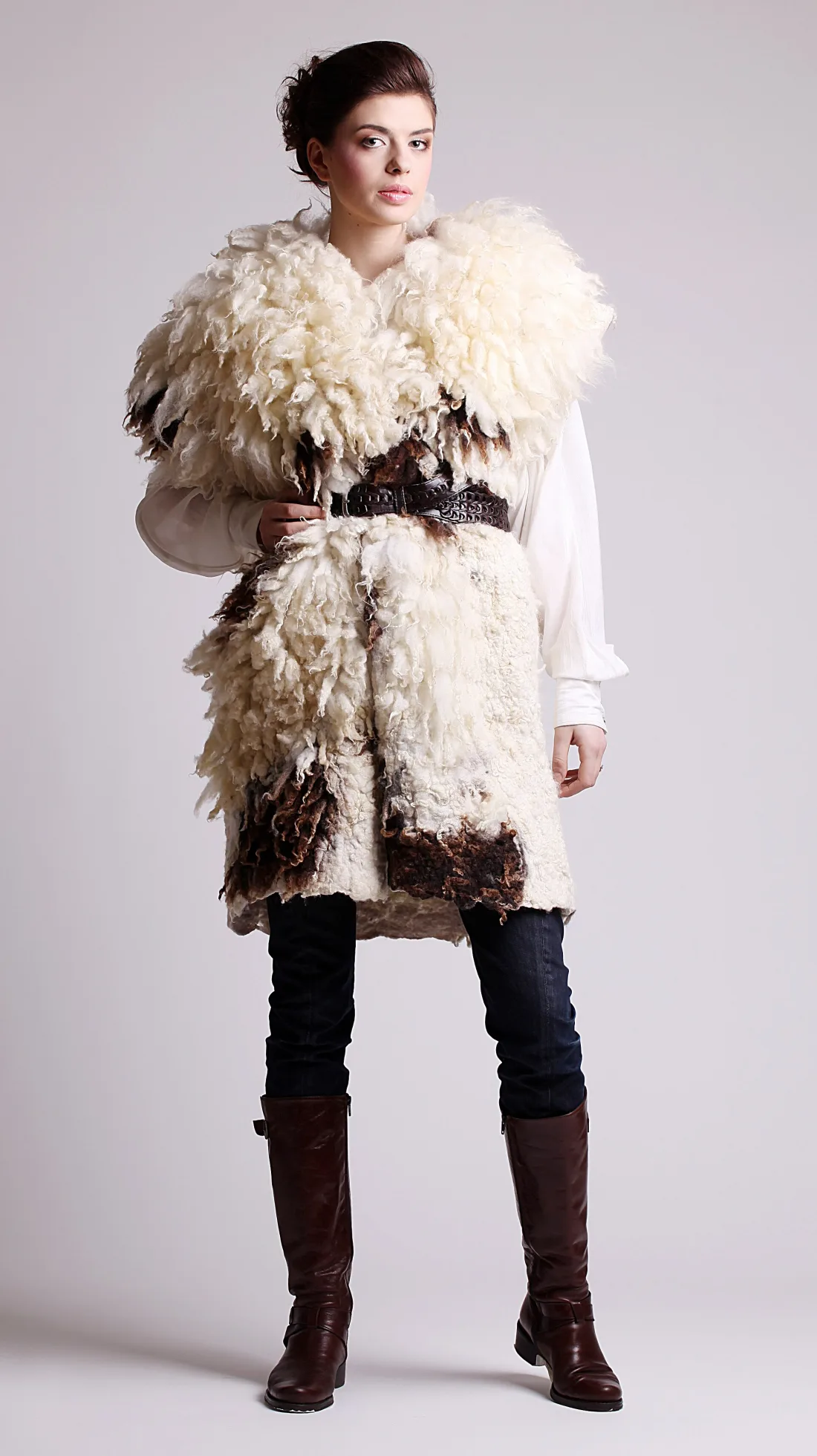
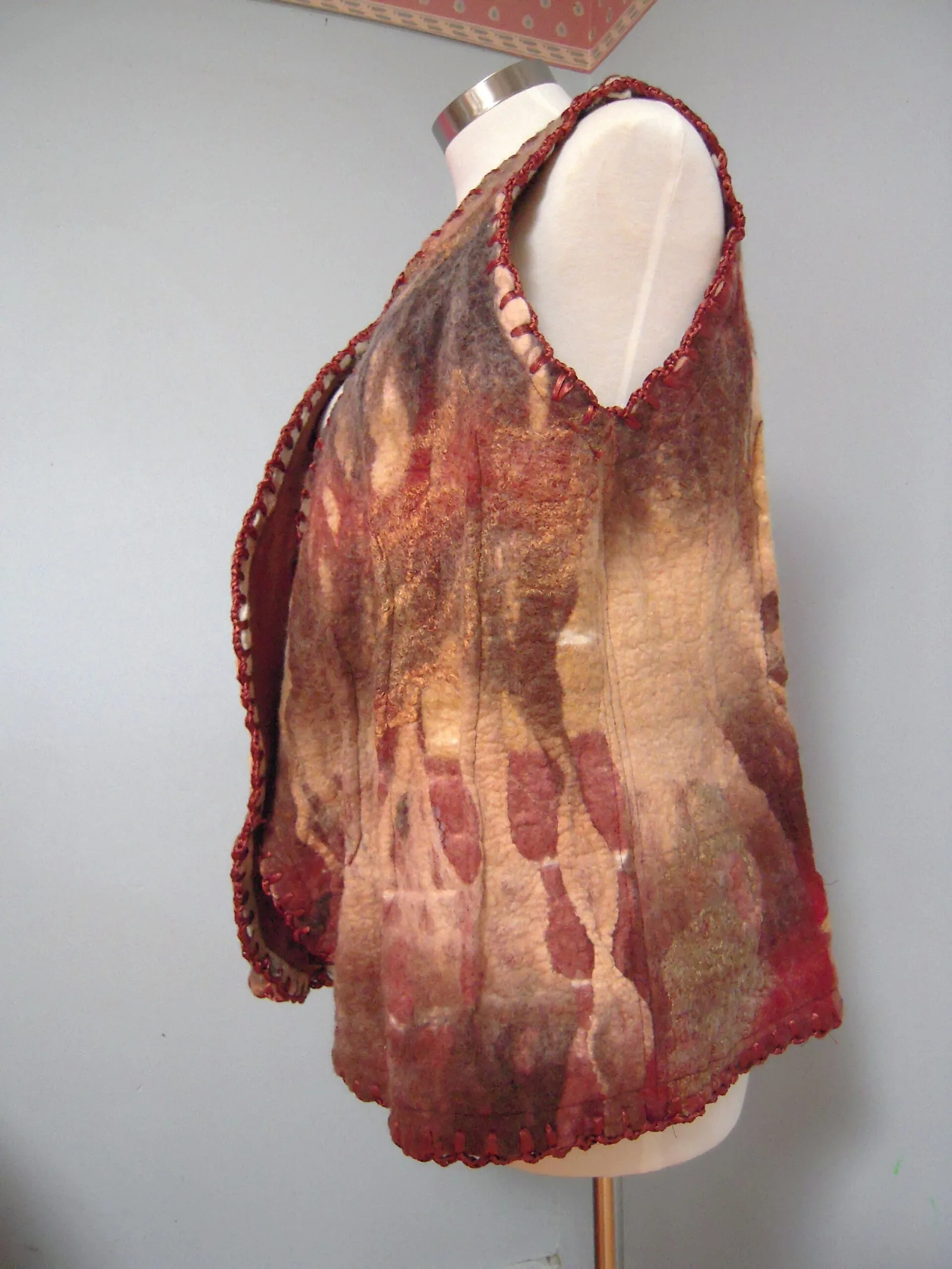
On a garment such as a felted vest, measure the two front panels against each other often, not just against the target.
How do you keep a straight edge when nuno felting?
An edge goes wavy when bare fabric along the border stays long while the felted middle contracts, or when fibers laid across the edge pull it inward. Three fixes:
- Lay the wool to the edge. Run the last row of wisps parallel to the cut edge, finishing flush with it, so the border shrinks with the rest.
- Fold the fabric over. Lay a thin line of wool along the edge, fold a ½ in (1.3 cm) hem of fabric over it, and lay the main wool over both. The edge then has wool on both sides and felts into a firm, even border.
- Tape a guide. Put a strip of masking tape on the bubble wrap as a straight line and lay the fabric edge against it. Check against it after each rolling set.
While the piece is still wet after the last roll, pull the edges straight with your hands and dry it flat. Once dry, a fully bonded edge frays very little and can be trimmed straight with a rotary cutter; test on a corner first. For a long straight piece, how to wet felt a scarf covers rolling a long layout evenly.
How much does nuno felting shrink?
The fabric sets the limit more than the wool does. Plain merino felt shrinks by about 35–45 percent, but in nuno the fabric resists and gathers instead, so the piece usually shrinks less. These are typical figures for fine merino laid as a single thin layer:
| Fabric | Typical shrinkage | Texture |
|---|---|---|
| Silk chiffon or georgette | 25–35% | Soft, even ruffles |
| Silk gauze | 25–35% | Fine, crinkled |
| Silk habotai, 5 momme | 15–25% | Smoother, bubbled |
| Cotton gauze or cheesecloth | 20–35% | Bark-like crinkle |
| Cotton or linen scrim | 20–30% | Firm, slightly rough |
To get the real figure, felt a sample about 8 × 8 in (20 × 20 cm), using the same fabric, wool, layer weight and rolling count you plan for the project, and measure it dry. If it comes out 5½ in, it shrank by about 30 percent. Divide the finished size you want by 0.7 to get the layout size: a 70 in (178 cm) scarf needs a 100 in (254 cm) layout. How much wool shrinks when felted has the general formula and figures for other wools.
Why is the color bleeding from my fabric?
Hot soapy water lifts dye that was never fully set, especially from hand-dyed silks and dark wools. Prewash dyed fabric in hot water until it rinses clear, which also removes the mill finish. Soak a tuft of dyed wool in hot water for 10 minutes and check the water. If either keeps running, pair it only with colors that will hide a stain, and do the final rinse cool.
Why won't my silk felt at all?
Check that it is silk. A lot of fabric sold as chiffon or "silky" is polyester. Snip a few threads and burn them over a sink: silk smells like burning hair, stops burning when you remove the flame and leaves a soft ash you can crush; polyester melts, drips, smells chemical and leaves a hard bead. Polyester chiffon can nuno felt if its weave is open, but it is less predictable.
If it is silk and still fails, drop some water on it. Water that beads instead of soaking in means a finish. A hot wash with detergent removes most; a few water-repellent finishes never wash out.
Does cotton gauze or scrim behave differently?
Yes. Cotton gauze and scrim are so open that the wool goes through quickly, often in under 10 minutes, which makes them good practice fabrics. They soak up water, so press out the excess before rolling, and they crinkle rather than ruffle. Very open cheesecloth can let wool through without holding much fabric, so the piece looks like felt with a faint grid; use a closer grade if you want more fabric to show. For an even lighter result with no fabric at all, cobweb felting is the next step.
What makes holes appear in the fabric?
Abrasion. Fine silk can be rubbed through by bare hands, a ridged washboard or a palm sander used directly on the fabric. The threads break, and the hole grows as the wool shrinks around it. Rub through netting or a sheet of bubble wrap at all times, keep the piece wet and soapy so it slides, and move to rolling once the fibers have migrated. The rolling does the shrinking more gently than rubbing.
When should I stop fulling nuno felt?
Stop when three things are true: the pinch test passes everywhere, the piece measures the size you planned in both directions, and the texture looks even. Going further makes the piece shrink more and stiffen. A scarf that should drape needs less fulling than a vest that should hold its shape. Rinse, pull it into shape and dry it flat.
Frequently asked questions
Why is my merino wool not attaching to the silk in nuno felting?
Usually one of five things: the silk is too tightly woven or still has a mill finish on it, the wool is coarser than about 19.5 micron, the wool layer is too thick, you pressed hard before the fibers had migrated, or you stopped rubbing too soon. Hold the fabric to a window, prewash it in hot water, lay a thinner veil of superfine merino, and rub lightly for 20 minutes or more before rolling.
How much does nuno felting shrink?
Typically 20 to 35 percent with fine merino on silk chiffon, gauze or cotton gauze, less on tighter silks such as habotai, and over 40 percent if you keep fulling. The fabric sets the limit, so felt an 8 in (20 cm) sample with the same fabric and wool and measure it before cutting the real piece.
Can you nuno felt with any silk fabric?
No. The wool has to pass between the threads, so silk gauze, chiffon, georgette and light habotai work, while satin, dupioni, taffeta and heavy crepe de chine usually do not. Many fabrics sold as "silky" are polyester, which can work if the weave is open but often has a finish that blocks the wool. Do a burn test on a thread if you are unsure.
Will cotton gauze nuno felt?
Yes, cotton gauze and cheesecloth are some of the easiest fabrics to nuno felt, because the weave is very open. They give a crinkled, bark-like texture rather than the soft ruffles of silk, they absorb a lot of water, and they need a hot prewash to remove sizing.
How do you get a straight edge in nuno felting?
Lay the wool exactly to the cut edge of the fabric with the fibers at the border running parallel to it, or fold a ½ in (1.3 cm) hem of fabric over a line of wool. Full the piece evenly from both directions, pull the edge straight while it is wet, and dry it flat. A fully bonded edge can also be trimmed straight once dry.