Felt Animal Hair Clips: Flat Shapes, Strong Fixings, No Glue
4 min read Beginner
The animal is the easy part. The reason most felt hair clips end up in the bin is the join between the felt and the metal, and glue is never the answer.
Felt hair clips are a twenty-minute project with one difficult part, and it is not the animal. It is the fixing — and almost every failed clip failed there.
What you need
- Wool for needle felting, or 1–2 mm wool-blend felt sheet for cut shapes
- 38 and 40 gauge needles and a brush mat, if felting
- Alligator clips, 45–55 mm, partially lined, with holes in the metal
- Strong thread — button thread or waxed polyester — and a sharp needle
- Small scraps of felt for the backing patch
Route 1: a needle felted flat animal
- Lay the outline. Put a small pile of wool on a brush mat in roughly the animal's silhouette — head shape plus ears.
- Needle it flat with a 38 gauge, working around the edges to define the outline. Lift and flip regularly so it does not felt into the mat.
- Keep going until it is thin, dense and firm — 3–4 mm, and stiff enough to stand up on its own.
- Tidy the edges by folding stray fibres inward and needling them down, or by trimming with sharp scissors and needling the cut edge.
- Add features with a 40 gauge: a slightly raised muzzle, a darker nose, eyes as small dark dots needled shallow. Keep the whole thing under about 8 mm deep.
Route 2: cut from felt sheet
Faster, and better for a set of matching clips.
- Draw the animal on paper and cut a template.
- Cut the shape from 1–2 mm wool-blend felt. Felt does not fray, so cut edges are finished edges.
- Cut smaller pieces for inner ears, muzzle and cheeks in contrasting colours.
- Stitch or needle those pieces on. Blanket stitch round the outside adds definition and strength — see felt appliqué.
- For a set, cut all the shapes at once on a die cutter; felt cutting machines covers what handles what thickness.
The fixing — the part that matters
Glue on felt and metal is a temporary arrangement. This is not:
- Cut a backing patch of firm felt, slightly narrower than the clip and about two-thirds its length.
- Open the clip and slide the patch under the upper blade, so it sits against the metal.
- Stitch through the holes in the clip blade, through the patch, several times, with strong thread. Knot inside.
- Stitch the animal to the patch from the back, with four or five anchoring stitches spread across the area — not one in the middle, which lets it pivot.
- Tug test. Pull the animal and the clip apart with real force. If anything shifts, add more stitches.
If your clips have no holes, wrap a narrow strip of felt round the upper blade and stitch it closed round the metal, then sew the animal to that. It works just as well.
Balance
A hair clip has to stay put in hair, which means it must not be top-heavy:
- Keep the design flat. Sculptural heads pull the clip out sideways.
- Keep the total weight under about 10 g.
- Centre the animal over the clip, not at one end.
- Position ears and tails within the outline rather than sticking well out, where they catch on clothing.
Animals that work flat
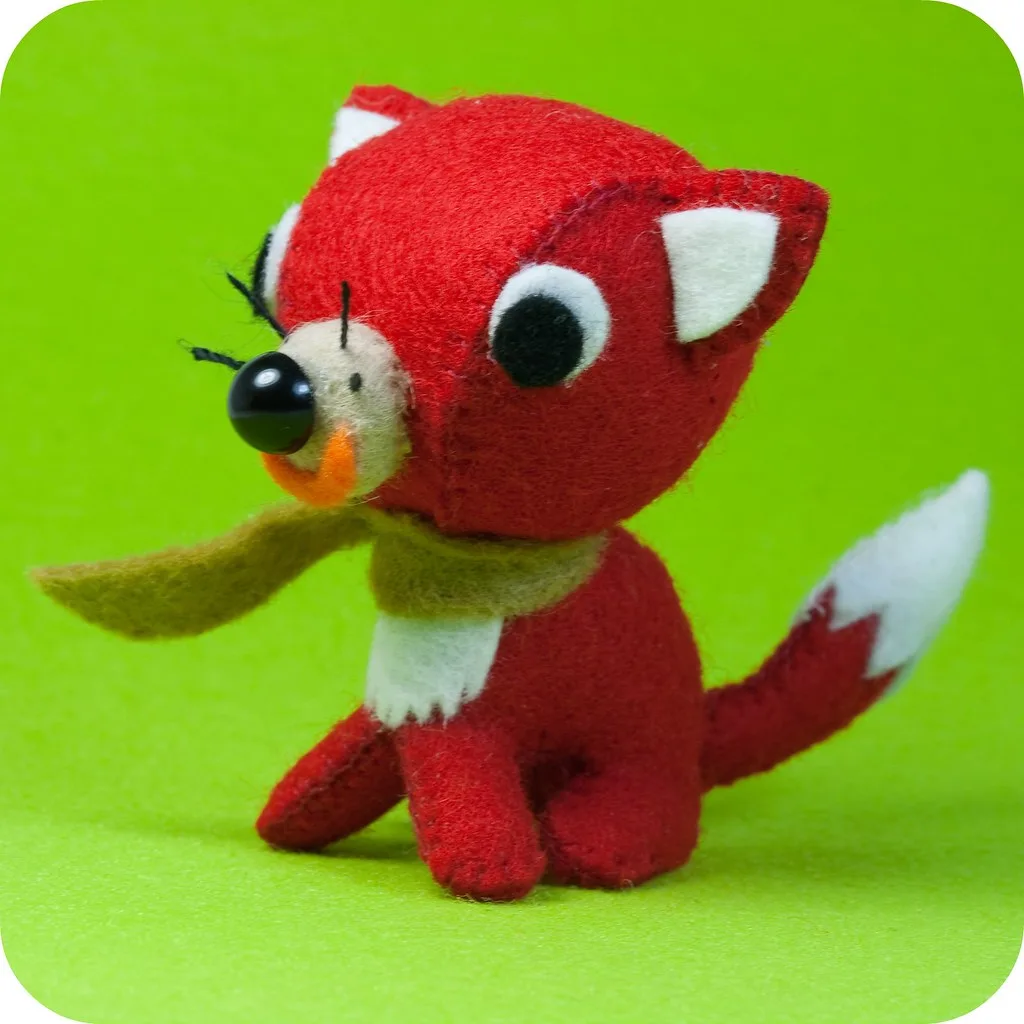
- Fox — a triangle with two ears and a white cheek line. The easiest by far.
- Cat, bear and dog heads
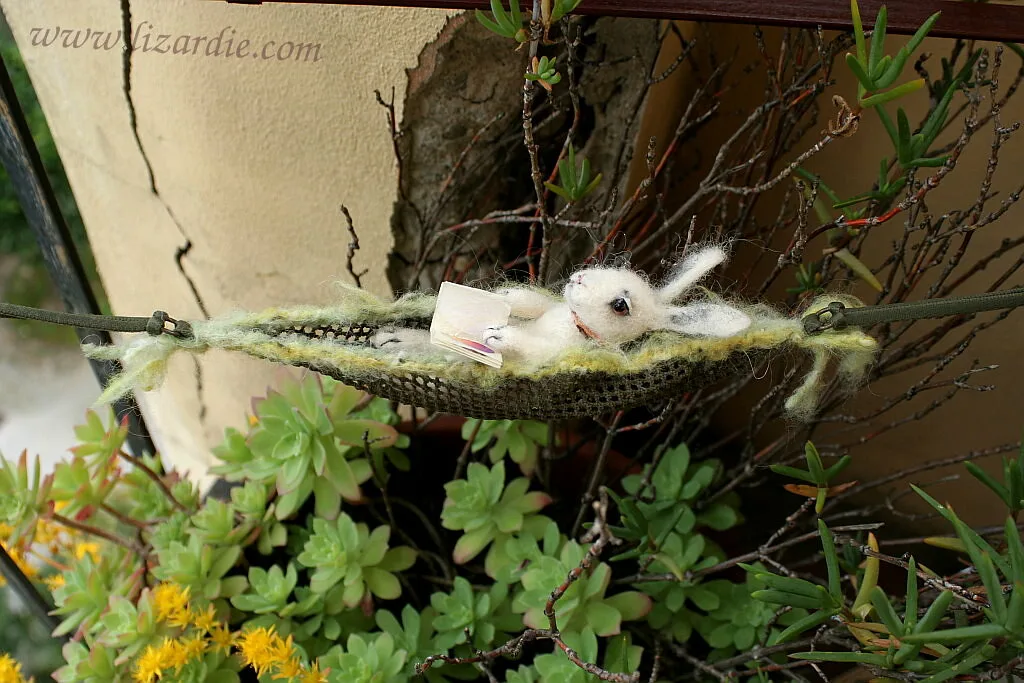
- Bunny, with the ears laid back along the clip rather than upright
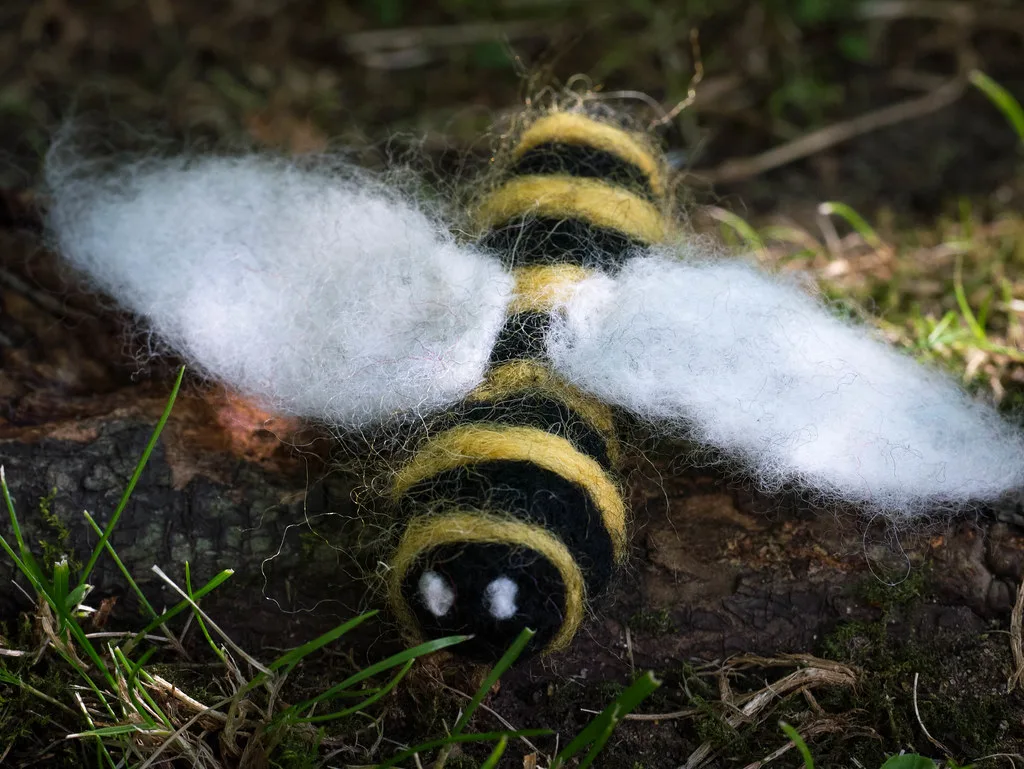
- Bee and ladybird, which are naturally flat ovals
- Butterfly, cut from two colours of felt sheet
- Whole small animals in profile — hedgehog, mouse, whale
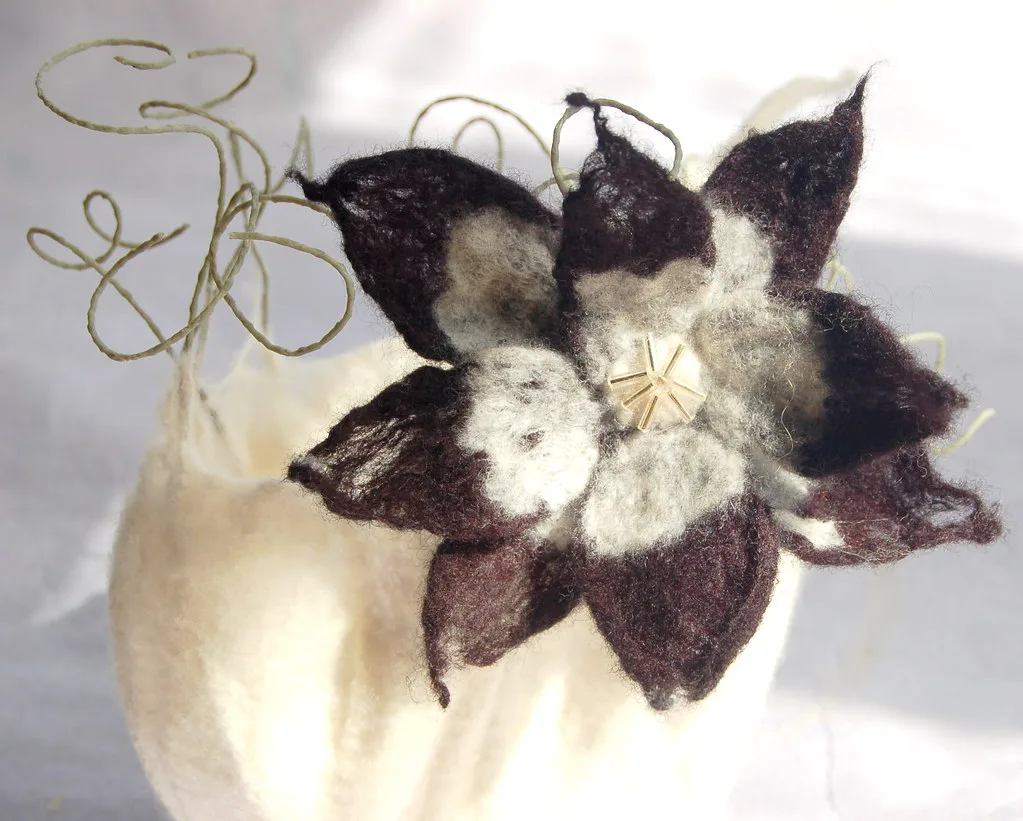
- Flowers and leaves as a set with the animals; see needle felted flowers
Safety
- Under three: no beads, no glued eyes, no small separate parts. Needle felt the features from wool.
- Check the clip itself for sharp edges on the spring.
- Pull-test every clip before it goes on a child's head, and again periodically.
- If children are making their own, they can cut and stitch felt shapes safely — but felting needles are sharp and barbed, and that part belongs to an adult. See is needle felting dangerous.
Care
Spot clean only, with cool water and a drop of wool wash, then let it dry flat. Shave pills off with a fabric shaver and needle the surface smooth again. Store flat rather than in a bag where the shapes get crushed.
The same shapes work on other fittings — brooch pins, elastics, shoe clips and bag charms — with the same stitched-not-glued rule throughout.
Frequently asked questions
How do you attach felt to a hair clip?
Stitch it, never glue it. Sew a small felt backing patch to the clip through the holes in the metal, then stitch or needle the animal to that patch. Glued felt separates from metal within weeks of daily wear.
What kind of clip works best?
A partially lined alligator clip of 45 to 55 mm for most hair, with holes in the metal to stitch through. Snap clips suit fine or short hair; French barrettes suit thick hair and larger designs.
Should the animal be flat or three-dimensional?
Flat, or nearly so. A full sculptural animal is top-heavy and pulls the clip sideways out of the hair. Make a flat shape with a slightly raised muzzle and ears and it sits properly.
Are felt hair clips safe for toddlers?
Not with small added parts. No beads, no glued eyes, no loose components on anything for a child under three. Needle felt the features from wool instead, and check the clip has no sharp spring edges.