Natural Dyes for Wool: Mordants, Plants and the Colours They Really Give
8 min read Intermediate
We may earn a commission from links on this page, at no extra cost to you. As an Amazon Associate I earn from qualifying purchases. Learn more.
Avocado stones give pink, not green. What separates dyeing from staining is the mordant, and what separates a colour that lasts from one that does not is knowing which plants were never going to hold.
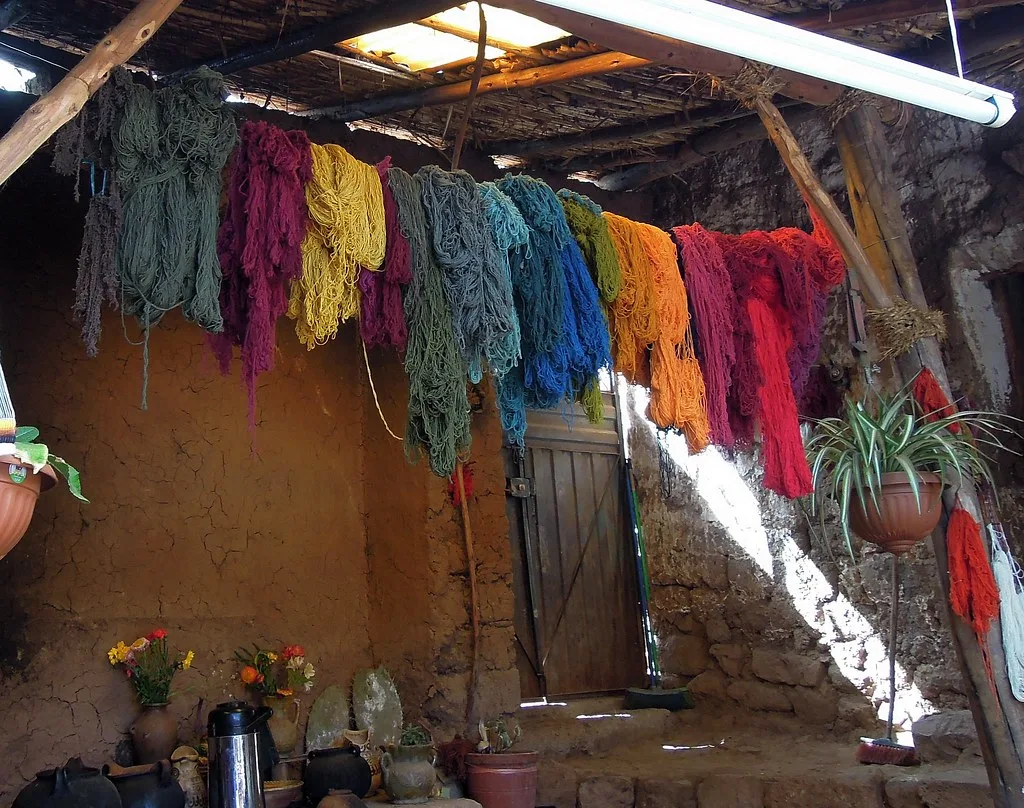
An avocado stone gives pink. Not green, which is what everyone expects from the colour of the fruit, but a soft dusty rose that comes from the tannins in the stone and the skin. That gap between the colour of a plant and the colour it yields runs through the whole subject: madder root is brown and dyes red, weld is a weed and gives the clearest yellow there is, and woad leaves are green and turn wool blue only after they have been through a process that looks nothing like dyeing.
So the plant list is the last thing to learn, not the first. What comes first is the mordant, because that is the difference between dyeing wool and staining it.
The mordant does the joining
A mordant is a metal salt that fixes to the fibre and then holds the dye. Wool takes it readily — the same protein chemistry that makes wool easy to dye with acid dyes gives the metal somewhere to attach. Without it, most plant colour rinses out within a wash or two.
- Alum (potassium aluminium sulphate) — the standard, and the only one a beginner needs. 10 to 15% of the dry weight of the fibre. It brightens rather than shifts, so the colour you get is the dye's own.
- Cream of tartar — 6 to 8%, used alongside alum. It softens the handle and makes reds clearer. Optional, and worth it for madder.
- Iron (ferrous sulphate) — 1 to 2%, and no more. Iron does not brighten, it saddens: yellows go olive, browns go grey, and purples go almost black. Too much makes wool harsh and brittle.
- Copper — shifts towards green. Effective, but genuinely toxic to handle and to dispose of, and largely abandoned for that reason.
Mordanting is its own bath, run before the dye bath. Dissolve the alum, bring the wetted fibre up slowly to about 80 °C, hold it an hour, and let it cool in the pot overnight. Mordanted fibre keeps damp in a bag for a few days, or dry indefinitely, so a single mordant pot can prepare enough for several dye sessions.
Which dyes need one and which do not
The distinction has old names and they are worth knowing, because they predict what will happen.
- Adjective dyes need a mordant. Madder, weld, cochineal, logwood — nearly everything with a strong colour is in this group.
- Substantive dyes do not. They carry enough tannin to bond on their own: walnut husk, oak gall, some lichens, and — well enough for practical purposes — onion skin. This is exactly why onion skins are the standard first experiment, and the full method is on dyeing wool with onion skins.
- Vat dyes are a category of their own. Indigo and woad need no mordant and do not work like either of the above.
The plants, and what they actually give
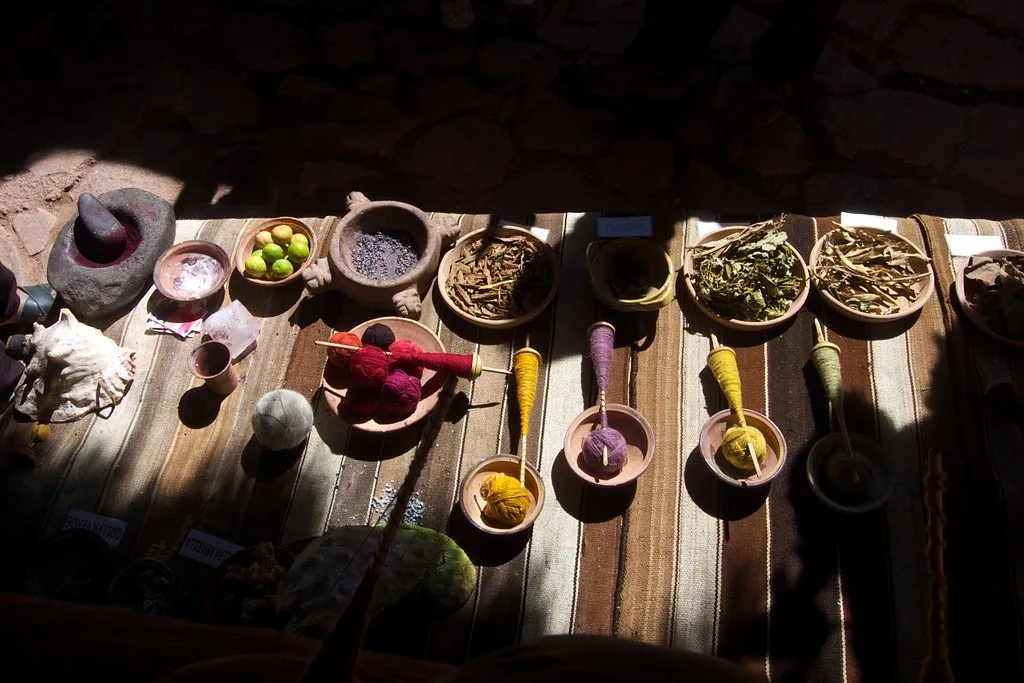
- Madder root — orange through to a true red, and the most reliable red available from a plant. Keep the bath below 80 °C; above that it turns brick and then brown, and it will not come back.
- Weld — a clear, sharp yellow, and the most lightfast yellow in the whole natural palette. Nothing from a kitchen cupboard comes close to it.
- Walnut husk — warm mid-brown, no mordant needed, and it stains hands and pots for weeks. Very fast.
- Cochineal — crimson to deep pink, with alum. Worth saying plainly that it is an insect, not a plant, which matters to some people.
- Logwood — purple, and the easiest purple to get. Its reputation for fading is deserved on its own, but with a little iron it makes excellent greys and near-blacks that do hold.
- Onion skin — gold to rust-orange, free, and stronger than it has any right to be.
- Avocado stone and skin — dusty pink. Slow, needs a lot of material, and gives a colour that is hard to get any other way.
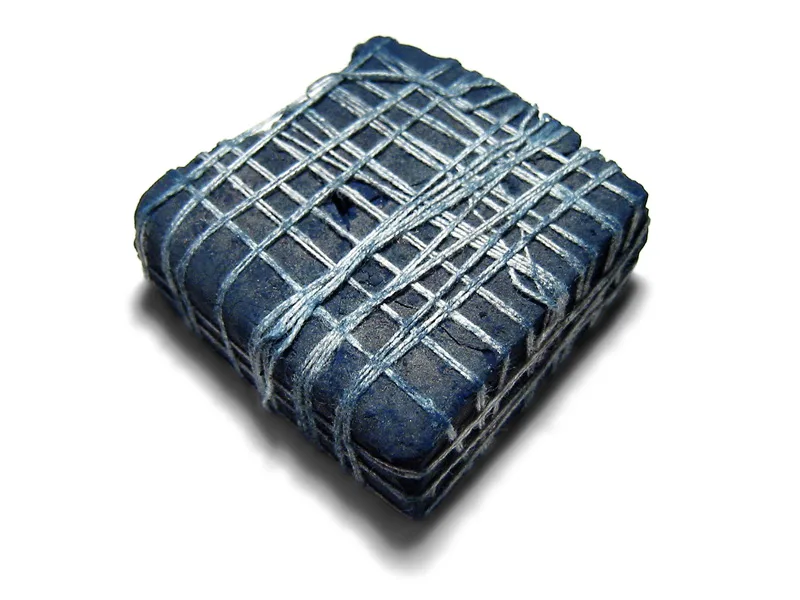
- Woad and indigo — blue, and the only real blue here. See below, because they do not behave like the rest.
Indigo and woad work backwards
Indigo is not soluble in water, so it cannot simply be simmered like the others. It has to be chemically reduced in an alkaline bath into a soluble form — the leuco form — which is a murky yellow-green. That is the vat.
Wool goes into the vat, comes out yellow-green, and turns blue in front of you as the air oxidises the dye back to its insoluble form, this time trapped inside the fibre. That last step is the whole trick: the colour appears in the air, not in the pot.
Because each dip only deposits a thin layer, depth comes from repetition — five or six short dips with a full airing between them, rather than one long one. Woad is the same dye in smaller quantities from a different plant, so it behaves identically and just takes more leaves.
Two practical warnings. Squeeze the fibre under the surface, never above it, because dripping air into the vat oxidises it prematurely and ruins the bath. And the alkalinity that makes the vat work is hard on wool — keep the pH around 9 to 10 rather than the 11 or more that suits cotton, and do not leave wool sitting in it.
Fastness, honestly
This is where natural dyeing is most often oversold. Two different things fail, and they fail separately: washfastness, meaning the colour bleeds when wet, and lightfastness, meaning it fades in daylight.
- Good on both counts: indigo, madder, weld, walnut, cochineal, logwood with iron. These are the dyes that survive in museum textiles.
- Fades quickly: turmeric, beetroot, red cabbage, most berries, and nearly every flower petal. Turmeric in particular gives a spectacular yellow that is visibly weaker after a fortnight in a south-facing window.
None of this makes the fugitive dyes not worth doing — a beetroot pink on a scarf is a real pleasure. It just means you should know which category you are in before you commit forty hours of felting to the result.
Shifting a colour after the fact
The same dye bath will give several colours depending on what you do next, and this is where natural dyeing gets genuinely interesting.
- Iron — a rinse in a weak ferrous sulphate solution darkens and dulls. Yellow to olive, pink to mauve, brown to charcoal.
- Alkali — a pinch of soda shifts madder towards blue-red and turns some flower yellows orange.
- Acid — a splash of vinegar moves them the other way.
Do the shift in a separate bath, on a small sample first, and keep notes. Modifiers are not reversible.
The pot, and the wool in it
Everything in acid dyes for wool about not moving hot fibre applies here twice over, because natural dyeing puts wool through two hot baths instead of one. Mordanting is a full hour at temperature before the dye bath has even been mixed, and every extra handling between the two is another chance to felt what you are dyeing.
Practically: mordant and dye in the same vessel where you can, support the whole weight of the fibre when you lift it, let each bath go cold before you touch it, and match the rinse water to whatever the wool itself is at. Unspun tops suffer worst of anything here, since nothing holds one fibre in place against the next; a twisted skein shrugs off treatment that would ruin them. If it does go wrong, wool shrinkage when felting explains what has happened, and why wool will not felt covers the reverse problem — superwash, which takes natural dye evenly and will never felt for you afterwards.
Preparing the fibre
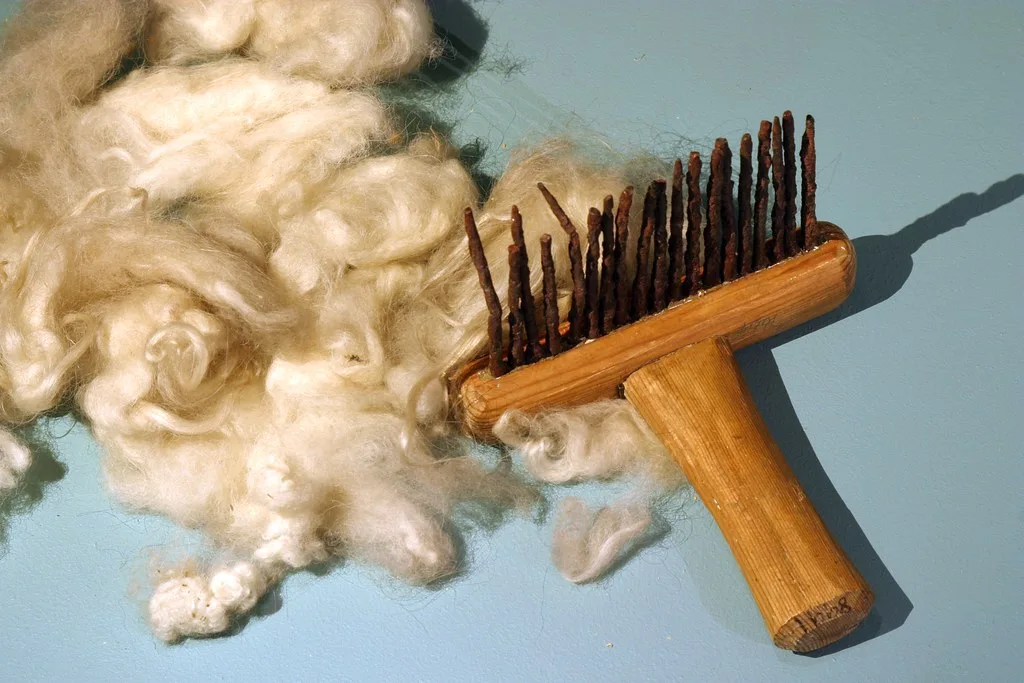
Scour first. Grease and spinning oil both block dye, and a raw fleece will come out patchy at the tips wherever lanolin survived. Hot water, a little wool wash, no agitation, two rinses. Breed matters less here than it does for felting itself, though the fine wools take colour a shade deeper than the coarse ones — best wool for felting covers the differences, and alpaca and mohair take plant dyes as readily as sheep wool does, a little darker each time, as in alpaca felting.
Then mordant, then dye. It is a three-day job by the time each bath has cooled properly, which is the real reason people batch it: mordant enough fibre for a month while the pot is hot.
Where to start
Onion skins, because they need no mordant and prove the principle in an afternoon. If even that is more equipment than you want, dyeing wool with food colouring needs nothing but a jam jar, and a whole garment can go in a bucket as in dyeing a wool sweater. Then buy alum and a bag of madder, and dye 50 g at 20% of the fibre weight — that one pot teaches mordanting, temperature discipline and the endpoint all at once, and it gives a red you cannot buy the equivalent of.
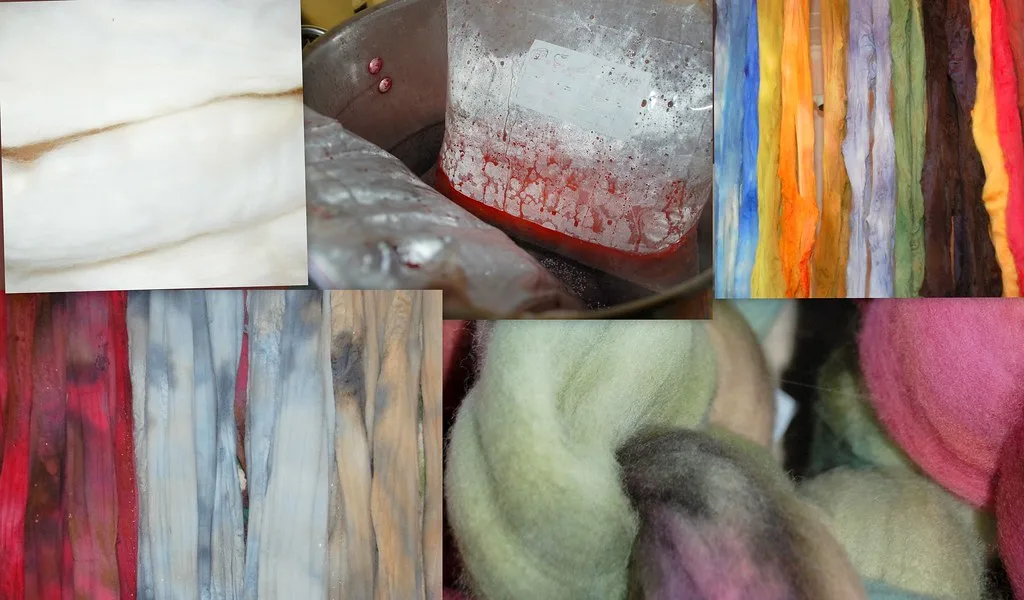
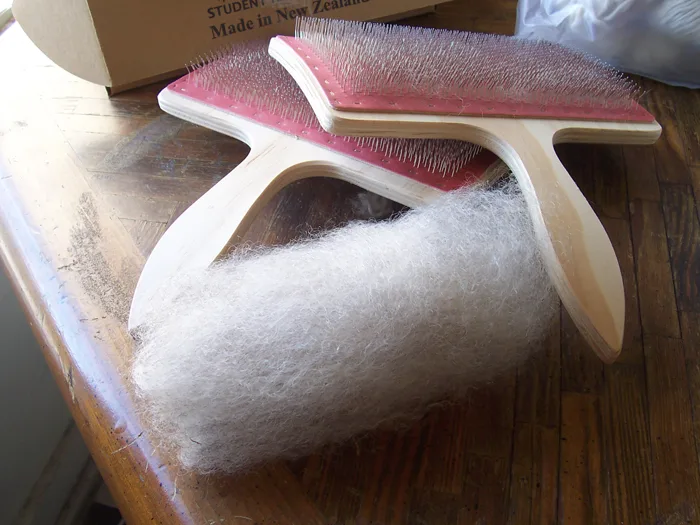
Keep a card of every sample with the plant, the mordant, the percentages and the date written on the back. Natural dyeing is not repeatable the way acid dyeing is — this year's madder is not last year's, and water hardness moves colours around on its own — but a card file gets you close, and it is the difference between a craft and a series of accidents. For what to do with the results, carding wool by hand turns a pot of separate colours into one graded fleece, blending wool colours covers mixing them deliberately, and dyeing wool roving is the route if you would rather colour fibre before it becomes anything.
Frequently asked questions
Do I need a mordant to dye wool naturally?
For most dyes, yes. Alum at 10 to 15% of the dry weight of the fibre is the standard, and without it the colour sits on the surface and washes out. The exceptions are the tannin-rich dyes — walnut husk, onion skin, oak gall — which bond well enough on their own, and indigo, which is a vat dye and works by a different mechanism entirely.
Which natural dyes actually last?
Indigo, madder, weld, walnut and cochineal have centuries of textiles behind them and hold up. Turmeric, beetroot, red cabbage, berries and most flower petals fade badly, sometimes within weeks on a sunny windowsill. They are worth doing, but not on anything you want to keep.
Why did my wool felt in the dye pot?
Heat lifts the scales and any movement between fibres locks them together. Natural dyeing makes this harder to avoid than acid dyeing, because mordanting is a second hot bath before the dye bath even starts. Move the fibre as little as possible, cool it in the pot each time, and never lift hot wool straight into cold water.
Can I use my kitchen pans for natural dyeing?
Buy separate ones. Alum is not especially toxic but mordant residues are not food, and iron and copper pots shift colours on their own — useful when you want it, a nuisance when you do not. Stainless steel or enamel for a neutral result.