Wool Pressing Mat: Size, Thickness, and How to Press on One
9 min read
We may earn a commission from links on this page, at no extra cost to you. As an Amazon Associate I earn from qualifying purchases. Learn more.
A wool pressing mat is a slab of dense industrial wool felt, usually about ½ in thick, that heats up under the iron and presses fabric from below. Which size and thickness to buy for quilting, how to use one without warping it or marking the table, and how to clean it.
A wool pressing mat is a block of industrial wool felt, typically about ½ in (12–13 mm) thick and so dense that it barely dents when you press a thumb into it. It does one thing an ironing board cannot: it soaks up the heat and steam from the iron and pushes it back up through the fabric from below, so a seam is pressed from both sides at once.
That is why quilters took to them. A pieced block pressed on wool comes out flatter and squarer than the same block pressed on a padded board, and the slightly grippy wool surface stops small pieces sliding around under the iron. A listing for a wool ironing mat or a wool ironing pad is selling the same thing.
What a wool pressing mat actually is
It is the same material as the thick felt used for gaskets, polishing pads and machine parts: loose wool fiber, carded into a web, then shrunk and compressed under heat, moisture and pressure until it is a solid slab. How that is done industrially, with needle looms, fulling and calenders, is covered in industrial felt machines. Listings often say New Zealand wool; most New Zealand wool is from coarser crossbred sheep, the kind well suited to dense felt.
What makes it work as a pressing surface is density. A wool blanket folded four times is wool too, but it squashes, holds the steam as wet heat, and lets the iron sink. A pressing mat is too dense to compress much, so all the iron's pressure goes into the fabric and the stored heat stays right under the seam.
Thinner, softer cuts of pressed wool felt are what a felt desk mat (usually 3–5 mm) and wool felt insoles are made from; the thicknesses sold by the sheet are listed in wool felt fabric.
Why quilters press on wool
- Heat from below. The mat warms up after a few passes and stays warm, so the underside of the seam is pressed too. Seams set flat with less pushing.
- A firm surface. An ironing board has foam or batting under the cover; seams sink into it and spring back. Wool gives a little, enough to let seam allowances settle, but not enough to round them.
- Grip. Cotton sticks lightly to the wool fibers. Bias edges and small pieces stay put instead of stretching under the iron, which matters for accurate points.
- A station anywhere. A small mat beside the sewing machine means pressing each seam as you go without getting up, which is the main reason many quilters own two.
It does not replace an ironing board for everything. Shirts, curtains and anything that needs to be draped over the narrow end of a board are still easier on a board.
Which size to buy
Size is the first decision, and it depends on the largest piece you press flat in one go.
| Size, roughly | Good for | Limits |
|---|---|---|
| 8–10 in (20–25 cm) square | Pressing seams beside the machine, small blocks, English paper piecing, travel and classes | Too small for a 12 in block |
| 13–14 in (33–36 cm) square | Standard 12½ in unfinished blocks, appliqué | Fat quarters have to be pressed in sections |
| About 17 × 24 in (43 × 61 cm) | Most of a fat quarter laid flat, rows of blocks, most general pressing | Needs a table or a large board to sit on |
| Larger, up to ironing-board scale | Pressing yardage, borders, whole rows | Heavy, slow to dry, needs a permanent spot |
A useful rule: buy a mat a little larger on every side than the block you make most often, so the iron never runs off the edge onto the table. If you can only have one, the 17 × 24 in size covers the most work. If you sew at a machine and press at a separate table, the second mat worth buying is a small one for the machine side.
Thickness and density
Thickness is where cheap mats cut corners, and the number is not always printed in the listing.
- About ½ in (12–13 mm). The standard. Enough mass to store heat, stiff enough to stay flat, and the thickness most pressing advice assumes.
- About ¼ in (6 mm). Lighter and easier to carry to a class. Heats up faster and cools faster, and lets more heat reach the surface underneath. Fine as a second mat, weaker as the only one.
- Thicker than ½ in. Holds even more heat but is heavy and takes a long time to dry after steam.
Density matters as much as thickness. Two ½ in mats can feel completely different: one a hard board, the other closer to a dense blanket. A good mat is heavy for its size and smells and looks like plain wool. Press your thumbnail in; it should leave only a faint mark that disappears. A soft mat compresses under the iron and behaves like an ironing board, which defeats the point. Industrial felt is graded for density, and wool felt fabric explains how those grades read.
Check the fiber content too. A mat should be 100% wool. Blends with polyester exist and can glaze or melt where a hot iron sits, which wool does not do.
How to press on a wool mat
Using one is mostly ordinary pressing, with three adjustments.
- Warm the mat first. Press a scrap or just the empty mat for a few passes. The first block of the day on a cold mat is pressed only from the top.
- Press, do not iron. Lift and set the iron down rather than sliding it. Sliding on a grippy surface pulls blocks out of square more easily than on a board, because the fabric is held in place while the iron drags the top layer. Finger-press or use a seam roller first, then set the seam with the iron.
- Go lighter on steam. The mat holds moisture and heat for you. Heavy steam soaks the wool, makes the smell stronger, and leaves the mat damp for hours. Many quilters press dry on wool, or use a light mist on stubborn seams.
The cotton setting is fine on wool in normal use. Wool does not melt, and it resists ignition far better than cotton or synthetics, but it will yellow and scorch if a hot iron is left standing on it. Rest the iron on its heel, not on the mat.
Fusible, starch and vinyl
The wool surface is hard to clean, so keep sticky things off it. Fusible web and interfacing adhesive that squeezes past the fabric edge will bond to the wool fibers. Starch and sizing sprays build up as a stiff, sometimes brown film. A pressing cloth or a non-stick pressing sheet between the work and the mat stops both. The same goes for heat-transfer vinyl: wool mats are often used under a heat press or iron for vinyl, and the carrier sheet keeps the glue off.
Unwashed fabric with strong dyes, reds especially, can bleed onto a steamed mat. Press those pieces dry or on a cloth.
Protecting the surface under it
This is the part that surprises people. A wool mat that has had steam on it for an hour is hot and damp right through, and it stays that way well after the iron is off. Laid straight on a wooden table, it can leave a cloudy white mark in the finish, and over months it can lift varnish. Laminate and plastic surfaces can warp.
- Put it on an ironing board, a pressing board, or a heat-resistant board made for the job.
- On a table you care about, put a folded cotton towel or a sheet of heat-resistant board between the mat and the wood.
- Never press on top of a self-healing cutting mat. Those are vinyl and warp with heat, and a warped cutting mat is ruined for straight cuts.
- After a session, lift the mat and let air reach the underside. Stand it on its edge or set it on a rack until it is dry.
Cleaning and care
A pressing mat collects lint and loose threads in the fibers, especially in the first few weeks while it sheds its own surface fuzz. A lint roller or a vacuum with a brush attachment deals with that.
For marks, spot clean only. Dab with cool water and a small amount of wool wash, blot, then rinse by dabbing with clean water. Do not scrub; rubbing wet wool is how felt is made, and you will raise a fuzzy, uneven patch. Dry it flat, turning it now and then. A ½ in mat can take a day or more to dry through.
Never machine wash one. Heat and agitation will shrink it further, and a mat that shrinks unevenly cups or ripples and will not lie flat again. For the same reason, washing any wool felt is a cold, gentle business.
Warping and doming
A mat pressed hard on one side, wet with steam and dried in place, can slowly dome or curl at the corners. Flip it over regularly so both faces get used, let it dry flat, and store it flat rather than rolled or standing in a damp corner. A mild curl usually flattens if you lay it under a few heavy books overnight.
Moths
A pressing mat is a large piece of clean wool, and clothes moth larvae eat wool. One that is used every week is rarely touched; one put away for a season in a dark cupboard can be. Store it clean and dry, check it when you take it out, and see protecting wool from moths if you find damage.
Mistakes that ruin a mat
- Leaving it damp. The cause of most smells, most warping and most marks on furniture.
- Pressing fusible without a cloth. Adhesive in wool fiber does not come out.
- Cutting on it. A rotary blade goes straight into the felt and leaves a groove the iron will catch on. Some products put a cutting mat on one side and wool on the other; on a plain wool mat, do not cut.
- Buying too small. The iron running off the edge leaves a ridge in the fabric where the mat ends.
Other things a wool mat is good for
Felt makers find uses for one too. Flat wet felted pieces and nuno felt can be given a final press on wool, which takes steam without leaving shine on the surface. Flat appliqué on wool felt sheets presses well on it. And it makes a decent heat-proof base for small hot tools.
It is not a good needle felting surface. A pressing mat is denser than a felting pad, so needles drive in hard and break more easily, and needled fiber can lock into the mat. Use a proper pad; the options are in felting mat alternatives.
Is a wool pressing mat worth it?
For anyone who pieces quilts regularly, yes. It lasts for years with basic care. For occasional sewing of garments, an ironing board does the job and a mat is a nice extra rather than a need.
It is also one of the safer presents for a quilter, because few people buy one for themselves early on, and a second one for the machine side is always useful. The rest of that kind of list is in gifts for crafters.
Frequently asked questions
What is a wool pressing mat used for?
Pressing seams and blocks in quilting and sewing, and pressing appliqué and heat-transfer vinyl. The dense wool soaks up heat and steam and gives it back from underneath, so the fabric is pressed from both sides at once and seams lie flatter than they do on a padded ironing board.
What size wool pressing mat should I get?
For quilting, a mat a little larger than your usual block: about 13 to 14 in square handles a 12½ in unfinished block, and around 17 × 24 in takes most of a fat quarter (18 × 22 in) laid flat. A small square of about 8 to 10 in is for pressing seams beside the sewing machine. Buy the largest your table can hold flat if you can only have one.
How thick should a wool pressing mat be?
Around ½ in (about 12 to 13 mm) is the usual choice. It holds enough heat to press from below and stays flat. Thinner mats of about ¼ in (6 mm) are lighter and fine for travel, but let more heat through to the table and lose some of the effect.
Can I put a wool pressing mat directly on a wooden table?
It is better not to. The mat stays hot and damp after steaming, and that heat and moisture can cloud or lift a finish on wood. Put it on an ironing board, a heat-resistant board, or a folded towel over a surface you do not mind marking. Never put it on top of a plastic cutting mat, which can warp from the heat.
Why does my wool pressing mat smell?
Hot steam in wool brings out a warm, sheepy smell, strongest when the mat is new. It fades with use. Pressing with less steam, letting the mat dry fully between sessions and airing it helps. A sour or musty smell means it is being stored damp.
Can you wash a wool pressing mat?
Not in a machine. Agitation and hot water will felt and shrink it further and can make it cup or warp. Lint-roll or vacuum it, spot clean marks with cool water and a little wool wash, and dry it flat, which takes a long time because the felt is so dense.
Topics
Image credits
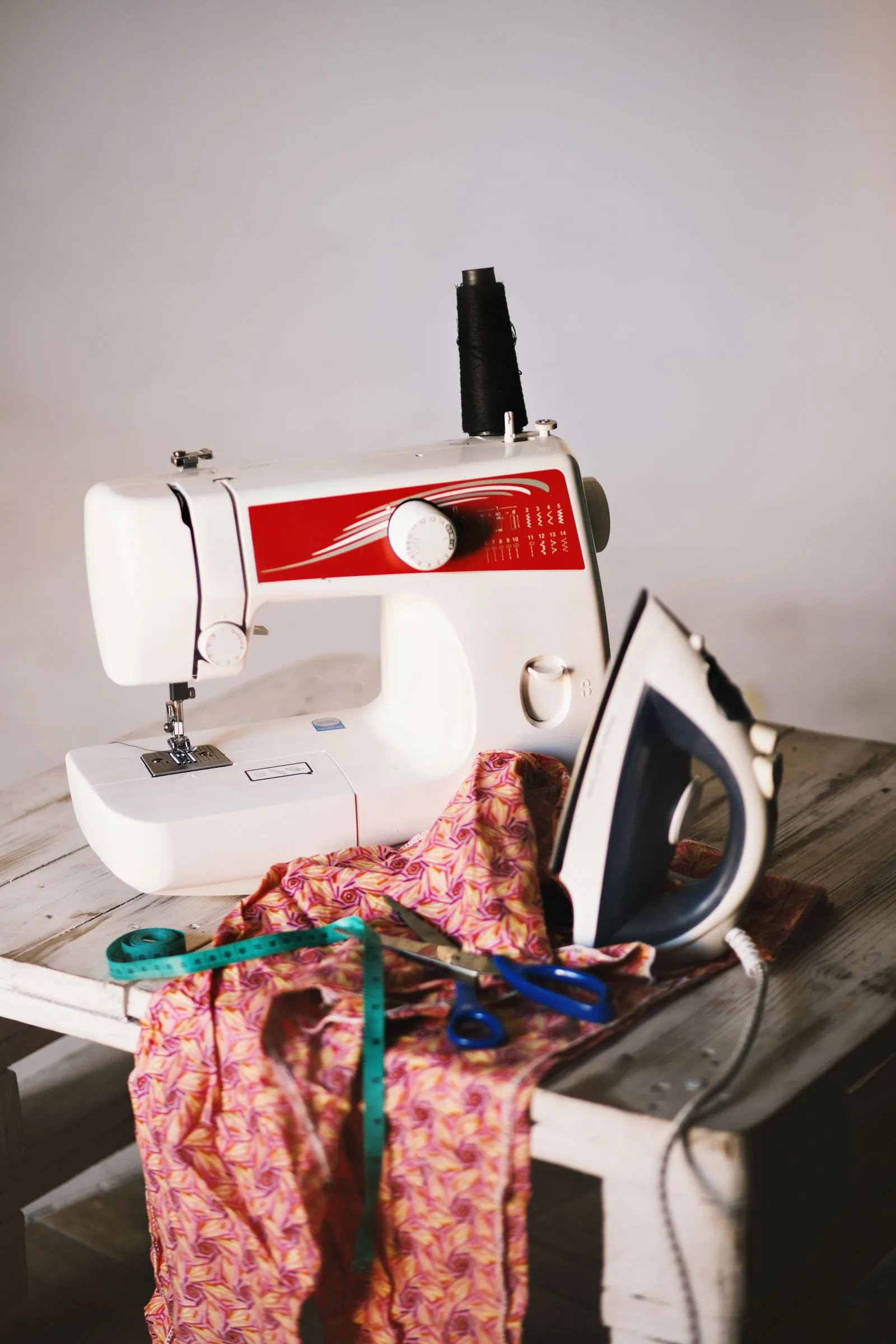
- A white sewing machine and a steam iron on a worn wooden table, with patterned pink fabric, blue scissors and a tape measure — EVG Kowalievska (Pexels License)
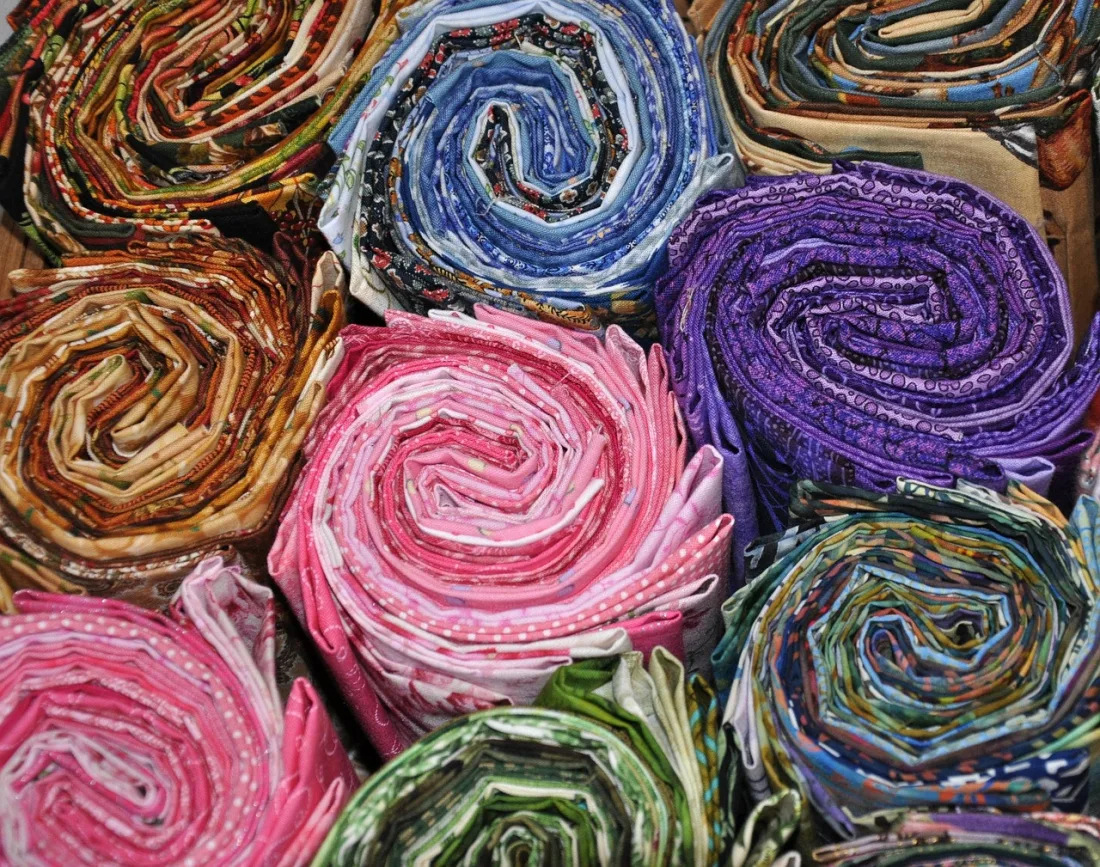
- Rolled bundles of printed quilting cottons in pink, purple, blue, green and brown, seen end-on — MarkMartins (Pixabay Content License)
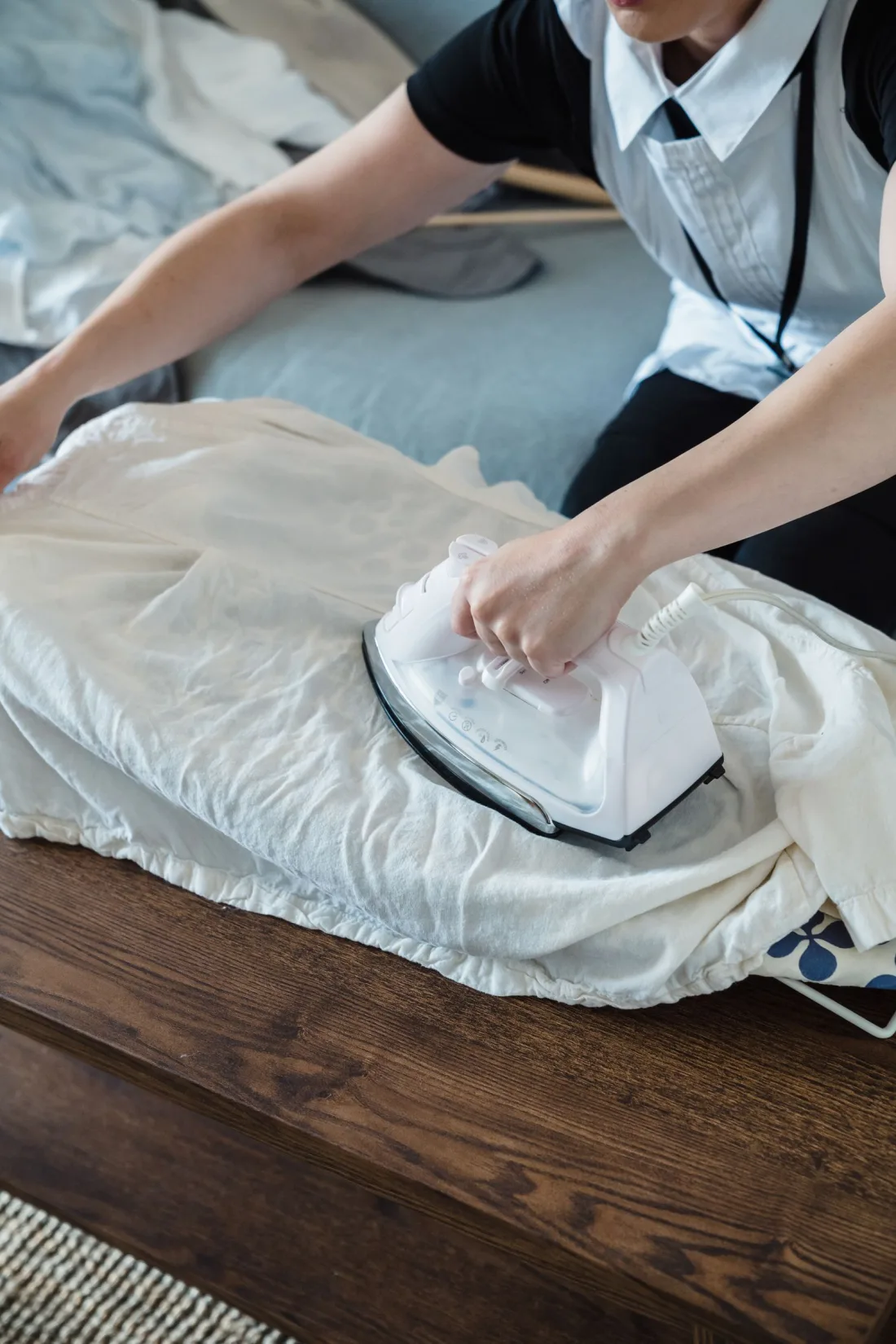
- Hands pressing a cream fabric with a white steam iron on a wooden bench, with no mat or board underneath — Liliana Drew (Pexels License)