Wet Felting
Cobweb Felting
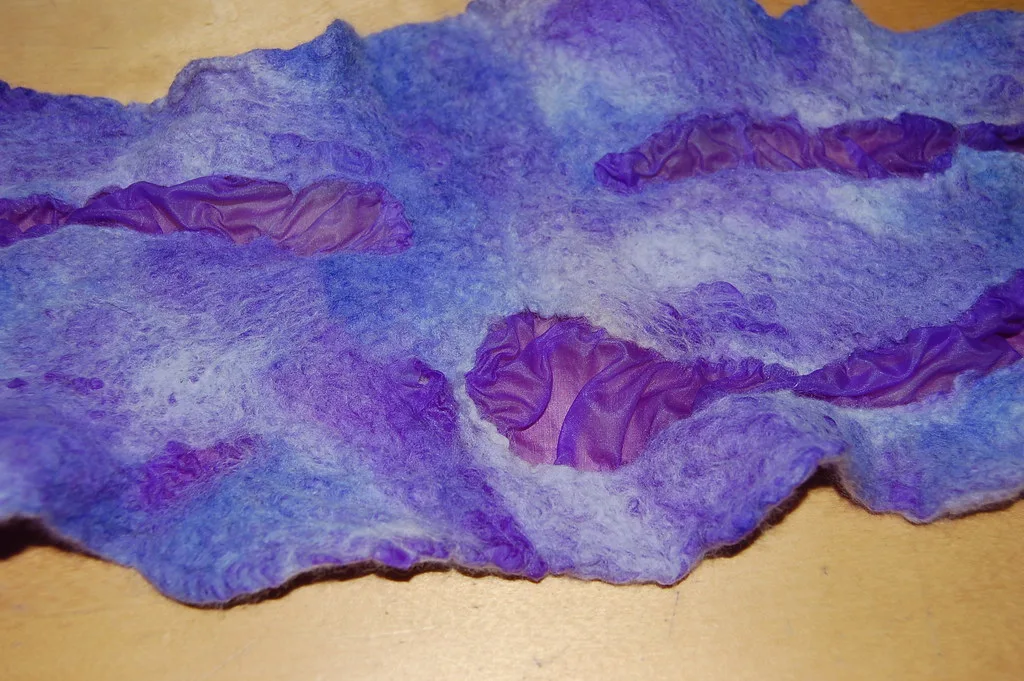
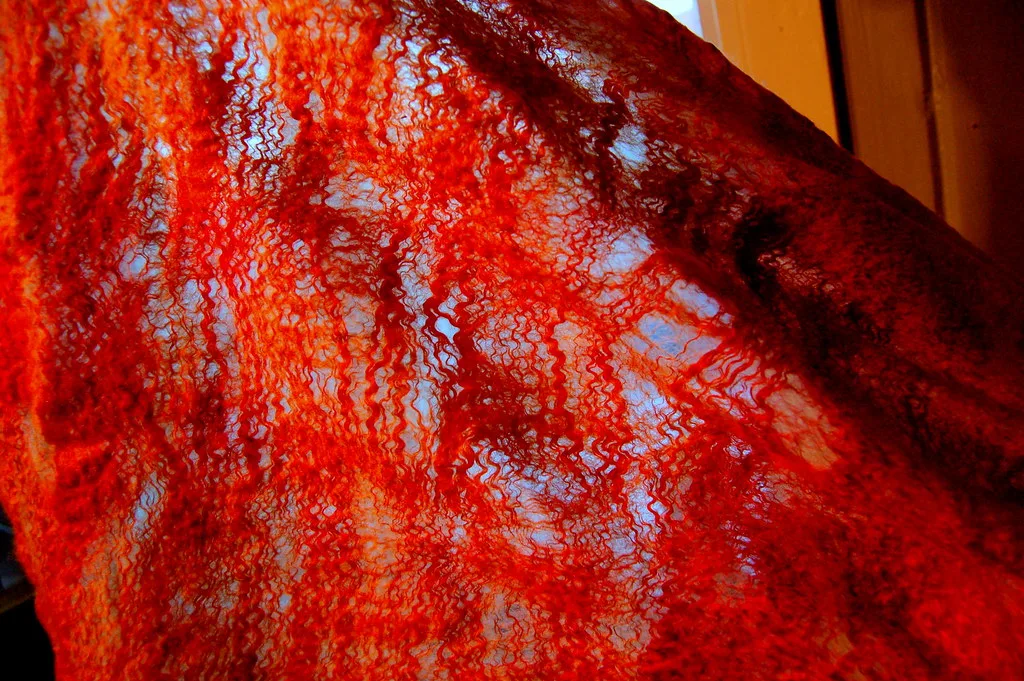
Cobweb felt is wool laid so thinly it has holes in it on purpose — lace-light, full of gaps, and the most forgiving advanced technique in wet felting.
4 min read Intermediate
Topic
Cobweb felt is wool laid so thinly it has holes in it on purpose — lace-light, full of gaps, and the most forgiving advanced technique in wet felting.
4 min read Intermediate
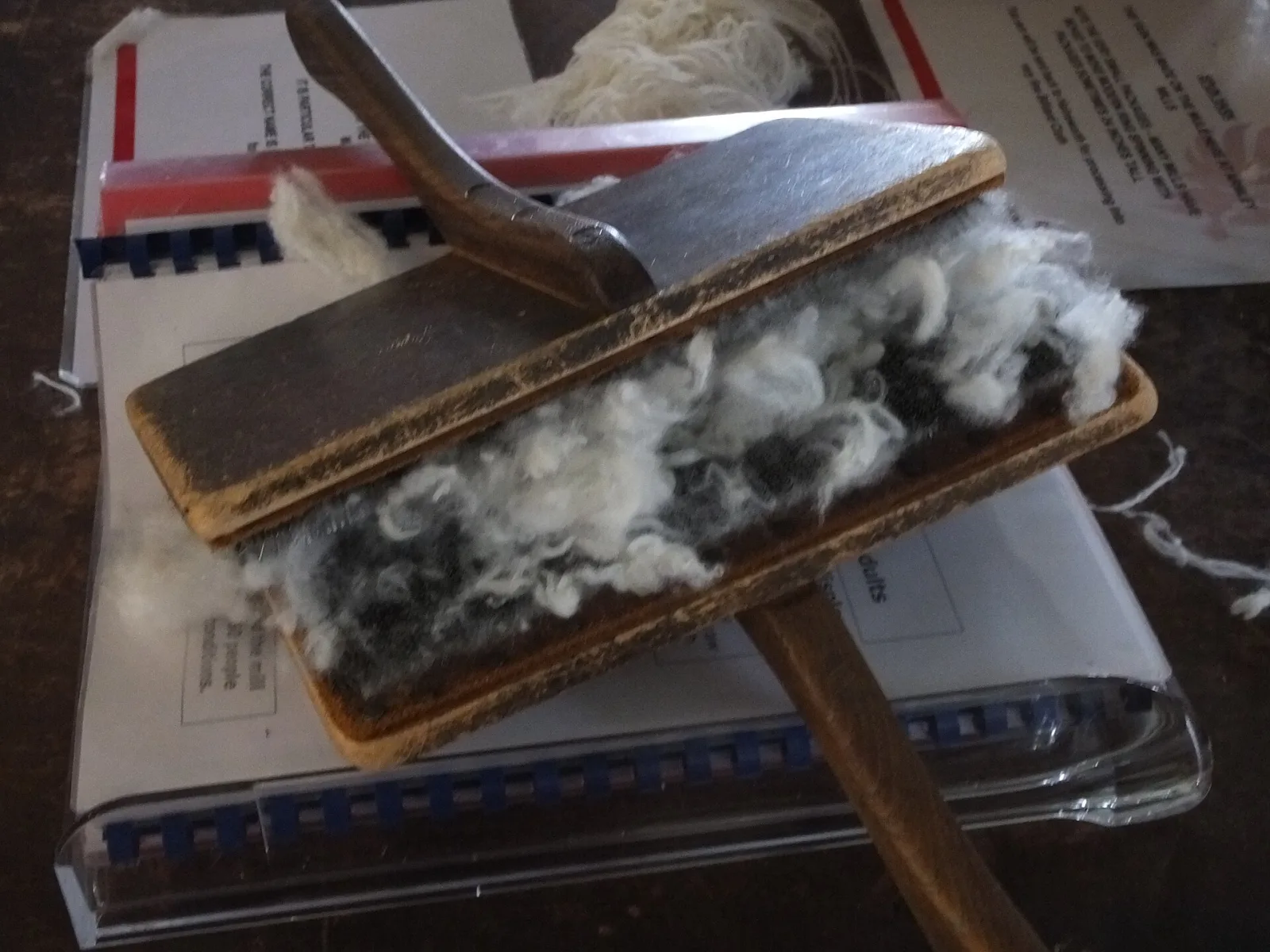
How to card wool with hand carders, what a good batt looks like, and why felters get more out of carding than spinners do — custom colour blends, mostly.
4 min read Intermediate
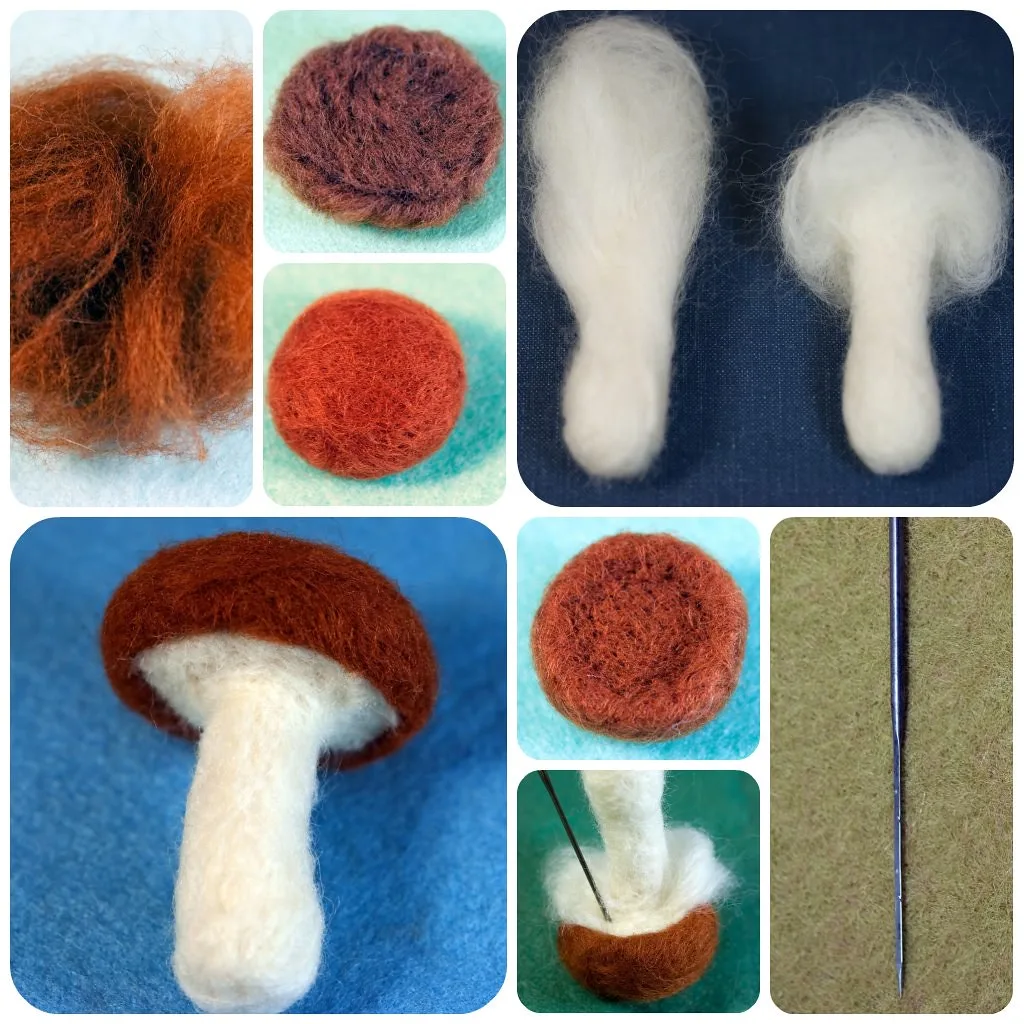
Combining the two methods is standard practice, not a compromise. What wet felting does to a needled piece, in which order to work, and when it ruins things.
3 min read Intermediate
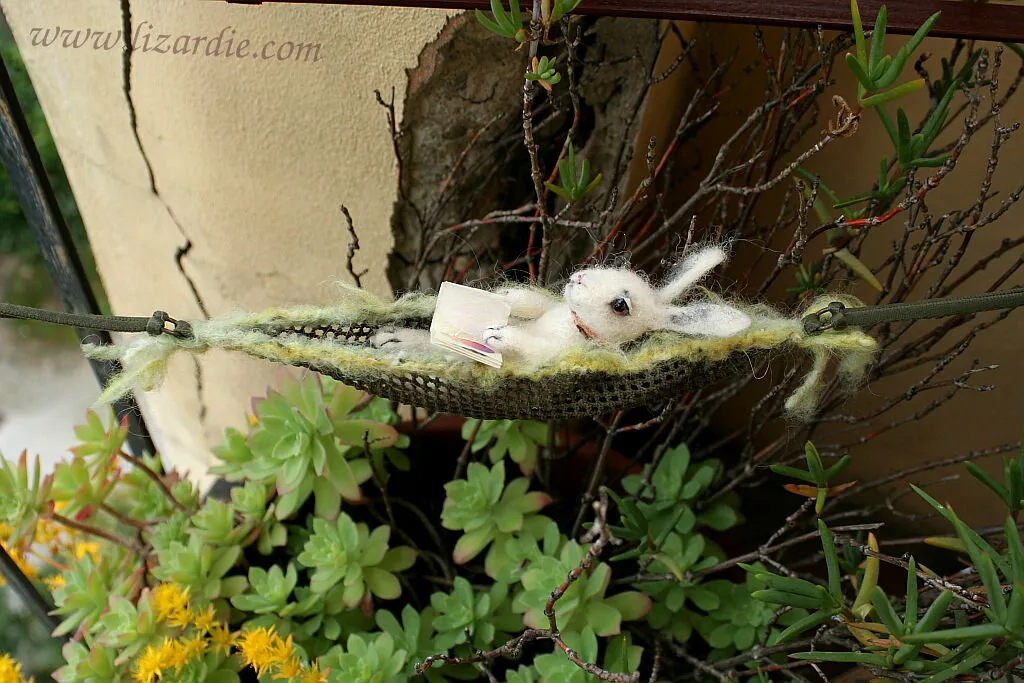
Alpaca has fewer scales than sheep wool, so it felts more slowly and drapes far better. Where that trade-off helps, and where you should blend it with wool instead.
4 min read Intermediate
Felt shrinks by a third or more, and not evenly in both directions. Rates by fibre, how to size a felting project so it fits, why a sweater shrinks in the dryer, and how far a shrunk one can be stretched back.
7 min read Intermediate
The technique that makes felt light enough to wear in warm weather. How wool migrates through an open weave, how much to use, and why less is always more.
4 min read Intermediate
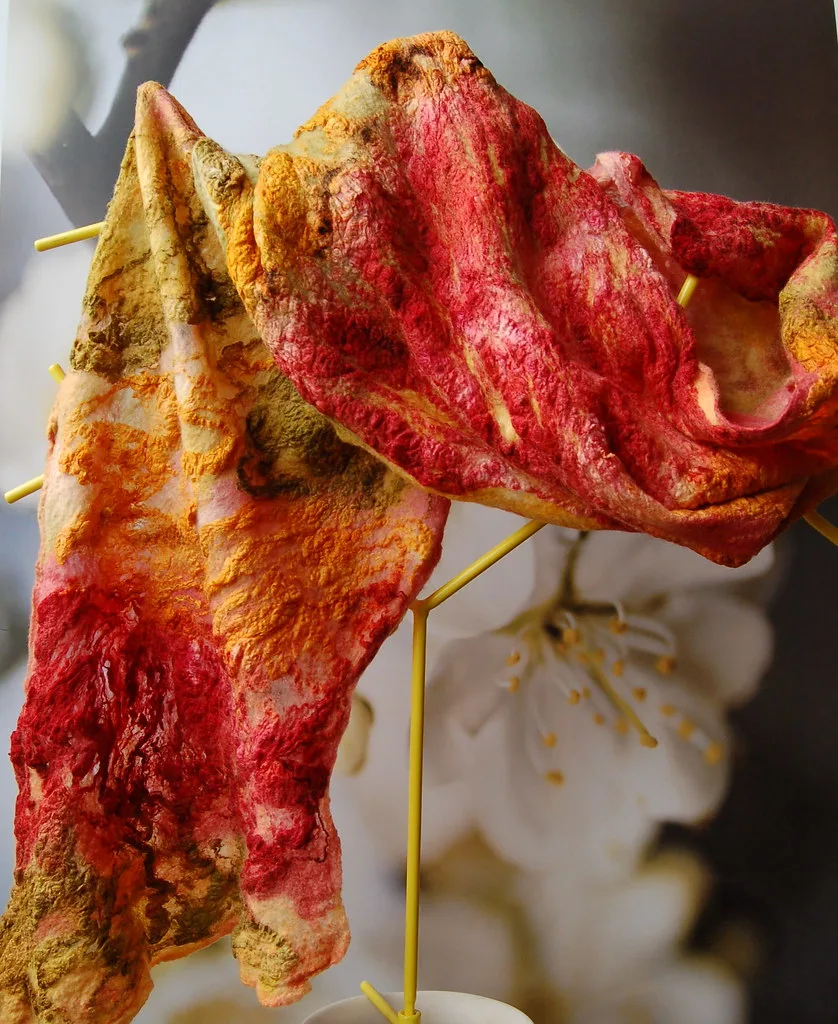
A first wearable piece. How thin to lay the wool, how much length to add for shrinkage, and why a scarf needs less felting than you would think.
4 min read Intermediate
Hand carders, the drum carder and the two methods that need no equipment at all. How wool colour mixing differs from paint, and why it does.
5 min read Intermediate
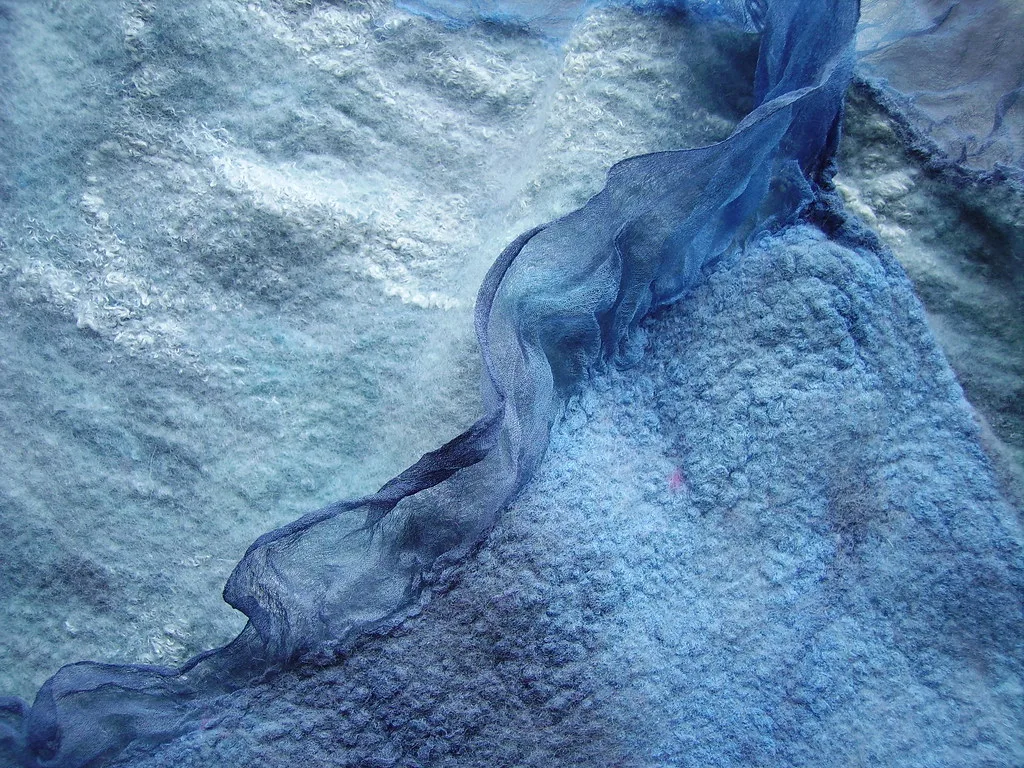
Silk gauze, chiffon, muslin, scrim — how to judge whether a fabric will let wool through before you commit a project to it.
4 min read Intermediate