Needle Felted Fox: The Wedge Head and the Tail That Sells It
4 min read Intermediate
We may earn a commission from links on this page, at no extra cost to you. As an Amazon Associate I earn from qualifying purchases. Learn more.
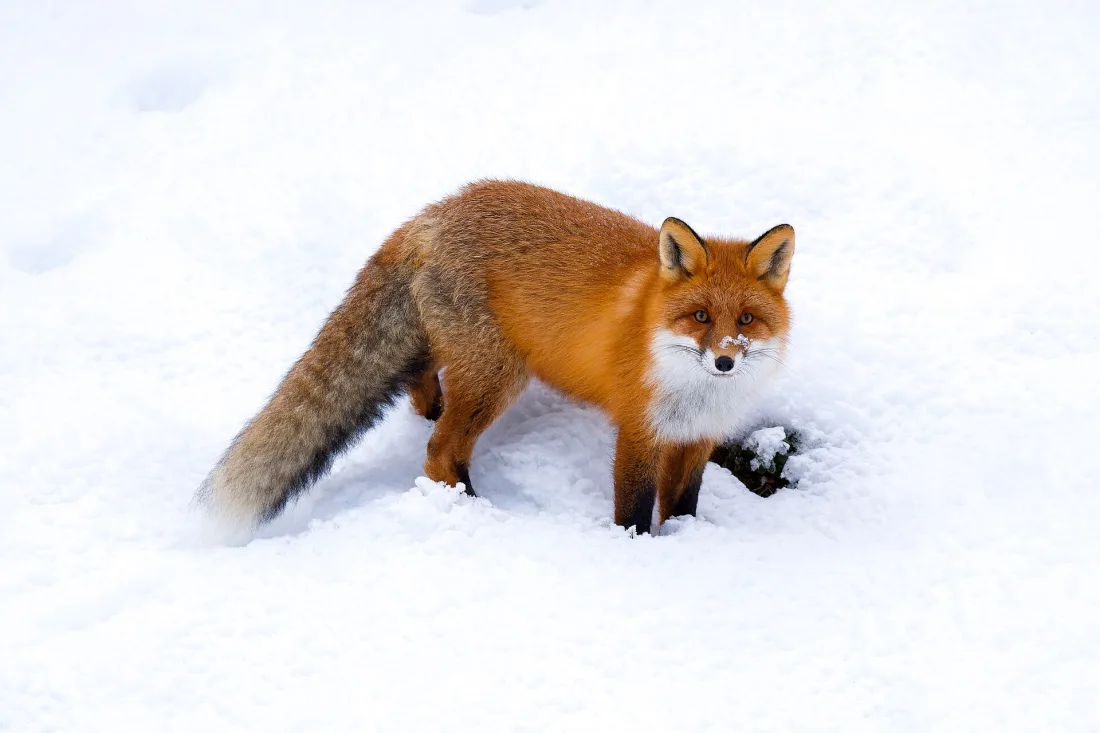
Foxes are made of triangles — a wedge head, pointed ears, a sharp muzzle — and one enormous tail. Get the wedge right and the rest follows.
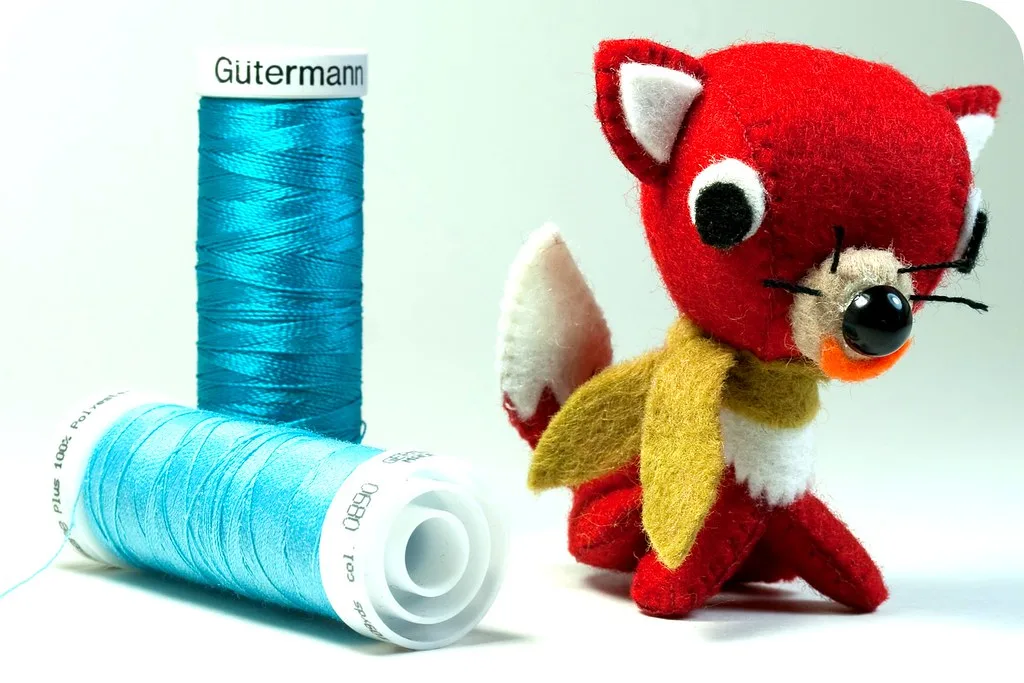
Foxes are the most popular animal in needle felting after cats, and the reason is the colour: a fox is one strong orange, one clean white and a little black, so it reads well even at ornament size.
Two things decide whether it looks like a fox rather than a small orange dog — the wedge of the head and the size of the tail.
What you need
- Core wool — 25–35 g
- Fox orange, white and black corriedale
- 38 and 40 gauge needles, foam pad
- Optional: 5 mm amber glass eyes, pipe cleaners for a standing pose
Start with a sleeping fox
Curled, nose tucked into the tail. No legs, no balance problems, and the pose everyone wants anyway.
- Body. Roll core wool into a firm, slightly flattened kidney about 10 cm long — the curled back.
- Head. A separate ball, firmed hard, then worked into a wedge: needle the front into a taper that narrows continuously to a point. Keep the skull wide at the back and flatten the top slightly.
- Muzzle. Extend the taper by adding a small amount of wool at the tip and needling it into a sharp, slightly downturned point. A fox muzzle is long and fine — longer than feels correct.
- Join. Attach the head with loose fibres pushed into the body, then cover the join.
- Ears. Two flat triangles, made as a pair, firm enough to stand. Attach them upright and quite far apart, angled slightly forward. Fox ears are large — about a third of the head height.
- Tail. Roll a thick sausage three-quarters the body length, taper the attached end, and leave the free end blunt. Attach with loose fibres, curl it around the body and bring the tip up to the nose.
- Colour. Orange over the whole body, back of the ears and top of the tail. Then white on the chin, throat, chest, belly, inner ears and the last 3 cm of the tail.
- Black. Nose tip, a thin line at each ear back, and the lower legs if visible.
- Eyes. Amber, almond-shaped, angled with the outer corner higher. Add a thin dark rim around each.
The tail
Foxes are famous for their brush, and it is the single thing beginners underbuild. Make it thick — as thick at the base as the chest — and make it fluffy rather than smooth. Needle it less firmly than the body, then brush the surface or use a reverse-barb needle to raise the fibre. Techniques for that are in needle felting fur.
The white tip should be crisp, not blended. Lay it as a distinct band and needle it in cleanly.
The colour map
- Orange: back, sides, top of head, outside of legs, back of ears, most of the tail.
- White: chin, throat, chest, belly, inside of the legs, inner ear, tail tip.
- Black: nose, lower legs and feet, and the backs of the ears.
- Blend the boundary along the flanks so the orange fades into the white, but keep the ear and tail-tip edges sharp.
A slightly darker rust along the spine and a lighter shade on the shoulders gives the coat depth. Two or three related oranges beat one flat colour every time — see how to blend wool colours.
Other poses
- Sitting. A pear-shaped body with the tail curled around the feet. No armature needed if the tail helps support it.
- Standing. Needs a wire armature. Foxes stand low and long, with a level back and slightly bent hind legs.
- Pouncing. Front legs together and forward, back arched, tail streaming out. Dramatic and difficult.
- Fox head only. A wedge head mounted flat, as a brooch or a wall piece.
Other species
- Arctic fox. All white with a rounder face, shorter muzzle, smaller ears and a much thicker coat. Made with cream and pale grey.
- Grey fox. Grizzled grey back, rusty sides and neck, black stripe along the top of the tail.
- Fennec fox. Enormous ears — nearly half the body height — pale sand colour, tiny body. The ears must be very firm to stand.
Common problems
- It looks like a dog. The muzzle is too short or there is a step between forehead and nose. A fox head is one unbroken taper.
- It looks like a cat. The tail is too thin and the ears too small.
- The orange looks flat. One colour, applied evenly. Add a darker spine and lighter flanks.
- The white is grubby. Do all white work with clean hands and apply it after the orange, never the other way round.
For the next animal in the same family of techniques, try a hedgehog or a sheep; both reuse the wedge head and the flat-piece ears. A needle felted deer is the harder relative: the same narrow head, but on legs thin enough to need a wire core.
Frequently asked questions
How do you needle felt a fox?
Build a firm body, then a wedge-shaped head with a long pointed muzzle, add two triangular ears with dark backs, and finish with a tail almost as long as the body and much thicker than seems right. White goes on the chin, chest, belly and tail tip.
What shape is a fox head?
A wedge, seen from above and from the side. It narrows continuously from a wide skull to a sharp black nose, with no step between forehead and muzzle. That unbroken taper is what separates a fox from a dog.
How big should a felted fox tail be?
About three-quarters the length of the body and roughly as thick as the fox's chest at its base. Nearly everyone makes it too thin, and a thin tail makes the fox look like a cat.
Is a fox a good beginner project?
A sleeping curled fox is. It is one body, a wedge head and a tail wrapped around, with no legs to balance, and it takes about two hours. A standing fox needs an armature and is a step up.