Felted Cat Cave: A Knitting Pattern That Survives the Washing Machine
7 min read Intermediate
We may earn a commission from links on this page, at no extra cost to you. As an Amazon Associate I earn from qualifying purchases. Learn more.
Knit an absurdly large wool bowl, shrink it by a third in a hot wash, and dry it over a form. The pattern, the arithmetic, and why the entrance is easier cut than knitted.
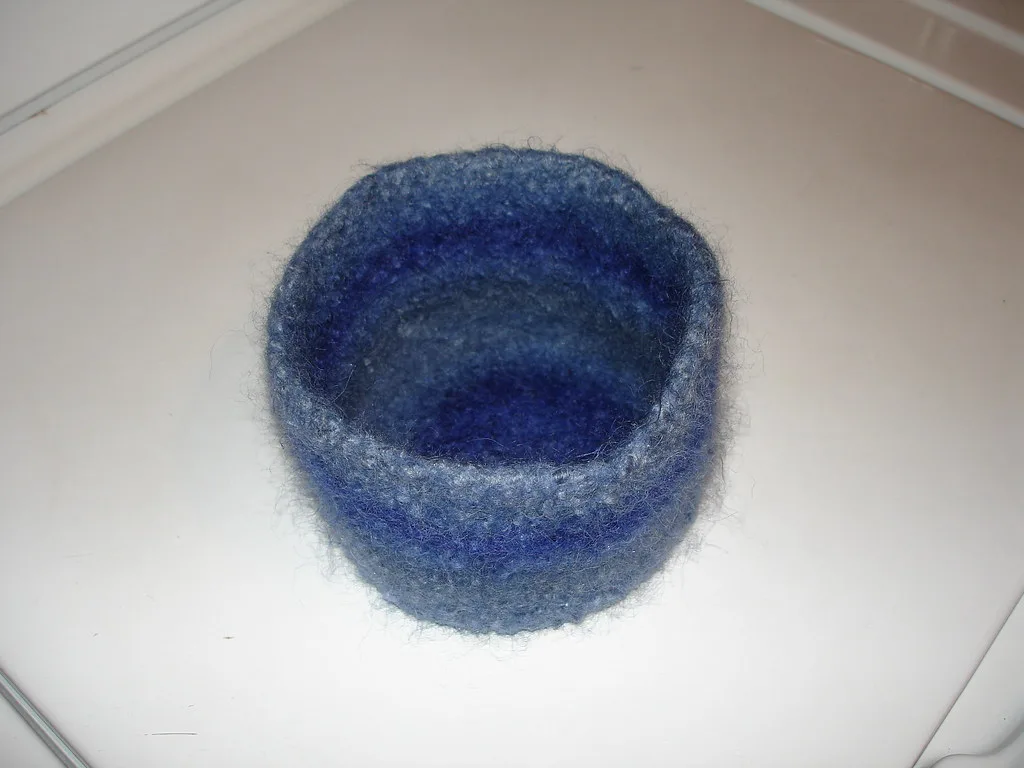
A cat cave is a knitted wool bowl, felted until it is rigid enough to stand up on its own. Cats like them because they are dark, enclosed, warm and smell of wool; people like them because they are one of the few genuinely useful things you can make from a kilo of cheap yarn.
The whole project rests on one idea: knit something far too big and far too loose, then let the washing machine turn it into felt.
What you need
- 500–800 g of pure wool yarn, aran or chunky, not superwash. Undyed Icelandic, Peruvian highland, Shetland and cheap rug wool are all ideal.
- 10 mm circular needles, 80 cm cable, plus a spare shorter circular or DPNs for the base.
- A stitch marker, a darning needle and sharp scissors.
- A form to dry it over — a bucket, a large mixing bowl, a football, or a cushion inside a plastic bag.
- A pillowcase, a pair of jeans and a washing machine.
The yarn decides everything
If the yarn will not felt, nothing else matters. Check the label for "superwash" or "machine washable" and put it back if you find either — those yarns have had the fibre scales stripped or coated precisely so this cannot happen. The reasoning is in what is felting, and the diagnosis if it goes wrong in why won't my wool felt.
Coarse wool felts denser and stands up better than fine merino. This is one of the few projects where a scratchy carpet wool is the right choice — nobody is wearing it, and the cat wants structure. See felting yarn for what to look for on a ball band.
Hold two or three strands of aran together. A single strand on 10 mm needles gives a fabric so open it takes forever to close up in the wash.
The arithmetic
Knitted wool shrinks unevenly — more in height than in circumference, because the stitch structure gives differently in each direction. Assume:
- Height: loses 30–40%
- Circumference: loses 20–30%
For an adult cat you want a finished cave roughly 40 cm across and 30 cm tall. Working backwards:
- Knit to about 52 cm diameter — a circumference of roughly 165 cm.
- Knit to about 45 cm tall before felting.
At a loose pre-felting gauge of about 8 stitches to 10 cm, that is around 130 stitches in the round. Measure your own gauge on a swatch of a dozen stitches and adjust — the number matters less than the measurement. The general shrinkage picture is in how much wool shrinks when felted.
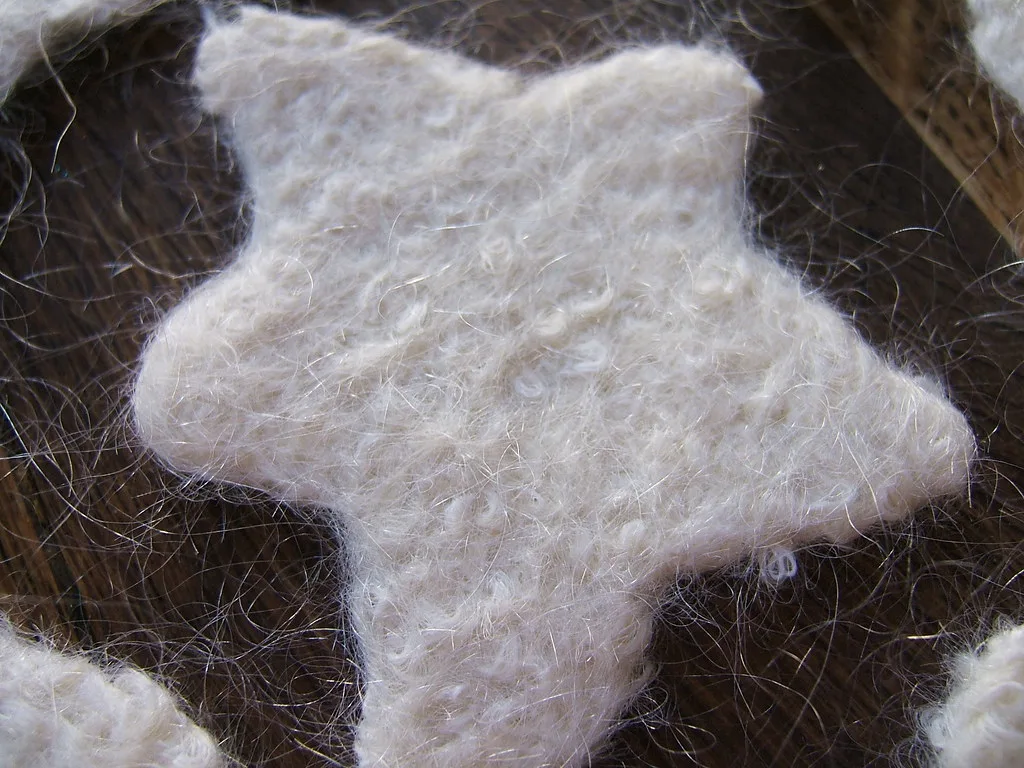
The felted cat cave pattern
Worked in the round from the base upwards, entirely in stocking stitch. There is no shaping at all above the base, because felting will not preserve fine shaping anyway.
Base
- Cast on 8 stitches and join in the round, dividing over DPNs or a short circular.
- Round 1: knit into the front and back of every stitch. (16 sts)
- Round 2 and every alternate round: knit.
- Round 3: [k1, kfb] to end. (24 sts)
- Round 5: [k2, kfb] to end. (32 sts)
- Continue increasing 8 stitches on every alternate round, working one more plain stitch between increases each time, until you have 130 stitches — or until the flat circle measures about 52 cm across.
- Change to the 80 cm circular when the stitches no longer fit.
The base will not lie flat. It will ruffle at the edge and look wrong. Ignore this — felting flattens it.
Walls
- Knit every round, with no increases or decreases, until the piece measures 45 cm from the base.
- Cast off loosely. A tight cast-off edge felts into a hard rim that will not soften.
- Weave in the ends with a darning needle, taking them well into the fabric — felting will lock them permanently, but a short end can still work loose beforehand.
That is the entire pattern. It is 45 cm of plain knitting and it is genuinely dull, which is why most people do it in front of something.
Felting it
- Put it in a zipped pillowcase. A felting project of this size sheds an extraordinary amount of fibre, and your machine's pump will not enjoy it.
- Add friction — a pair of old jeans, or a couple of tennis balls.
- A teaspoon of detergent. No more.
- Hottest wash, longest cycle, high spin.
- Check it. Take it out, stretch it into shape, and measure. It will almost certainly need a second cycle, and often a third.
- Stop when you can no longer see individual stitches and the fabric feels like thick cloth rather than knitting.
Front loaders felt badly because they tumble rather than thrash — expect three or four cycles, and use the longest hot programme the machine has. The full method, including how to do it by hand, is in how to felt a wool sweater, which is the same process on a different object.
Shaping and drying
This is the step that decides whether you get a cat cave or a wet sack.
- Take it out while soaking wet and pull it into shape with your hands — it stretches surprisingly well at this stage.
- Stuff it over a form: a bucket upside down, a large bowl, a football, or a cushion in a bin bag. Anything the right size and shape.
- Pull the walls up and smooth the base flat against the table.
- Leave it for two to four days. It is thick felt and it dries slowly.
- Do not put it near a radiator. Fast drying makes the felt stiff and can warp the shape.
Cutting the entrance
Wait until it is fully dry.
- Stand the cave up and decide where the opening goes. Looking at the finished object is much easier than guessing at the knitting stage.
- Mark an arch with tailor's chalk — roughly 20 cm wide and 20 cm tall for an average cat, its base about 3 cm above the floor of the cave.
- Cut with sharp scissors in long, continuous strokes.
- Leave the edge raw. Felt does not fray, and a raw edge is the whole point of the material.
If the felt is thin enough to feel floppy at the cut edge, run a line of blanket stitch around the arch in a contrasting wool. It stiffens the opening and looks deliberate.
Sizing
| Finished | Knit to | Yarn | |
|---|---|---|---|
| Kitten / small cat | 32 cm × 25 cm | 42 cm × 38 cm | ~450 g |
| Average adult cat | 40 cm × 30 cm | 52 cm × 45 cm | ~650 g |
| Large cat or two cats | 48 cm × 35 cm | 62 cm × 52 cm | ~850 g |
Cats curl up smaller than their owners think. Measure yours asleep and add 10 cm.
What goes wrong
- It will not stand up. Under-felted. Run it through the machine again — this is nearly always the answer.
- It felted unevenly. The join between base and walls felts at a different rate. Stretch the tight areas hard while wet.
- It shrank far more than expected. Fine wool and long cycles compound. Next time check after every cycle.
- It did not shrink at all. Superwash yarn. Nothing can be done; use it for something knitted instead.
- The base is domed rather than flat. Too few increases. Press it flat under a weight while drying and it usually settles.
The wet felted alternative
A cat cave can also be made without knitting at all, by wet felting wool over a resist — a flat template the wool wraps around, removed through the opening at the end. It uses less yarn, gives a smoother finish and takes a good deal more physical effort. The method is in resist felting, and the same principle at a smaller scale in wet felting a bowl.
Living with it
Vacuum it on a low setting and spot clean marks with cool water — do not put a finished cave through a hot wash again unless you want it smaller. The details are in can you wash felt. Wool is naturally odour-resistant and the cave will need washing far less often than a fabric bed.
Two last things that help: put it somewhere high or enclosed, and rub the inside with a little catnip. Cats ignore new furniture on principle, and both of those shorten the standoff. If you would rather make something the cat cannot refuse, try a felt cat toy instead.
Frequently asked questions
How much yarn does a felted cat cave take?
Between 500 and 800 g of pure wool for an adult cat, depending on how thick you want the walls. It is a large object made of solid felt, and running out halfway through is the most common thing that goes wrong.
What yarn do you use for a felted cat cave?
Non-superwash 100% wool in aran or chunky weight, worked with two or three strands held together. Anything labelled machine washable or superwash will not felt at all, and a wool blend below about 80% wool will not felt enough to hold its shape.
How much does a knitted cat cave shrink?
Roughly 30 to 40% in height and 20 to 30% in circumference. Knit it about 40% larger than the finished size you want and expect the height to lose more than the width.
Do you knit the entrance or cut it?
Cut it. Felted wool does not fray, so cutting the opening after felting gives a cleaner arch, lets you place it once you can see the finished shape, and removes all the shaping from the knitting. Knitted openings distort in the wash.