Felt Bucket Hat: Wool Felt Against Cotton, Fit, Care and Sewing Your Own
8 min read
We may earn a commission from links on this page, at no extra cost to you. As an Amazon Associate I earn from qualifying purchases. Learn more.
A felt bucket hat is the soft cotton bucket shape made in wool felt: a flat-topped crown and a brim that slopes down all round, warm enough for fall and winter and light rain. Blocked against sewn felt, wool against polyester, how it should fit, how to keep the brim from flopping, and three ways to make one.

The bucket hat is a cotton hat by reputation: a soft, washable crown with rows of stitching round the brim to give it body. Make the same shape in wool felt and it changes season. The felt is thick enough that the brim holds its slope without stitching, it blocks wind, it sheds a light shower, and it can be steamed back into shape when it has been crushed in a bag. What you get is the casual shape in a material made for cold, damp weather.
It is also a hat that wears well on almost anyone, because the brim slopes down evenly all round and there is no pinch, crease or snap to get right.
What is a felt bucket hat?
A hat with a fairly flat top, a crown with straight or slightly sloping sides, and a brim that angles down all the way round. The brim is usually about 2–2½ in (5–6.5 cm) wide, measured from the base of the crown to the edge, though fashion versions run wider. It sits loosely, on top of the head rather than pulled down over it, and it has no crease or dent in the crown.
The origin usually given for the shape is Irish farmers and fishermen in the early 20th century, who wore soft wool felt or tweed hats with downturned brims against the rain. That story is widely repeated and hard to pin down, so take it as tradition. Cotton versions went on to military and outdoor use, and the bucket hat has moved in and out of fashion repeatedly since, which is why most of the ones for sale today are cotton.
Bucket hat, cloche or fedora?
- Against a cloche. A felt cloche hat has a deep, rounded crown and is pulled down to the eyebrows, with a short brim or none. A bucket hat has a flatter top, a wider brim and a looser fit. Soft, wide-brimmed cloches and felt bucket hats are often sold under each other's names; how the hat sits on your head is the best test.
- Against a fedora. A fedora has a creased crown, a front pinch and a brim that is snapped down at the front and flat or up at the back. A bucket hat has none of those. The fedora's shapes are covered in types of felt hats.
- Against a fishing or walking hat. Much the same hat. Tweed and waxed-cotton versions sold as walking or fishing hats are bucket hats in another fabric.
Felt or cotton?
They are different hats for different months.
| Wool felt bucket hat | Cotton bucket hat | |
|---|---|---|
| Season | Fall, winter, cool spring | Summer, sun |
| Rain | Sheds a shower; wets through in a downpour | Soaks through quickly unless treated |
| Wind | Blocks it | Lets it through |
| Brim body | From the thickness of the felt | From rows of stitching |
| Washing | Not washable; brush and spot clean | Usually machine washable |
| Reshaping | Steam resets a crushed brim | Iron, or nothing |
The washing line matters. A wool felt bucket hat that goes in the washing machine shrinks and thickens, because a washing machine is exactly how wool is felted on purpose. Treat it as you would any felt hat.

Blocked or sewn felt?
Felt bucket hats are made two ways, and you can usually tell which from the photographs.
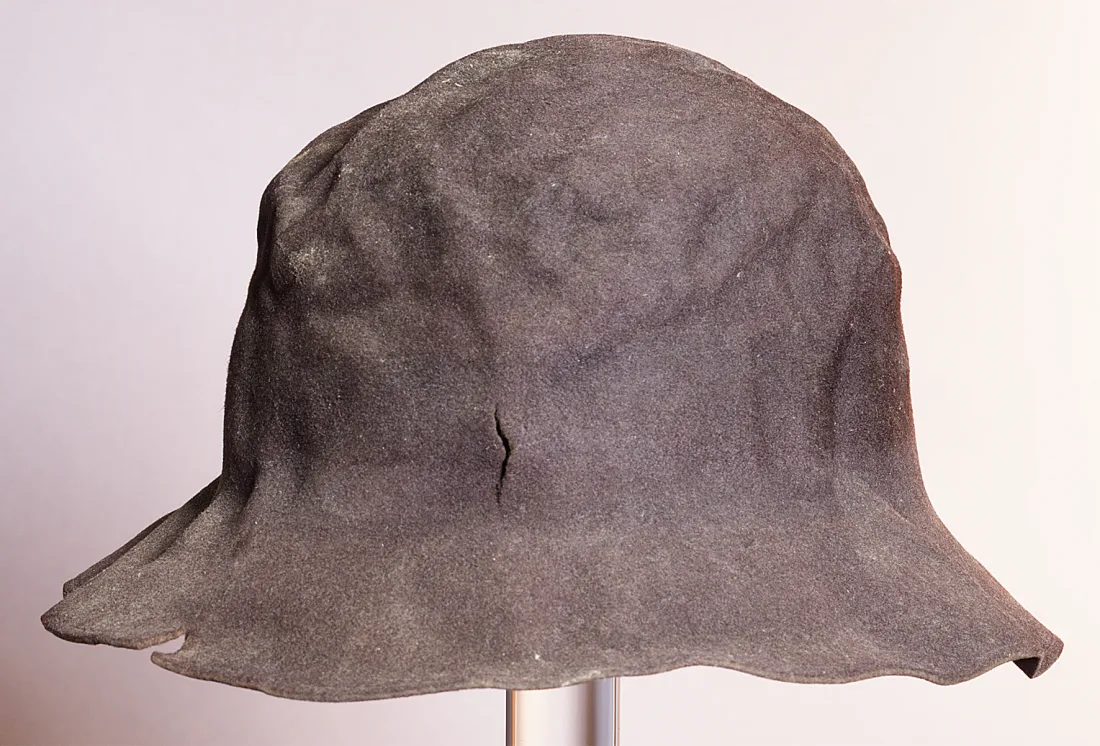
- Blocked from a felt cone. A wool felt cone is steamed and pulled over a block, so the crown is one seamless piece and the brim curves smoothly into it. These look like a soft fedora that has been left uncreased, and they reshape well with steam.
- Sewn from felt fabric. A flat top, a side band and a brim ring are cut from wool felt and stitched together, the way a cotton bucket hat is made. You can see a seam round the top and one where the brim joins the crown, and sometimes a seam down the back. These are often softer and more packable, and the raw felt edges need no hem because felt does not fray.
Neither is better as such. A blocked hat holds a cleaner line; a sewn one has a more casual, structured-panel look and packs flatter.
What to check before you buy
- Fiber content. "Felt" on its own often means polyester. Look for 100% wool, or a stated wool blend. Polyester felt looks flat and slightly shiny, keeps its pills instead of shedding them, and does not respond to steam the way wool does. If the label is missing, the felt hat burn test on a single fiber from inside the band will show which it is.
- Brim width. About 2–2½ in is the classic proportion. Wider brims shade the face more and look more fashion-led; much narrower and the hat starts to read as a beanie with a lip.
- Lining and band. A cotton or satin lining and a fabric band inside make a wool hat more comfortable on the forehead, especially for anyone who finds wool itchy.
- Crushable or not. Most felt bucket hats are made from soft, unstiffened felt so they can be packed. If you want one that keeps a crisper brim, look for one described as firm or blocked, and accept that it should not be folded.
- Size in inches. Many are sold as S/M and L/XL or "one size". The measurement is more useful than the letters.
How should a bucket hat fit?
Comfortably rather than tightly. A bucket hat sits on top of the head with the brim level or tipped very slightly forward, and the band should rest just above the ears without pressing. If it comes down over your eyebrows, it is too big; if it rides up and the brim flares out, it is too small.
Measure round your head, level across the forehead and just above the ears, and match the figure to the maker's chart. For a hat that is a little loose, a strip of foam sizing tape behind the band takes up the gap; it is the simplest fix for a two-size hat that lands between your sizes. Size tables in inches and US hat sizes are in felt hats for men and felt hats for women; a bucket hat is unisex and uses the same measurements.
Keeping a felt bucket hat in shape
On a soft felt bucket hat, the brim is the only part that needs regular attention.
- Brush it, and use a lint roller. Dark felt holds every pet hair and fiber from your coat. A soft brush in one direction lifts dust; a lint roller picks up the rest.
- Steam out kinks. After the hat has been packed or sat on, hold the brim over steam for a few seconds, smooth it back into its slope with your fingers and let it cool. A hat steamer or a handheld garment steamer does it in a minute.
- Leave the stiffness alone. A bucket hat brim is meant to be soft. If one section waves badly and will not hold after steaming, a very light coat of hat stiffener on the underside of the brim will firm it, but the hat will no longer roll into a pocket.
- Dry it slowly after rain. Blot, reshape, and let it dry on its crown at room temperature.
- Store it flat or on its crown in summer, in a bag or box with a moth deterrent. The steps are in protecting wool from moths.
Grease marks and sweat at the band are handled the same way as on any felt hat; see how to clean a felt hat.
Making a felt bucket hat
No hat block is needed for a bucket hat, and there are three ways to make one, from a sewing machine to a washing machine.
Sew it from wool felt
Three pieces, drafted on pattern paper from your head measurement:
- Top. An oval about as long and wide as the top of your head, with a perimeter equal to your head measurement.
- Side band. A strip as long as your head measurement plus seam allowance, and about 3–3½ in (7.5–9 cm) deep. Check the depth against a hat you already own; some people like a deeper crown.
- Brim. A ring whose inner edge matches the bottom of the side band and about 2–2½ in wide. A flat ring gives a flat brim. To make it slope down, cut a wedge out of the ring and close it into a shallow cone; the bigger the wedge, the steeper the brim.
Use 100% wool felt of about 1.5–2 mm for a hat that holds its brim; 1 mm is too floppy and thick industrial felt is too stiff to turn. Sew with a ¼ in (6 mm) seam allowance and press the seams open with steam, or butt the edges and zigzag them together for a flat seam. The edges can stay raw. Choosing the felt itself, by grade and thickness, is covered in wool felt fabric.
Knit it big and full it
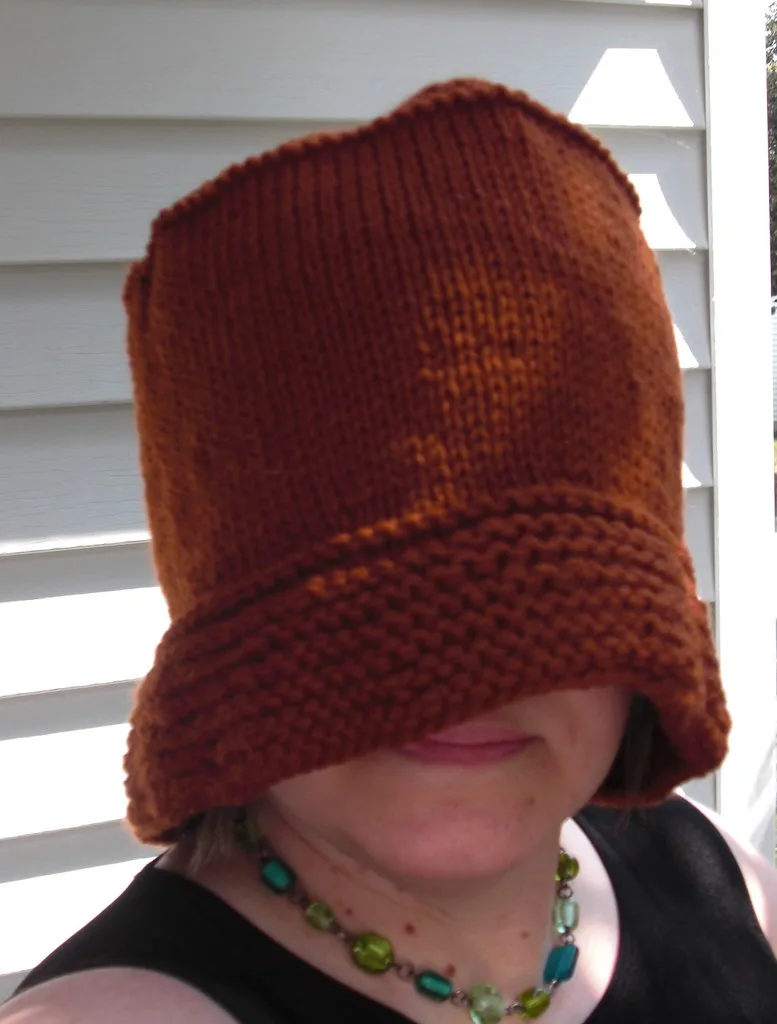
Knit the hat loosely in untreated wool yarn, not superwash, and far bigger than you want it, then run it through a hot wash so it shrinks and thickens into felt. Knitting typically shrinks by 20 to 40% when it felts, more in length than in width, so the unfelted hat often looks absurdly large. It comes out of the machine misshapen and has to be pulled into shape over a bowl or a head form while wet. Results vary with the yarn, so felt a swatch first; the sizing arithmetic is in felting in knitting.
Wet felt it from loose wool
Lay wool over a resist cut tall enough to allow for the brim, felt it, take the resist out, and full the hat to your head. A bucket shape is close to the brimmed hat in wet felting a hat, shaped with a flatter top. It is the most work of the three and gives a seamless hat entirely of your own making.
Frequently asked questions
Are felt bucket hats warm?
Warmer than cotton, and they block wind. Wool felt is a dense layer of wool, and the downturned brim covers more of the sides of the head than a fedora brim does. For hard cold a hat that covers the ears fully is warmer, but a wool felt bucket hat is comfortable through fall and a mild winter.
Can a felt bucket hat get wet?
In light rain, yes. Wool felt sheds a shower, and the brim slopes down all round so water runs off away from the face. In a downpour wool felt wets through. Blot it, push it back into shape and let it dry at room temperature, away from a heater.
Can you fold or pack a wool felt bucket hat?
Most can be rolled loosely and packed, because bucket hats are usually made from soft, unstiffened felt. Shake it out when you arrive, and steam the brim for a few seconds if it has kinked. Stiffened felt hats should not be folded.
What size bucket hat should I get?
Measure round your head just above the ears and buy by the inch or centimeter figure. Bucket hats are often sold in two sizes, such as S/M and L/XL. Take the larger if you are between them and add sizing tape inside the band.
Topics
Image credits
- A young woman with long dark hair wearing a soft, fuzzy taupe bucket hat with a short brim angled down all round — Truman Rexti (Pexels License)
- A soft dark brown felt hat with a rounded crown and a wavy brim sloping down all round, on a museum stand — Museum Rotterdam (BY SA 3.0)
- A young man with light hair wearing a black cotton bucket hat with rows of stitching on the brim, against a white background — Ron Lach (Pexels License)
- A rust-colored knitted wool bucket hat, much too big, falling over the wearer's eyes before felting — Aine D (BY SA)