Felt Insoles, Wool Boot Inserts and Felted Boot Liners
8 min read
We may earn a commission from links on this page, at no extra cost to you. As an Amazon Associate I earn from qualifying purchases. Learn more.
A wool felt insole adds a layer of still air between your foot and a cold sole, and keeps insulating when it is damp. Which thickness suits shoes and which suits boots, how felt compares with sheepskin and foam, why a tight boot cancels it out, and how to dry, wash and cut your own.
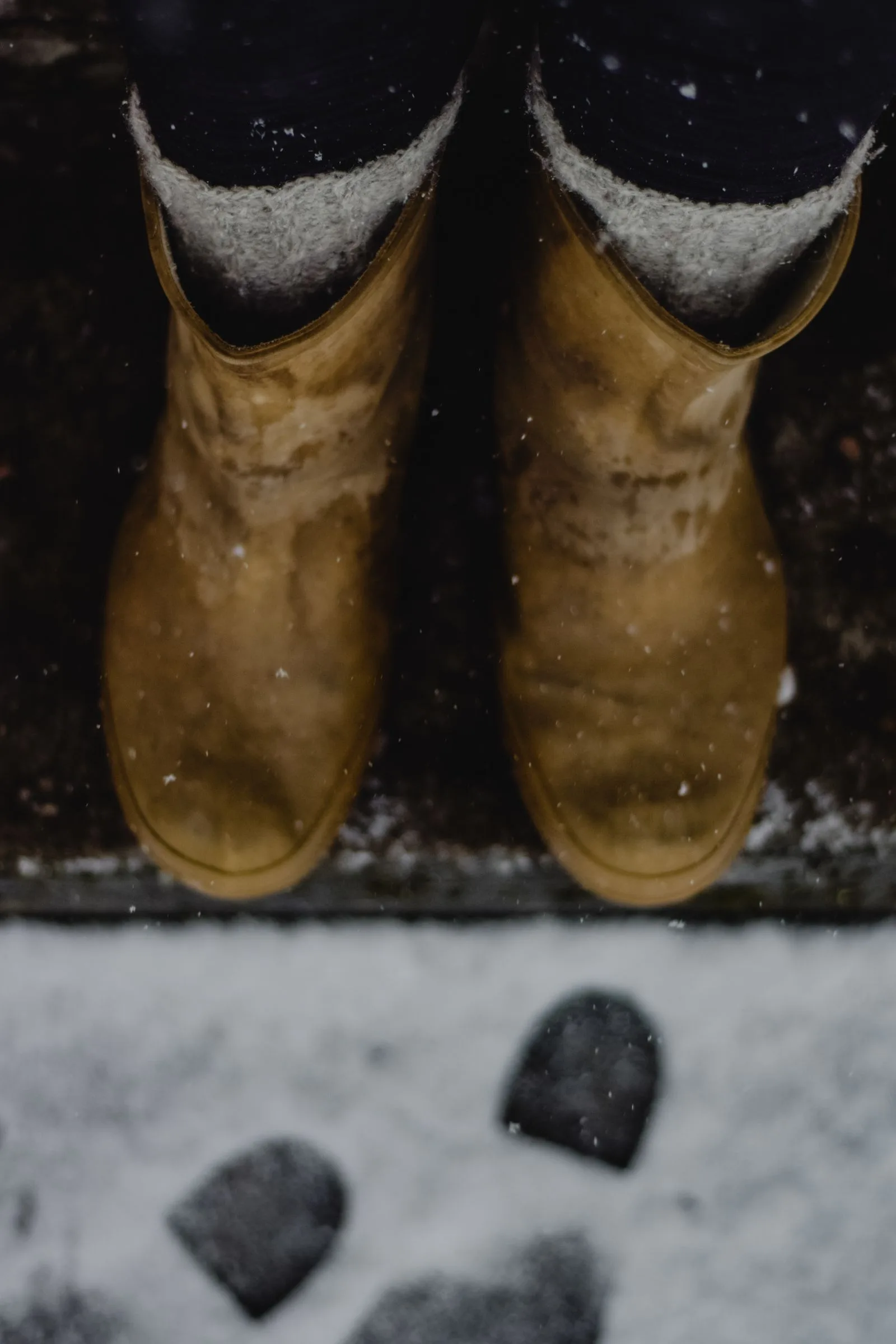
Stand still on snow for ten minutes and your feet get cold from the bottom first. The air around your boot is cold, but the ground is worse, and it draws heat through the sole by direct contact. A felt insole puts a layer of wool and trapped air in that path. The felt itself is simply a dense mat of wool fibers with a great deal of still air between them, and still air is what insulates.
Wool has one more advantage over foam: it takes up moisture from a sweating foot without feeling wet, and it keeps much of its warmth while damp. That is why wool felt has been used inside winter boots for as long as felted boots have existed, from full felt liners to a simple cut sole slipped into a shoe.
Thin insoles, thick inserts, full liners
Everything sold as a felt insole falls into one of three kinds, and they suit different footwear.
Thin wool felt insoles, about 3 to 5 mm
Pressed wool felt cut to a foot shape, sometimes with a thin latex or fabric backing. They go into ordinary shoes, ankle boots and rubber boots in place of the factory insole, or on top of it if there is room. The gain is modest warmth and a dry feel, without changing the fit much.
Thick boot inserts, about 6 to 10 mm
Roughly ¼ to ⅜ in of felt, often sold as wool felt boot inserts. These are for winter boots with room to spare: work boots bought a size up, rubber boots worn in the barn, snow boots that came with a thin foam footbed. This is the thickness that makes a real difference standing on frozen ground.
Felted wool boot liners
A full sock-shaped inner boot of felt, sole and sides together, worn inside a rubber or leather shell. This is how pac boots work: the felt does the insulating and the waterproof shell keeps it dry, and the liner pulls out to dry overnight. It is the same idea as the felt stockings worn inside leather boots across Central Asia, and a close relative of valenki, which are simply the liner worn as the whole boot.
Replacement liners are sold separately, and owning two pairs is the single best upgrade for a pac boot: one pair dries while the other is worn.
What the felt is made of

Read the fiber line before anything else. "Felt insole" alone often means polyester felt, which is cheap and hard-wearing but warms less and turns clammy when damp. Wool felt insoles say 100% wool, or name a percentage, and the difference shows as soon as your feet sweat.
- Pressed wool felt. Made by layering carded wool and compacting it with heat, moisture and pressure. Even, dense, and the usual material for thin insoles and boot inserts.
- Wet felted or fulled wool. Handmade or small-workshop felt, slightly uneven in thickness and often denser. Common in felted boot liners and handmade insoles.
- Wool blend. Wool with polyester, which resists packing down a little better and gives up some warmth and moisture handling.
- Polyester felt. The cheapest, the least warm when damp, and fine in a dry, roomy boot.
Density matters as much as fiber. A loose, springy felt feels plush in the hand and flattens within weeks under the heel. A dense felt feels firm, almost board-like, and keeps its thickness far longer. If you want a reference for what really dense wool felt feels like, press a thumb into a wool pressing mat: it barely dents. Insole felt is softer than that by design, but the denser of two insoles of the same thickness is nearly always the one that lasts.
Felt against the alternatives
| Insole | Warmth | When damp | Support | Packs down |
|---|---|---|---|---|
| Wool felt | High for its thickness | Stays warm | None | Slowly, if dense |
| Sheepskin (shearling) | High, and soft | Stays warm | None | Faster, mats under the heel |
| Foam | Moderate | Clammy | Only if molded | Varies |
| Cork footbed | Moderate | Fine | Yes, if contoured | Molds, then holds |
| Polyester felt | Moderate | Clammy | None | Slowly |
Felt and sheepskin are the warm pair. Sheepskin is the cozier one against a bare foot, which is why it dominates slippers; felt is thinner and firmer, and holds its shape better inside a boot worn with socks.
Felt does not support an arch
It is worth being clear about this, because felt insoles are sometimes sold as comfort insoles. Felt is a flat sheet that compresses under weight. It adds warmth and a small amount of cushioning, and holds nothing up. If you need arch support, the answer is a contoured cork or molded footbed, and a thin felt layer can go on top of it for warmth. Best felt slippers goes through which footbeds really support a foot and which only feel soft. Anyone with diabetes or reduced feeling in the feet should ask a podiatrist before adding thickness to a boot, because a new insole changes where pressure falls.
Fit: a tight boot is a cold boot
This is where most felt insoles fail, and it has nothing to do with the felt. Insulation works by holding still air. Squeeze a foot against the upper and you squeeze the air out of the sock, the insole and the boot lining together, and you cut circulation to the toes on top of it. A boot with a thick insert crammed into it is colder than the same boot with no insert at all.
- Take the old insole out first if the boot has a removable one, and try the felt in its place.
- Wiggle test. With the socks you will actually wear, you should still be able to move your toes freely and lift them off the insole.
- Sizing up. For a 6 mm insert, buy boots half a size larger; for a full felt liner, a full size. Thin 3 mm insoles usually need no change.
- Socks count. Thick wool socks plus a thick insole is often more than a boot will take. Decide which one you want, then size for both.
Drying them
Felt insoles take up sweat all day, and a damp insole put back into a boot the next morning is a cold one. Take them out every night and stand them on edge somewhere at room temperature. The boot dries faster with the insole out, too.
Never dry them on a radiator, a stove or a boot dryer on its hot setting. Wet wool plus heat is how felt is shrunk in the first place, and an insole dried hot comes out smaller, harder and curled at the edges. A boot dryer on a cool fan setting is fine. Cedar shoe trees in the boot overnight help pull moisture out of the lining while the insoles dry separately. The same rule for whole felt boots is in valenki.
Two pairs, swapped daily, wear better than one pair worn every day, because each pair gets a full day to dry and recover its thickness.
Washing
Wool is naturally slow to smell, and airing is usually enough. When a pair does need washing:
- Soak in cool water with a small amount of wool wash for ten minutes.
- Press the water through them with flat hands. Do not rub, scrub or wring; that is friction, and friction felts.
- Rinse in water at the same temperature. A sudden change from warm to cold also shrinks wool.
- Roll in a towel and press to take out most of the water.
- Reshape and dry flat at room temperature, turning them once.
Machine washing and tumble drying will felt them further and shrink them. Can you wash felt explains why, with the few exceptions.
How long they last
Felt insoles wear by compression rather than by holes. The patch under the heel and the ball of the foot flattens first, and with it goes most of the warmth at exactly the places that touch the ground. A dense pair in daily winter use is often good for a season or two; a loose, fluffy pair can be flat within weeks. When the heel area is noticeably thinner than the arch, replace them. Rotating two pairs and drying them properly is what stretches the life.
Cutting your own
Cutting your own from a sheet of thick wool felt takes a paper template and sharp shears, and it is the only way to get an exact match for an odd-shaped boot.
- Use 100% wool felt, 3 to 5 mm for shoes, thicker for boots. Craft felt is too thin and usually acrylic. Wool felt fabric covers thicknesses and where to buy them.
- Trace the boot's existing insole, or stand on paper and draw around your foot with the pencil held upright, then smooth the line.
- Mark a left and a right. Flip the template for the second one; two identical insoles is the classic mistake.
- Cut on the line with sharp shears, or a rotary cutter on a mat for anything over 3 mm.
- Test and trim. Slide each one in and stand up. Trim a little at a time from the toe; felt does not stretch back.
For a thicker insert, cut two layers and stitch them together around the edge with a running stitch, or glue them with a flexible fabric glue applied in dots so the felt still breathes.
Wet felting a pair
Insoles can also be wet felted from loose wool: several crossed layers laid over a paper template about 65 to 70% larger than the finished size, the same allowance as a wet felted slipper, felted with hot soapy water, then fulled hard and pressed flat to dry. Use a coarse, hard-wearing wool rather than fine merino, which packs down quickly under a heel; best wool for felting compares them. The method is the same as the sole of felted slippers, without the upper, and it needs the same long fulling until the felt is truly dense.
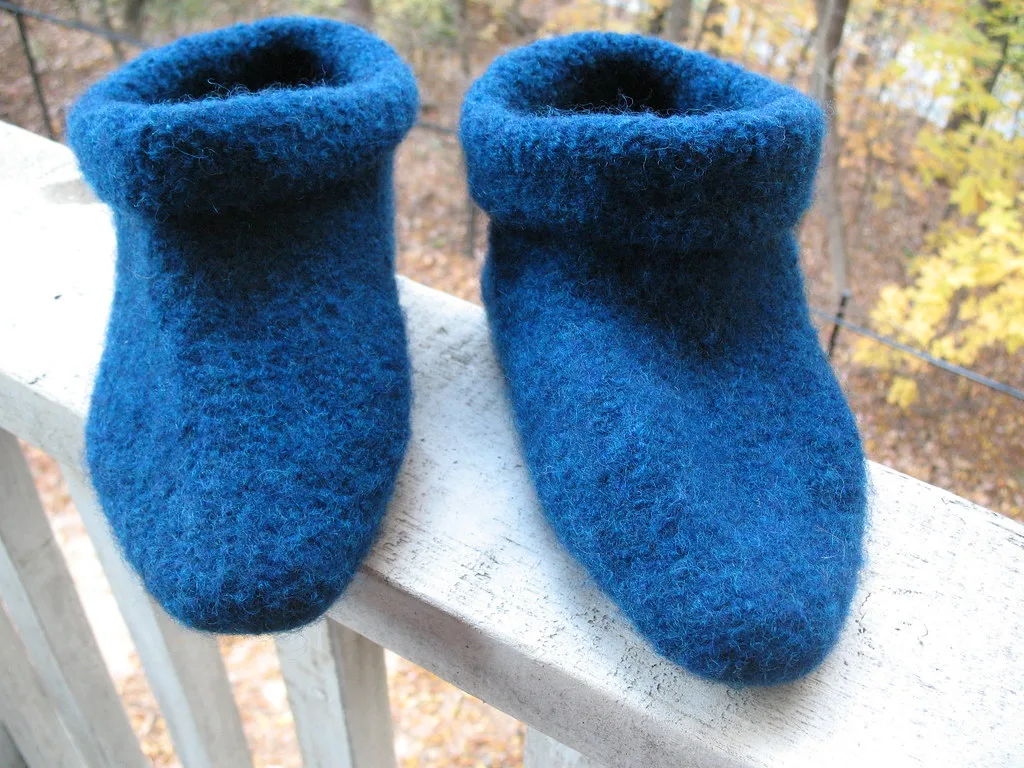
If you are making the whole slipper or boot rather than an insole, a wet felted sole will still wear through at the ball of the foot eventually; slipper soles covers leather and rubber soles for handmade footwear.
Frequently asked questions
Are wool felt insoles warm?
Yes, they are warm for their thickness, because felt holds a lot of still air and wool keeps much of its insulation when it is damp from sweat. They only work if the boot has room for them: an insole that squeezes the foot against the upper makes the boot colder, not warmer.
How thick should felt insoles be?
About 3 to 5 mm for shoes and boots worn with ordinary socks, and about 6 to 10 mm (roughly ¼ to ⅜ in) for roomy winter boots. Anything thicker belongs in a boot bought a size large for it.
Can you wash wool felt insoles?
By hand only, in cool water with a little wool wash, pressed rather than rubbed, then rolled in a towel and dried flat at room temperature. Never machine wash or tumble dry them: heat and agitation shrink felt, and the pair comes out smaller and harder.
Do felt insoles give arch support?
No. Felt is flat and compresses under load, so it adds warmth and a little cushion but holds nothing up. For support you need a contoured cork or molded footbed; a thin felt layer can sit on top of one for warmth.
Should you size up boots for felt insoles?
For a thick insert, yes: half a size for a 6 mm insole, a full size for a full felt liner. A thin 3 mm insole usually fits in place of the boot's own insole without a size change.
Are felt insoles better than sheepskin?
They are firmer, thinner and hold their shape longer. Sheepskin is softer and cozier against a bare foot but packs down and mats faster under the heel. Felt suits boots worn with socks; sheepskin suits slippers and boots worn barefoot.
Topics
Image credits
- Looking down at a pair of tan suede boots on a dark step at the edge of fresh snow, with gray wool showing at the boot tops — Eva Bronzini (Pexels License)
- Close-up of a plain gray felt surface showing its matted fibers — Emmanuel Correia (Pexels License)
- A pair of dark blue felted wool slipper boots with turned-down cuffs on a white porch railing, autumn trees behind — rmkoske (BY SA)