Felt Desk Mat: Wool or Polyester, Size, Backing and Care
8 min read
We may earn a commission from links on this page, at no extra cost to you. As an Amazon Associate I earn from qualifying purchases. Learn more.
A felt desk mat or desk pad is a 3–5 mm sheet of wool or polyester felt that covers the part of the desk your hands use. How wool and polyester felt differ, which size fits a keyboard and mouse, which backing stays put, how a mouse tracks on felt, and how to clean one.
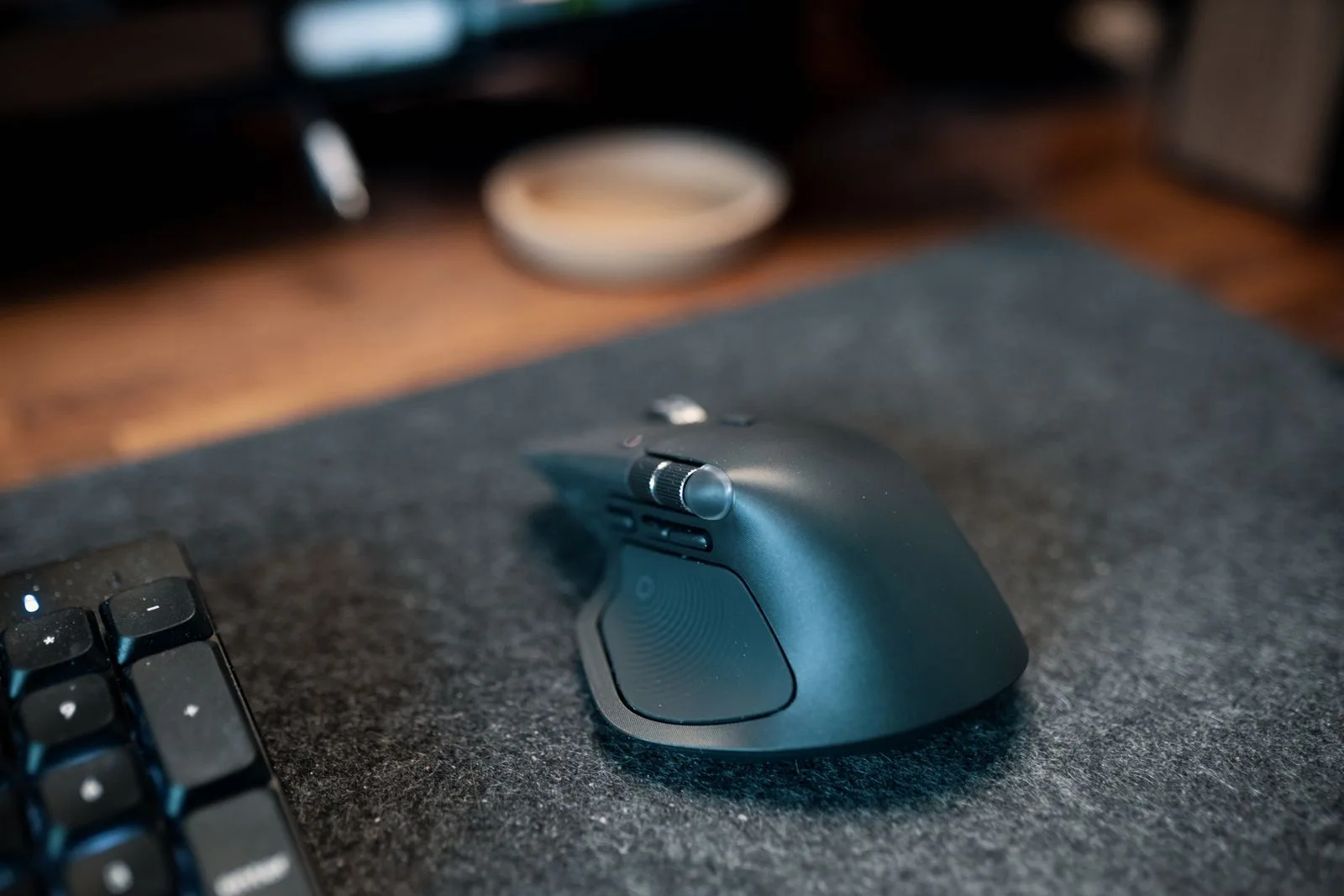
A felt desk mat is a single sheet of felt, usually 3–5 mm thick, laid over the part of the desk your forearms, keyboard and mouse use. It takes the chill and the hard edge off a wood or laminate top, quiets the clack of a keyboard a little, protects the finish from scratches and mug rings, and gives a mouse a surface to run on without a separate pad.
Shops also call it a felt desk pad, a wool desk mat or an oversized mouse pad. Whatever the name, it is made of one of two materials, wool felt or polyester felt, and knowing which one a listing is selling answers most of the other questions.
Wool felt or polyester felt
They look much alike in photographs. In the hand they are different products.
| Wool felt | Polyester (PET) felt | |
|---|---|---|
| Feel | Soft, dense, dry and slightly warm under the wrists | Firmer and a little scratchier; can feel plasticky at the edges |
| Look | Matte, often heathered gray or charcoal, with visible fiber | Flatter color, wider choice of brights |
| Wear | Sheds lint for the first weeks, then settles; pills slowly | Pills and goes shiny in the mouse area sooner |
| Spills | Resists for a few seconds, then absorbs | Absorbs, but dries faster |
| Flattening | Steam through a cloth | Weight only; heat can glaze it |
| Washing | Spot clean; machine washing can shrink it | Gentle hand washing is fine |
| Cost | The more expensive of the two, sometimes by a lot | The cheaper option |
Wool desk mats are sometimes sold as merino felt and sometimes simply as 100% wool; either way the felt is pressed dense. Polyester felt mats are often made partly from recycled bottles, which is the same material used for most acoustic felt wall panels. Listings are not always clear; "felt" with no fiber named is almost always polyester. If you already have one and do not know, a single fiber snipped from the underside and burned tells you: wool smells of burnt hair and crumbles to ash, polyester melts into a hard bead. The method is in the burn test page.
What size felt desk mat do you need?
Measure before buying, with the keyboard where it sits and the mouse moved to the far ends of its usual range. Most mats are sold in a few standard sizes, usually given in centimeters and converted.
- About 9 × 7 in (23 × 18 cm). A felt mouse pad. Fine if you only want the mouse on felt.
- About 23.6 × 11.8 in (60 × 30 cm). A compact keyboard and a mouse, or a laptop and notebook. Tight for a full-size keyboard.
- About 31.5 × 15.7 in (80 × 40 cm). The common size: a full keyboard and a mouse with room to move.
- About 35.4 × 15.7 in (90 × 40 cm). The same with more space for the mouse, or for a notebook beside the keyboard.
- About 47 × 24 in (120 × 60 cm) and up. A full desk pad covering the front of the desk, under a laptop stand and monitor base as well.
Depth is the dimension people get wrong. If you rest your forearms on the desk while typing, you want the mat to reach under them, which means at least about 15–16 in (40 cm) deep. A shallow mat leaves the edge of the felt pressing a line into your wrists.
Thickness
Most felt desk mats are 3–5 mm. Around 3 mm is thin and light, rolls easily and lies flat once settled. Around 4–5 mm feels noticeably more cushioned, damps keyboard noise more and stays flatter at the corners, but the step up from desk to mat is more noticeable at the front edge. Above about 5 mm, a mouse and keyboard start to feel as if they are sitting on something soft.
Thickness also shows density. A thin, dense wool felt can feel firmer than a thick, loose polyester one. The heavier the mat for its size, the denser it is. The thickest, densest wool felt is the material of a wool pressing mat, about ½ in thick and hard enough to iron on; a desk mat is a much thinner relative.

Backing: what keeps it in place
- Plain felt both sides. The cheapest construction. A dense wool mat is heavy enough to stay put on most wood desks; a light polyester one can creep on glass or glossy laminate.
- Cork. Grips well, adds a little stiffness and is kind to wood finishes.
- Natural rubber or silicone dots. The firmest grip. On some painted or oiled finishes rubber left in one place for months can leave a mark, so lift the mat now and then.
- Reversible, felt and faux leather. Two surfaces in one; the leather side is for writing. The felt side is usually thinner on these.
Using it: mouse, writing and drinks
Mouse tracking
Almost every modern mouse tracks on felt without trouble. The glide is slower and more controlled than on a smooth cloth gaming pad; for office work most people prefer it, for fast games some do not. Where a mouse does skip, the cause is usually very fuzzy felt, with loose fibers that confuse the sensor, and some mice also read very light-colored felt poorly. Darker, denser felt usually solves it, and the mouse area usually tracks better once the loose surface fibers have worn down after a few weeks.
Writing on felt
Felt is too soft to write on a single loose sheet; the pen pushes through or makes the line wobble. Write on a notebook or a pad of paper, which gives enough backing, or keep a leather or card blotter on one end of the mat.
Mugs and spills
A felt mat protects the desk from mug rings, but the felt itself takes the stain instead. Wool sheds liquid for a few seconds before it soaks in, which is the window to blot. Keep a coaster on the mat for coffee; there are ways to make one in felt coasters. Pens and cables are better kept off the felt altogether, in a tray or a small bin; felt storage baskets covers which ones keep their shape.
Cleaning and care
- Weekly. Run a lint roller or a vacuum brush over it. Felt holds dust, crumbs and pet hair; a dark mat shows them.
- Spills. Blot hard with a dry cloth straight away, then dab with cool water and a drop of mild detergent or wool wash, blot again and leave flat to dry. Do not rub; rubbed wet wool felts further and leaves a matted patch.
- Pills. Pick or brush them off with a stiff brush. Shaving them thins the surface.
- Washing. Do not put a wool mat in a washing machine. Heat and agitation can shrink it noticeably and make it ripple. Polyester mats survive a gentle hand wash in cool water. More on this in can you wash felt.
- Moths. A wool mat in daily use is rarely touched. One stored away for months should be clean and sealed.
Curled edges
Most mats arrive rolled and want to stay that way. Lay it flat, roll it briefly the other way, then put books on the corners for a day or two. For wool, steam is faster: lay a damp cotton cloth over the curled area and press lightly with a warm iron, then leave it flat to cool. Do not iron polyester felt. It softens and glazes under heat well before wool would come to harm.
Making your own
A desk mat is only a rectangle, so making one is mostly a matter of buying the right felt. Get wool felt 3–5 mm thick by the sheet or the yard, lay it on a cutting mat, and run a sharp rotary cutter along a steel ruler, pressing lightly and going over the line again until the blade is through. Round the corners with a coin or a cup as a template. The edge will be clean, because felt has no weave to fray. Which grades and thicknesses are sold, and how to tell wool from blends, is in wool felt fabric; a felt cutting machine can do curved or shaped mats if you have one.
A handmade wet felted mat is possible too, but getting a large piece perfectly even and flat by hand is hard. A commercial pressed felt is far more uniform, and evenness is what a mouse needs.
When felt is the wrong desk surface
- Heavy writing or drawing. If most of the desk time is pen on paper, a leather or vinyl blotter is firmer and wipes clean.
- Lots of liquids. A desk that doubles as a workbench for paints, glue or soldering is better with a wipeable or heat-proof mat. Felt soaks up whatever lands on it.
- A house full of shedding pets. Felt collects hair and holds it. It comes off with a roller, but it comes back daily.
- Very fast gaming. Players who want a mouse to glide with almost no resistance usually prefer a smooth cloth or hard pad.
For everyone else, a dense wool mat is one of the few desk accessories that improves with age: the surface settles, the lint stops, and the mouse track wears into a smooth, even patch.
If the room itself echoes, felt helps on the wall too: soft panels behind a desk do more for an echoing home office than the mat does for keyboard noise, and felt wall panels covers which ones actually absorb sound.
Frequently asked questions
Is a wool desk mat better than a polyester felt one?
Wool felt is denser, feels softer and drier under the wrists, pills less in the mouse area over time and can be flattened with gentle steam. Polyester felt is cheaper, comes in more colors and is easier to wash, but it tends to look tired sooner and cannot be pressed with a hot iron. For a mat you use all day, wool is worth it.
What size felt desk mat do I need?
Measure the keyboard plus the mouse's range of movement. For a full keyboard and a mouse, about 31.5 × 15.7 in (80 × 40 cm) is the usual size; 35.4 × 15.7 in (90 × 40 cm) gives more room. A mat that covers the whole front of the desk is usually around 47 × 24 in (120 × 60 cm).
Does a mouse work on a felt desk mat?
Most modern optical and laser mice track normally on felt. Glide is slower than on a smooth cloth gaming pad, which many people find gives more control. If a mouse stutters, very fuzzy felt is the usual suspect, and some mice also struggle on very pale felt; a darker, denser, tighter surface usually fixes it.
How do you clean a felt desk mat?
Lint-roll or vacuum it weekly. Blot spills at once with a dry cloth, then dab with cool water and a little mild detergent, blot again and dry flat. Do not machine wash a wool mat: it can shrink and cup. Polyester felt tolerates gentle hand washing better.
How do I stop a felt desk mat from curling?
Most curl comes from being shipped rolled. Lay it flat, roll it briefly the opposite way, and leave books on the corners for a day or two. A wool mat can also be pressed flat with steam through a cloth. A polyester mat should not be ironed; heat can glaze or distort it.
Topics
Image credits
- A dark ergonomic mouse on a charcoal gray felt desk mat, with the corner of a black keyboard in the foreground — Josh Sorenson (Pexels License)
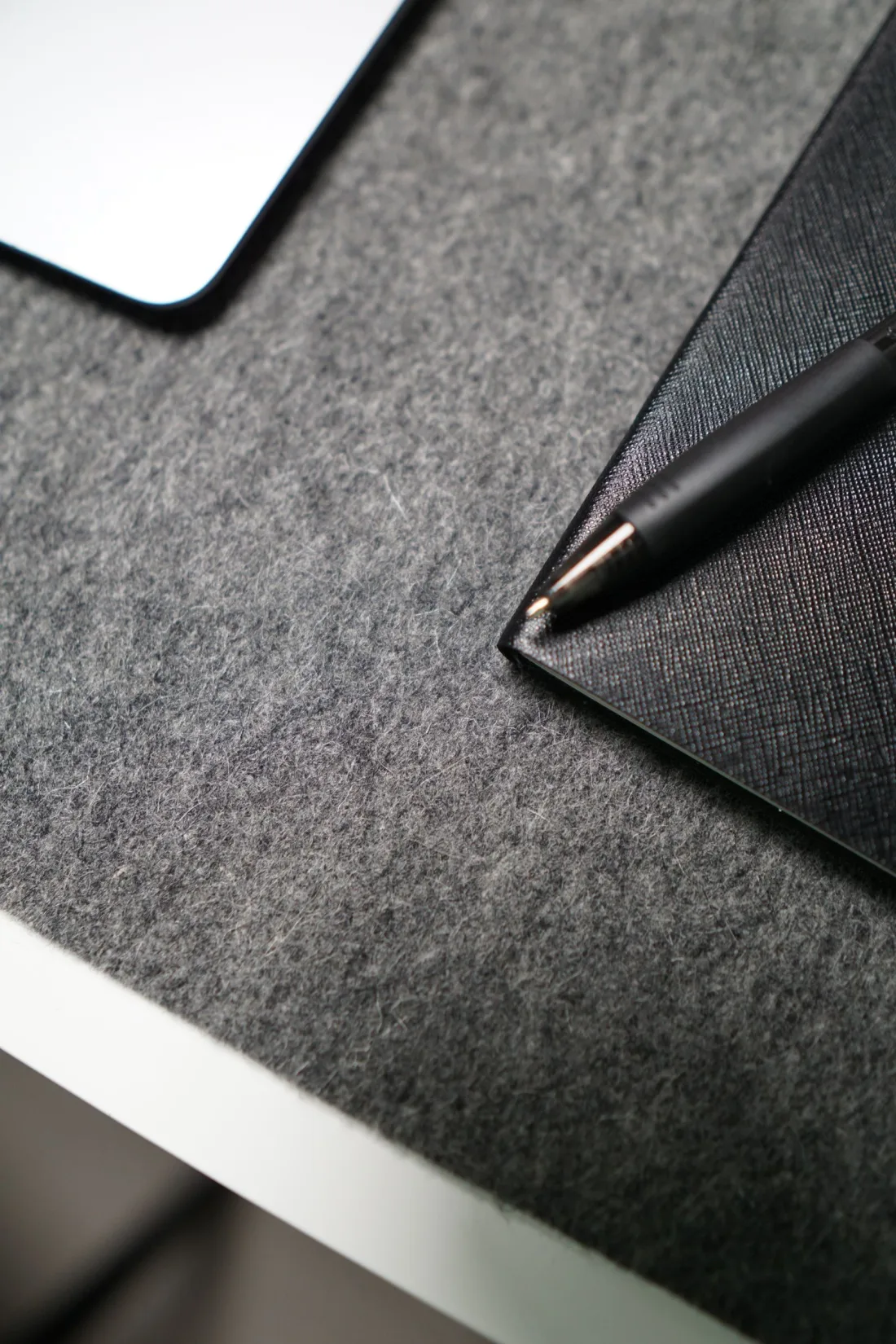
- Close-up of a heathered gray felt desk mat with loose surface fibers, a black notebook and a black pen on it, at the edge of a white desk — Oladimeji Ajegbile (Pexels License)
- Top view of a light gray felt desk mat on a wooden desk, with a tablet, white earbuds and part of a keyboard on the felt — thiago japyassu (Pexels License)
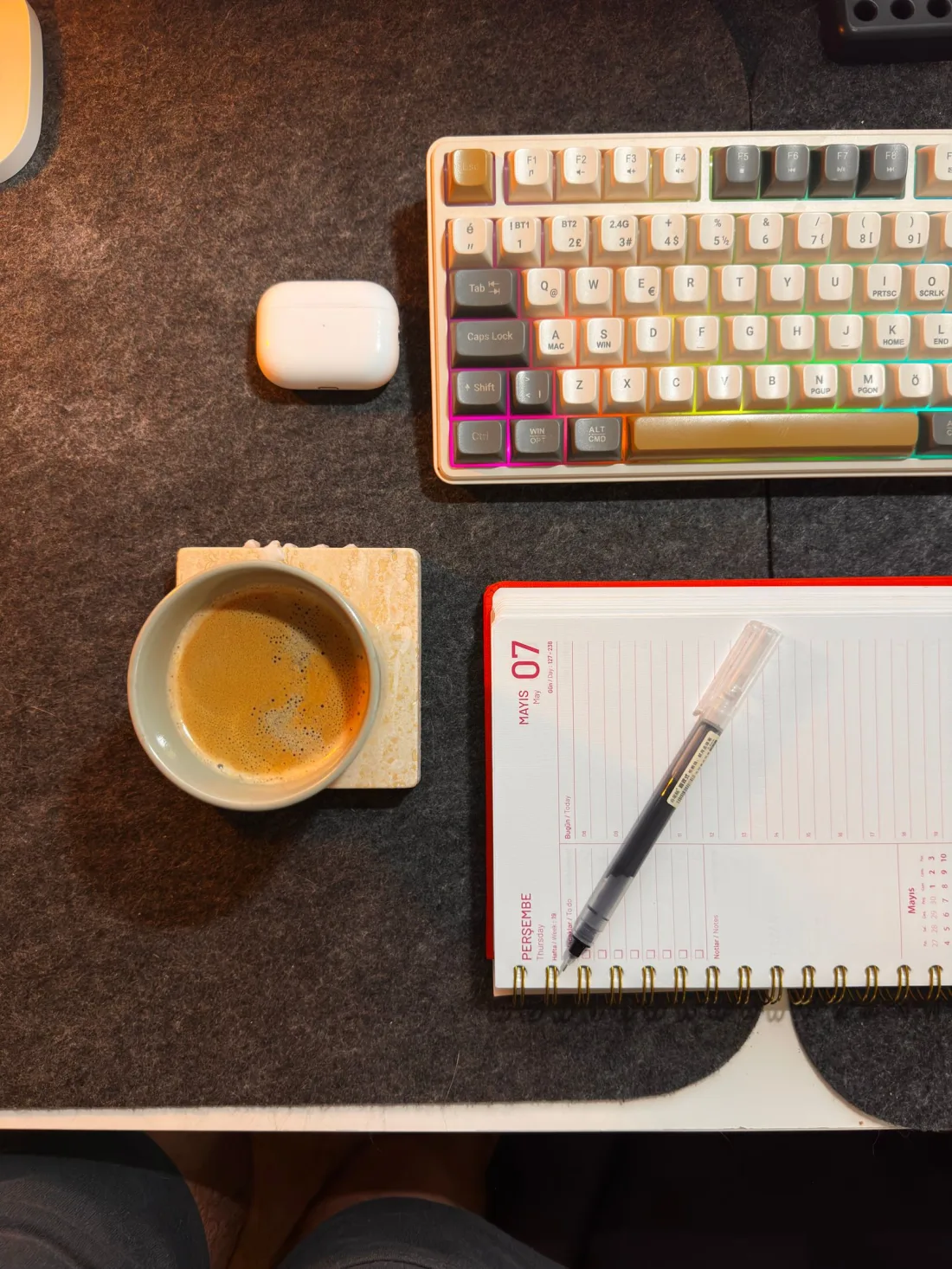
- Top view of a dark gray felt desk mat with a keyboard, earbuds case, a coffee cup on a stone coaster and an open spiral planner with a pen — onur bozkurt (Pexels License)