Felt Storage Baskets and Bins: Polyester, Wool and Felted
9 min read
We may earn a commission from links on this page, at no extra cost to you. As an Amazon Associate I earn from qualifying purchases. Learn more.
Most gray felt bins are polyester, a few are pressed wool, and handmade felted baskets are a third thing again. How each stands, cleans and ages, which thickness holds its shape, the sizes that fit cube shelves, and how to sew one from a sheet of thick felt.
Turn a gray felt storage bin over and read the sewn-in label. More often than not it says 100% polyester, often recycled from plastic bottles. The heathered gray that looks like wool is usually two colors of synthetic fiber needle-punched together. That is not a reason to avoid it. Polyester felt is why felt bins are light, cheap to make and safe from moths, and many of them will go through a cold wash. But it decides how the bin stands, how it ages and how you clean it. Pressed wool felt behaves differently on all three counts.
Felted baskets, the handmade kind knitted or wet felted and then shrunk, are a third product with the same name, and the one most people mean when they search for felted baskets.
What felt bins are made of
- Polyester felt. Most fabric bins, cube inserts and "felt storage boxes" sold in sets. Typically 2 to 4 mm thick, needle-punched, sometimes stiffened with resin. Washable in many cases, never eaten by moths, and inclined to pill along the rim where hands grab it.
- Wool blend felt. Wool mixed with rayon or polyester. Softer and more matte than polyester, a little more willing to hold a shape, and usually found in smaller decorative baskets.
- 100% wool felt. Industrial pressed felt, usually 3 to 5 mm and sometimes thicker, cut and stitched into baskets. Dense, heavy for its size, and stiff enough to stand without an insert at 4 mm and up. The most expensive of the sheet-felt options and the one that looks best after ten years.
- Felted (fulled) baskets. Knitted, crocheted or wet felted from loose wool, then shrunk hard. Thick, rounded, slightly irregular, and nearly always handmade. Covered in their own section further down.
If the label is missing, the wool felt fabric guide has the burn test: wool smells of burnt hair and leaves crushable ash, polyester melts into a hard bead.
| Polyester felt | Wool felt | Felted wool basket | |
|---|---|---|---|
| Stands on its own | Only with an insert or resin stiffening | Yes, at 4 mm and thicker | Yes, if fully fulled |
| Washing | Often cold and gentle, air dry | Spot clean only | Spot clean only |
| Moths | Not eaten | Eaten | Eaten |
| How it ages | Pills, then looks tired | Softens to a matte surface | Fuzzes, then settles |
| Relative cost | The cheapest | Several times polyester | Handmade pricing |
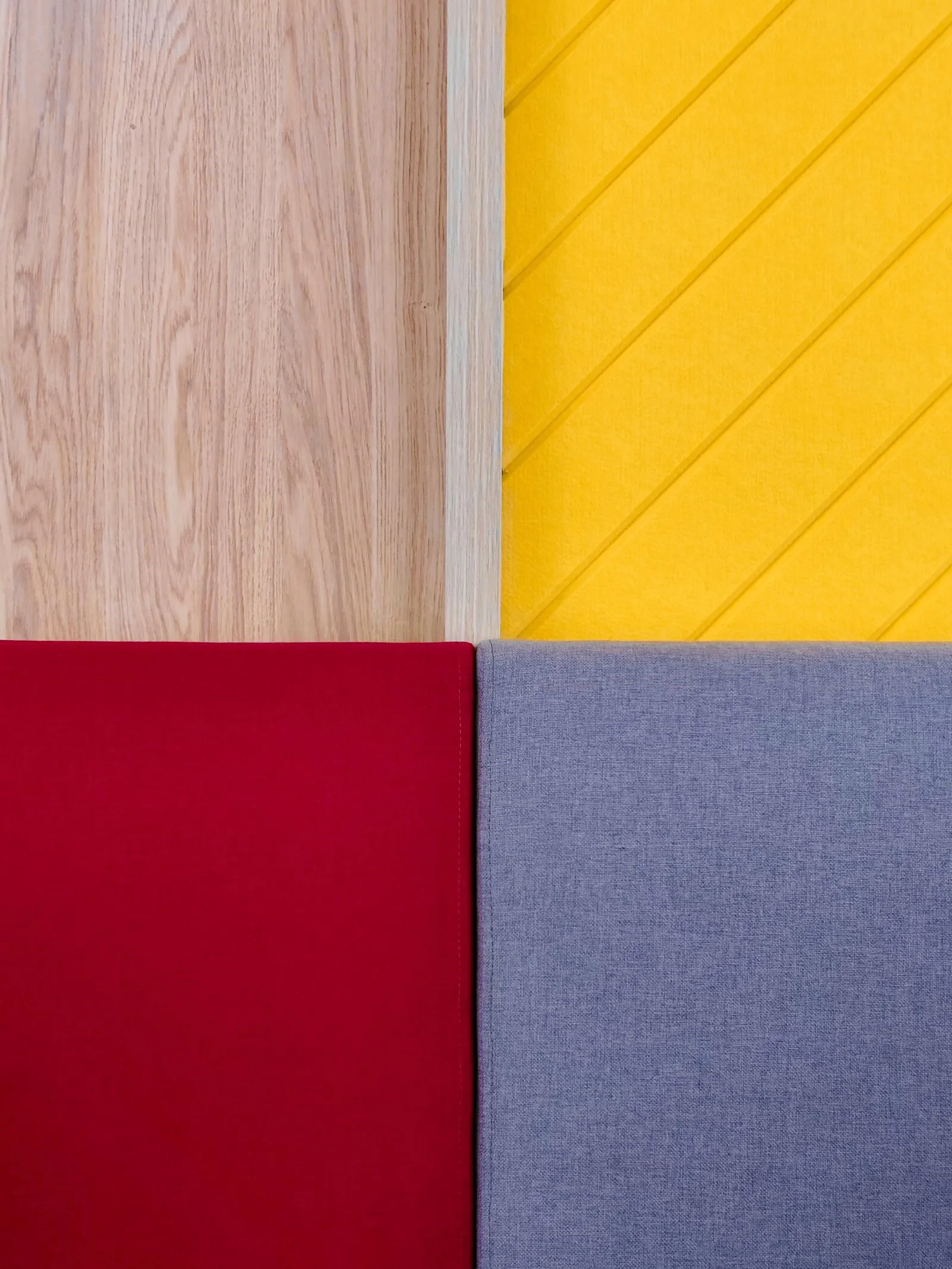
Color matching follows the fiber. Most felt wall panels are polyester, so a polyester bin in the same gray looks as if it belongs beside them, while wool felt reads warmer and slightly browner. A felt desk mat can be either, so if you are matching grays across a room, compare them side by side.
Thickness: why some bins slump
A felt wall is a sheet standing on its edge, and whether it stays up depends on how tall it is against how thick it is. Sheet felt around 2 mm folds over under its own weight once a wall is more than a few inches tall, which is why thin bins come with a board in the bottom and sometimes in the sides. At 3 mm a short basket holds itself up. At 4 to 5 mm, wool felt stands at shelf-bin height empty, and that is the thickness to look for if you want a basket without an insert.
Thickness is not always printed in a listing. Two clues stand in for it: the stated weight of the empty bin, and whether the product photos show the bin standing empty or always stuffed with towels. A bin that is only ever photographed full is a bin that slumps when it is not.
Construction helps as much as thickness:
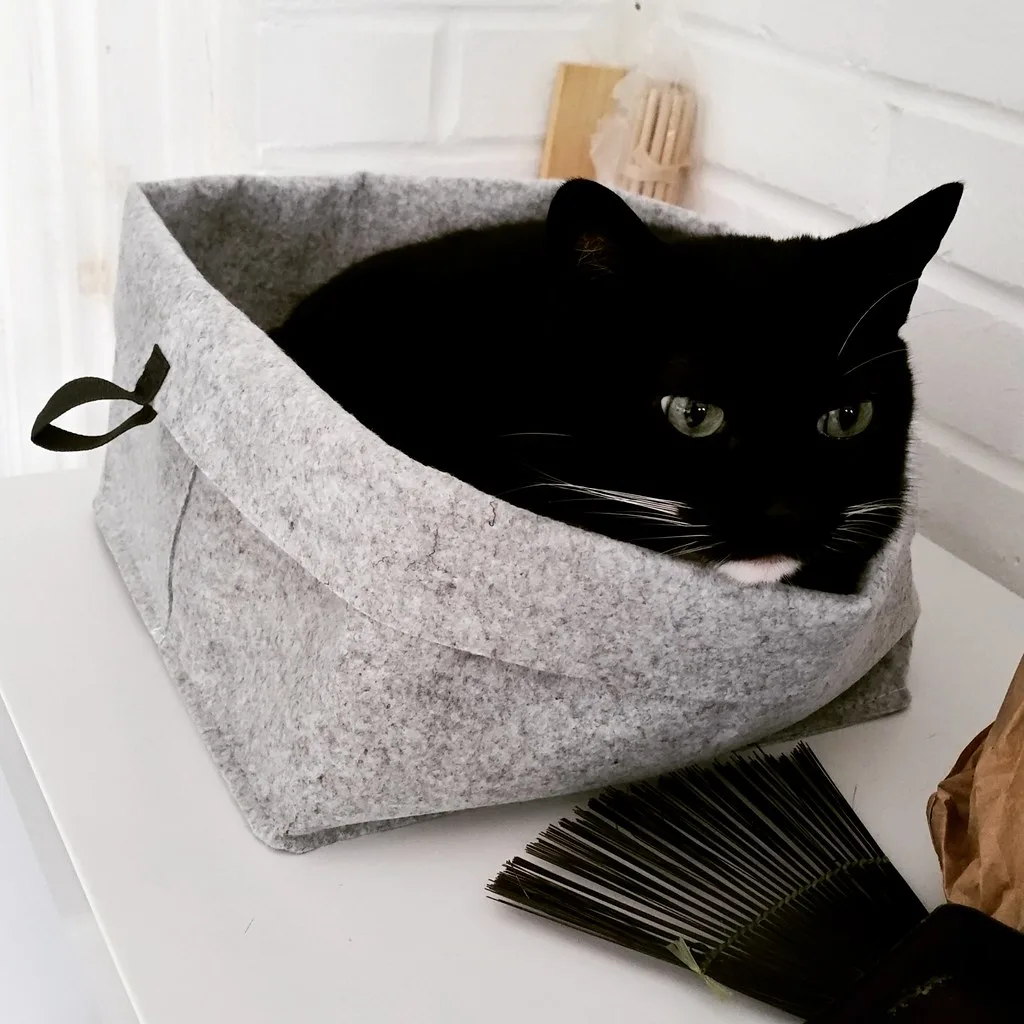
- A folded rim. The top inch or two turned over doubles the felt exactly where the wall needs it most. The gray basket at the top of this page has one, and it is why a thinner felt can still look crisp.
- A removable base board. Cardboard or plastic sheet slipped into the bottom. It stops the floor of the bin sagging into a bowl when you lift it full, and it must come out before washing.
- Stitched corners. Sewn seams outlast glued or heat-welded ones. A seam that has started to split at the top of a corner keeps going.
- Handles that are not just holes. A cut-out handle in 2 mm felt stretches and then tears. A sewn loop or riveted leather handles spread the load.
Sizes: felt storage cubes, shelf bins and baskets
Bins sold for cube shelving come in sizes that match the common cube openings, roughly 13 in and 11 in. Shelf names are not reliable, so measure the inside of one opening, width and height, and subtract about half an inch in each direction. A bin that exactly matches the opening scrapes in and out and wears through at the top corners within a year.
For open shelves, measure depth before anything else. A shelf bin deeper than the shelf hangs over the edge and gets knocked; one much shallower wastes the back of the shelf. For baskets that live on the floor, height matters most: under about 10 in a child can reach into it from standing, and over about 16 in a toy at the bottom is out of reach for everyone.
What felt baskets are good for
- Toys. Light, soft-edged and quiet. Nothing in a felt bin clatters, and nobody gets hurt when a felt bin falls off a shelf.
- Blankets and throws. A big wool felt basket beside a sofa is the most common use, and the one where wool's looks pay for themselves.
- Laundry. Felt breathes, so damp clothes do not sour as fast as they do in a plastic hamper. Choose polyester, because a laundry basket will need washing itself.
- Firewood. Thick felt log carriers protect a floor from bark and grit and can be shaken out of a door.
- Craft supplies. With one caution, below.
They are wrong for anything wet, for heavy books in thin felt (the base bows and the handles stretch), and for food, which leaves grease that felt keeps.
Wool in wool, and moths
An open wool felt basket full of yarn, roving or old sweaters is the setup clothes moths like best: undisturbed wool in a dim corner. Moths eat wool felt as readily as the wool inside it, and an infestation that starts in a stash basket moves into the basket too. Keep fiber stash in a lidded bin, ideally polyester or a sealed bag inside a wool basket, add cedar blocks, and turn the contents over every few weeks. The full routine is in protecting wool from moths.
Pet hair and lint
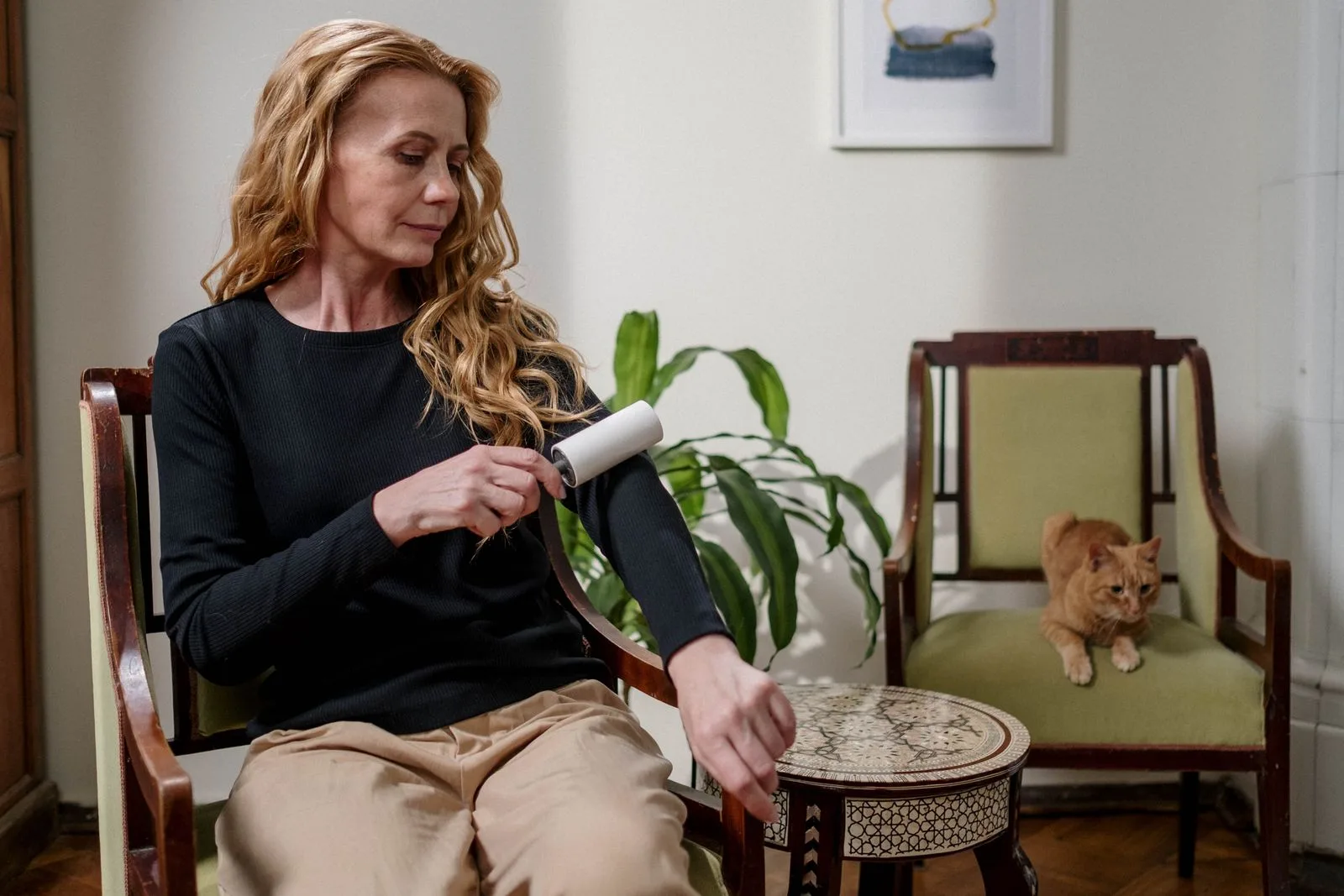
Felt has a fibrous surface with nothing slick on it, so it catches every loose hair in the house. White cat hair shows on charcoal felt, dark dog hair on cream, and a bin that also serves as a cat bed (some do, whether you planned it or not) needs cleaning every week or two.
- A lint roller is the quickest fix for a small bin.
- A slightly damp rubber glove, wiped in one direction, rolls hair into strands you can pick off. It works on both polyester and wool.
- A vacuum with a brush head handles large baskets. Keep the suction low on thin polyester, which can pucker.
If the hair is also coming out of the dryer on your clothes, that half of the problem is in dryer balls for pet hair.
Felted baskets: the handmade kind
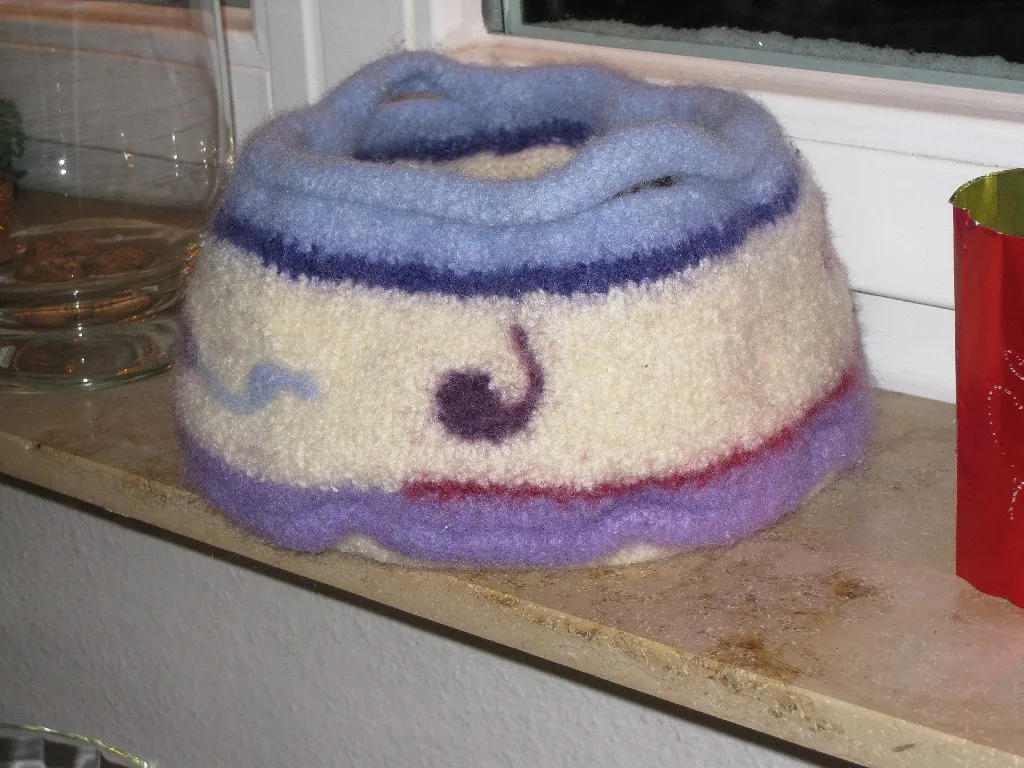
Search "felted baskets" and most of what comes up is handmade: knitted or crocheted in wool yarn at a loose gauge, run through a hot wash until it shrinks and thickens, then shaped over a box or bowl to dry. Others are wet felted from loose fiber around a resist, exactly like a wet felted bowl scaled up. They have no seams, rounded walls and a soft, slightly hairy surface, and they are some of the most satisfying projects in felting.
They behave differently from sheet-felt bins in two ways. They shrink unevenly in the making, so two "matching" baskets rarely match to the inch. And their stiffness depends entirely on how hard they were fulled: a basket that was stopped too early stays floppy forever, which is the most common fault in bought ones too. Press the wall between finger and thumb; it should feel like thick card, not like a sweater.
To make one, the knitting route is in felting in knitting, the crochet route in felting crochet, and the shrinkage you need to plan for in wool shrinkage when felting.
Care
Polyester bins
- Take out the base board first. It is usually cardboard and does not survive water.
- Follow the label. Many can be hand washed or put through a cold gentle cycle in a mesh bag; some resin-stiffened bins lose their stiffness if washed and are spot clean only.
- Air dry, reshaped, over a box. Heat from a dryer or a hot iron can glaze or melt polyester felt.
- Pills can be taken off with a fabric shaver held flat.
- A new polyester bin sometimes smells of the factory. A day or two in an airy room usually clears it.
Wool felt and felted baskets
- Never machine wash. Warm water and agitation are exactly what makes felt, and a wool basket put through the wash comes out smaller, thicker and a different shape. Can you wash felt covers what survives and what does not.
- Spot clean with cool water, a drop of wool wash and a cloth, pressed rather than rubbed.
- Reshape with steam. Wool felt softens when damp and sets as it dries, so a dented wall can be steamed, pushed back out over a box of the right size and left overnight.
- Brush the surface occasionally with a soft clothes brush to lift dust out of the fibers.
Sewing your own bin from sheet felt
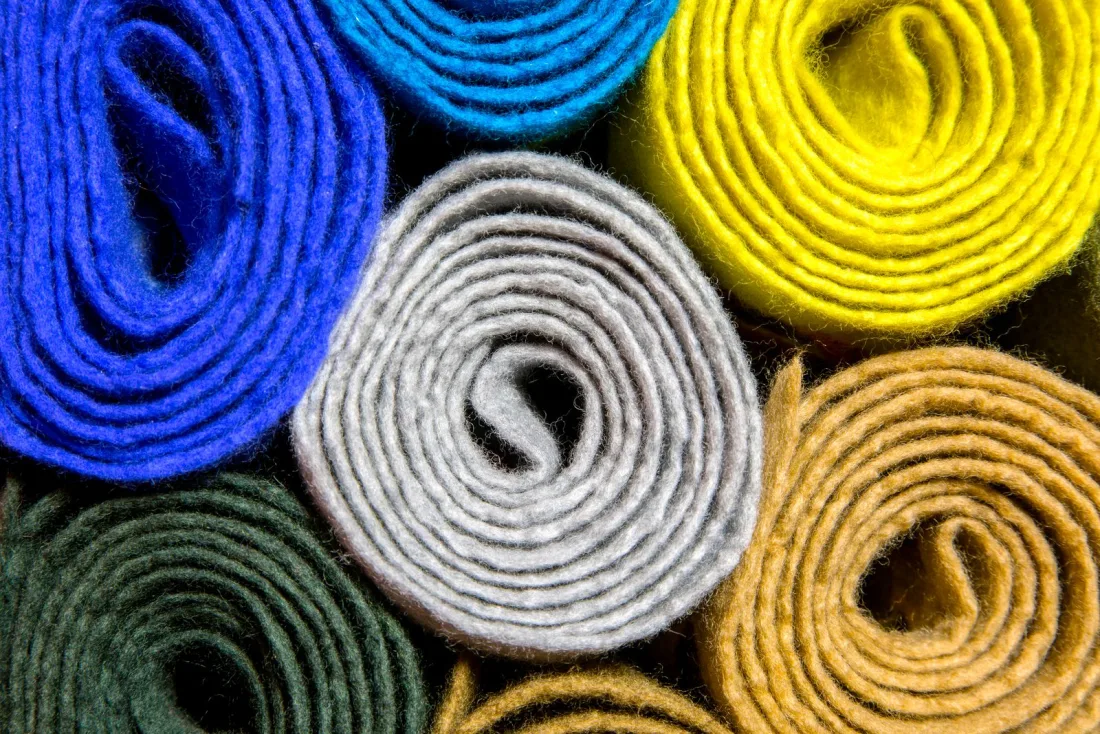
Thick felt does not fray and needs no hems, so a wool felt bin can be made from a single cut piece and four seams. Cut it in the shape of a plus sign: a rectangle for the base with a wall attached to each side. For a bin with a 10 × 8 in base and 6 in walls, the plus sign is 22 in one way and 20 in the other, with a 6 in square cut away at each corner.
- Choose the felt. 4 to 5 mm wool felt stands without an insert at this size. At 3 mm, plan to fold the rim or add a base board.
- Cut with a rotary cutter and a metal ruler, several light passes, on a cutting mat. Scissors chew thick felt and leave a ragged edge.
- Fold the walls up and hold each corner with binder clips.
- Stitch the corners with waxed thread, either a blanket stitch over the outside edge or a saddle stitch through pre-punched holes about 5 mm in from the edge.
- Add handles: leather handles riveted to the short walls, or a slot cut 1 in below the rim and finished with a line of stitching around it.
Thickness by project, and where to buy felt by the sheet or by the yard, is in wool felt fabric.
Reading a listing
- Fiber line. "Felt" alone almost always means polyester. Wool bins say 100% wool or merino felt, and say it prominently.
- Thickness in millimeters. If it is missing, assume 2 to 3 mm.
- Inside or outside dimensions. A thick wool basket loses nearly half an inch of inside width to its own walls.
- Insert. Removable is better than sewn in, because a sewn-in board means the bin cannot be washed at all.
- Handles. Sewn or riveted, not just punched holes, if it will be carried full.
- Photos of it empty. The best evidence that it stands up.
Frequently asked questions
Are felt storage bins washable?
Polyester ones usually are, by hand or on a cold gentle cycle once the base board is out, and they must air dry. Wool felt bins are not: warm water and agitation shrink and thicken wool felt, so spot clean them with cool water and a cloth instead. The fiber line on the label tells you which you have.
Why does my felt basket keep slumping?
The felt is too thin for the height of the wall. Sheet felt around 2 mm needs a stiff insert to stand; 3 mm holds a short basket; 4 to 5 mm wool felt stands on its own at shelf-bin height. A folded double rim and a board in the base fix most slumping bins.
What size felt bins fit cube shelves?
Measure the inside of the opening rather than trusting the shelf name. The two common cube openings are roughly 13 in and 11 in, and a bin about half an inch smaller than the opening in each direction slides in and out without catching.
Do moths eat felt storage baskets?
They eat wool felt, not polyester. An open wool basket holding more wool, such as yarn or roving, is the classic place for an infestation to start. Polyester bins are safe from moths themselves, but wool stored inside them is not.
Is a wool felt basket worth it over a polyester one?
For a basket that sits in view for years, usually yes: thick wool felt keeps its shape, can be reshaped with steam, and wears to a soft matte surface instead of pilling. For toy bins, laundry and anything that will need a wash, polyester is the more practical choice.