Dryer Balls for Pet Hair: Wool, Alpaca and the Routine That Works
8 min read
We may earn a commission from links on this page, at no extra cost to you. As an Amazon Associate I earn from qualifying purchases. Learn more.
Dryer balls do not pull dog or cat hair off clothes; they shake it loose so it reaches the lint screen. Used before the wash as well as after, they help a lot. How many to use, wool vs rubber vs alpaca, static, and keeping balls, cats and dogs apart.
Dryer balls do not grab pet hair. They knock it loose. A wool or rubber ball bouncing through a load flexes and beats every layer of fabric, and hair that was held only by static or a loose weave lets go and rides the airflow to the lint screen. Hair woven deep into a sweater or plastered flat by a wash stays where it is.
So the result depends less on which balls you buy than on when you use them. Put them in a short dry tumble before the wash, while the hair is still dry and loose, and they make a real difference. Used only in the final dry, the effect is mild. How the balls work in an ordinary load, and how to make your own, is in wool dryer balls.
Why pet hair survives the wash
Washing seems like the step that should remove hair, and often it makes things worse. In water, loose hair clings to wet fabric, collects in folds and pockets, and spreads across the whole load. A dog blanket washed with towels comes out with hair on every towel. When the load is spun, the hair is pressed flat into the fibers, and in a dryer without much agitation a lot of it stays there.
Dry hair is a different matter. It sits on the surface, held by static and friction, and a few minutes of tumbling with something to beat the fabric shakes most of it free. That is the job dryer balls are good at.
The routine that works
- Remove the clumps. Shake blankets and pet bedding outdoors, or go over them with a rubber brush or damp rubber gloves. Anything you can see in tufts should not go in the washer.
- Dry tumble before washing. Ten minutes on no heat or the lowest heat, with six dryer balls, with dry items only. Then empty the lint screen. This is the step that matters most, and it is usually the one people skip.
- Wash with room to move. Do not overload the drum; hair needs water moving through the fabric to rinse out. An extra rinse helps. A floating pet hair catcher in the drum collects some of what comes loose.
- Dry with the balls again. Normal heat, full set of balls. For a heavy load of pet bedding, stop halfway and clear the lint screen.
- Clean up after. Wipe the washer drum and door seal with a damp cloth, and clean the washer filter if it has one. Hair left behind ends up in the next load.
Wash pet bedding on its own, never with clothes. If a dog bed is too bulky to tumble freely, it is too bulky for the dryer balls to do anything; take the cover off and wash and dry that instead.
How many balls, and what size
Use the full set. Six for a normal load, nine for bedding and blankets, the same numbers as for ordinary use. Two or three balls in a full drum barely touch the fabric, and that is the quickest way to conclude they do not work.
Bigger and firmer is better here. Extra-large wool balls, somewhat bigger than a tennis ball, hit harder than small ones, and a soft, loosely felted ball absorbs its own impact instead of passing it to the fabric. Squeeze one: a good ball hardly gives under thumb pressure.
Wool or rubber dryer balls?
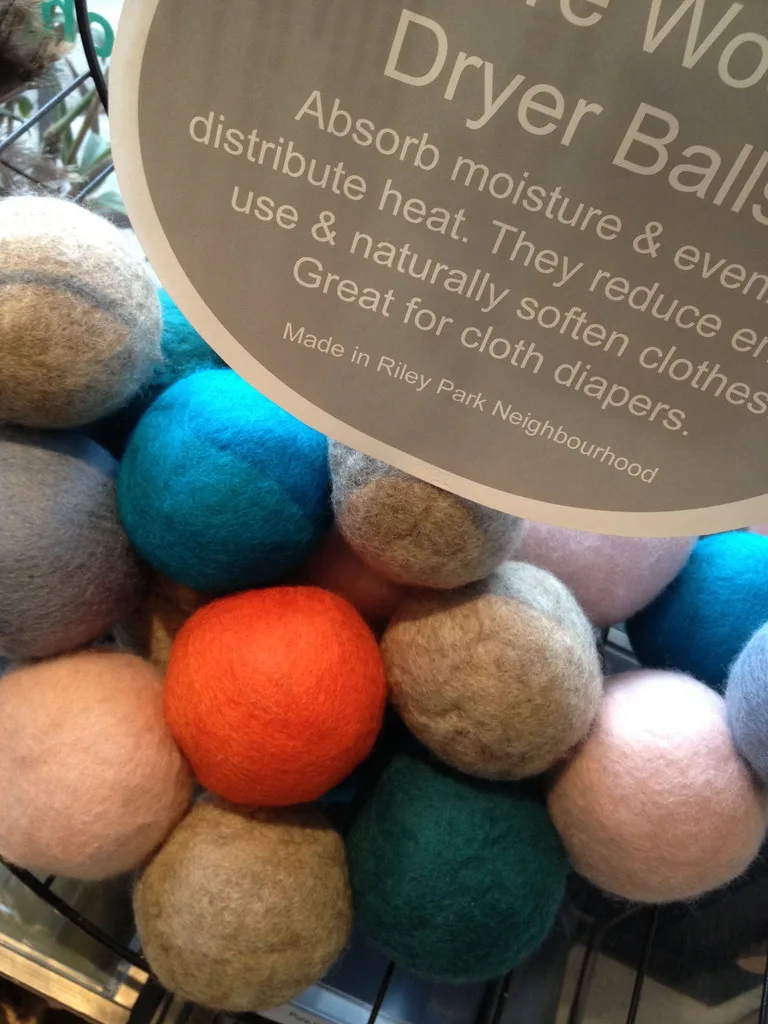
Wool dryer balls
Quiet, gentle on fabric, and they help soften laundry without adding any coating. Two drawbacks for pet owners. New balls shed some wool fluff for the first few loads, which shows on dark clothes, the very clothes that show pet hair. And their fuzzy surface catches some of the hair it loosens, so after a few weeks of pet laundry the balls are coated in it and need picking clean, or the hair felts into their surface.
Rubber and plastic spiked balls
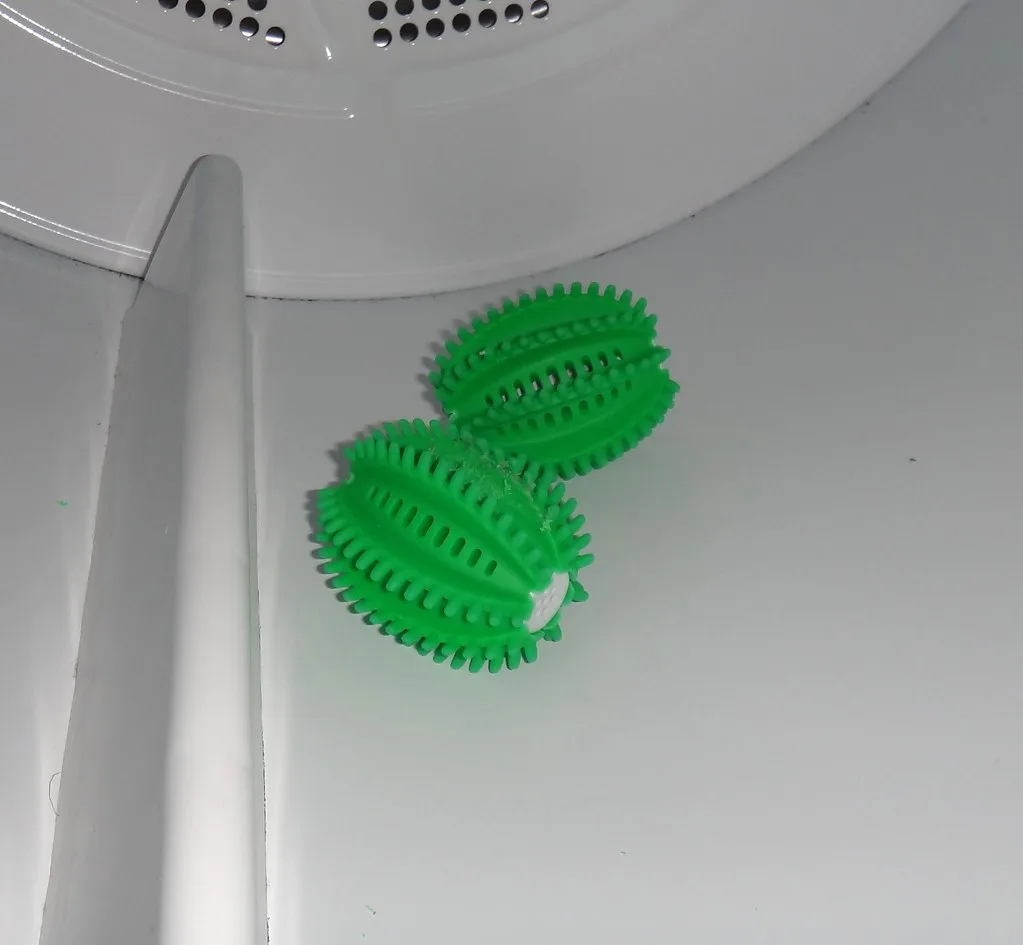
Spiked plastic balls, sold as dryer balls or laundry balls, do the same beating job with no fiber to shed and no surface to hold hair. They last for years. Against that, they are loud in a metal drum, harder on delicate fabrics and knits, and some are made of PVC, which some people prefer to keep out of a hot dryer. Check that any you buy are rated for dryer heat.
If the noise does not bother you and much of your laundry is dark, rubber balls are a reasonable choice for pet loads specifically. For mixed laundry, wool is the more pleasant one to live with.
Alpaca dryer balls
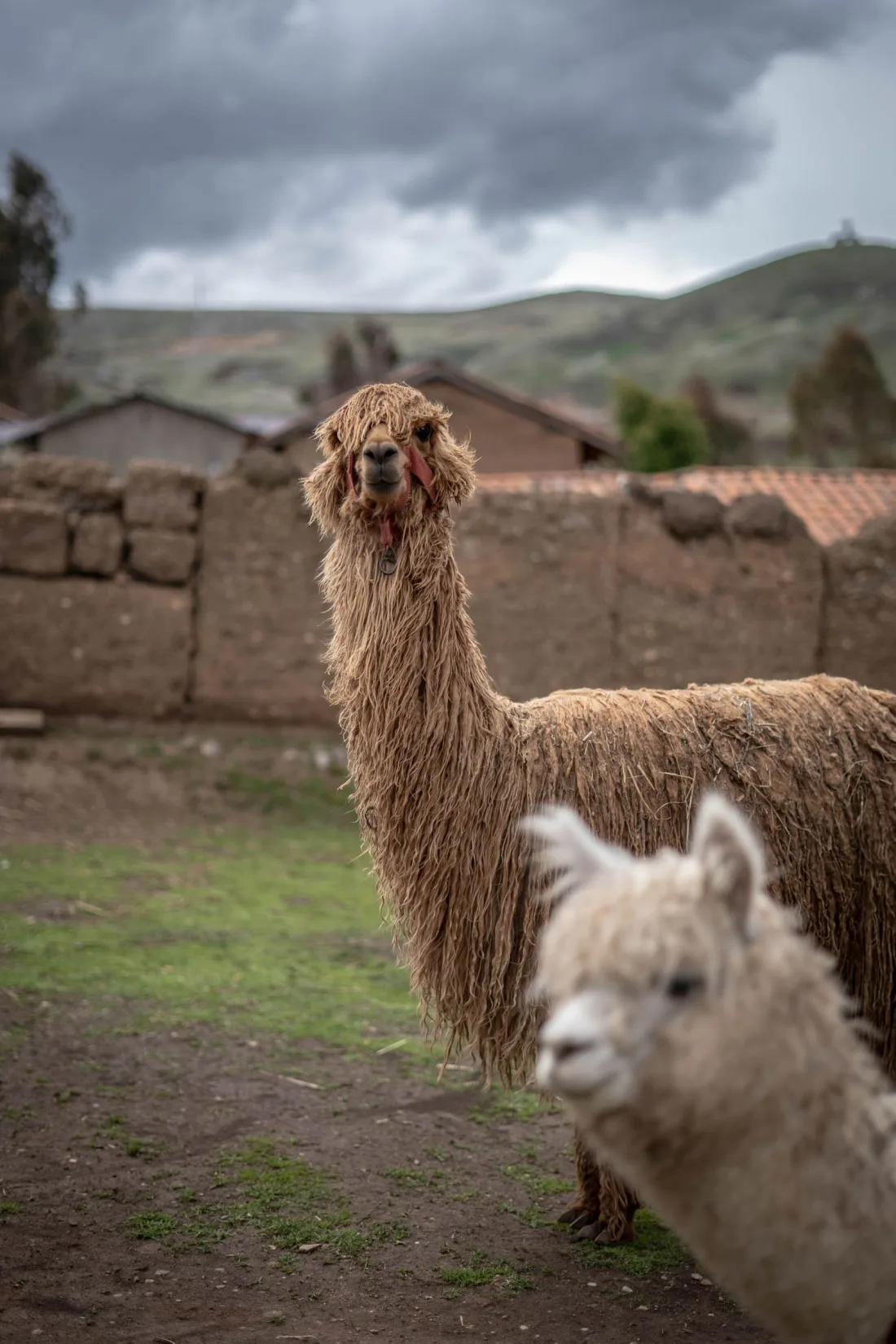
Alpaca dryer balls are made exactly like wool ones, from alpaca fiber felted into a firm ball, and they do the same mechanical job. The real differences come from the fiber:
- Almost no lanolin. Alpaca fleece carries very little of the wax that sheep's wool has. For someone who reacts to lanolin, that makes alpaca the safer choice. For anyone else, the difference in the drum is small, because scoured wool has little lanolin left anyway.
- Slower to felt. Alpaca fibers have smaller, flatter scales than sheep's wool, so they lock together less readily. Some alpaca balls are blended with wool or built on a wool core to make them firm. A soft alpaca ball is a weaker ball, so the squeeze test matters even more.
- Softer and less prickly. Pleasant in the hand, but it makes no difference to hair removal.
- Cost. They usually cost more than wool balls of the same size, because alpaca fiber does.
Most alpaca balls are made from huacaya, the crimped, fluffy type that behaves most like wool; suri alpaca, with its long silky locks, felts poorly and is rarely used. The fiber differences are explained in alpaca felting. For pet hair specifically, there is no good reason to expect alpaca to beat wool. Buy alpaca for lanolin, or because you like it, not for the cat.
Dryer balls for cat hair and dog hair
They come off fabric differently, and it helps to know which you are dealing with.
- Cat hair is fine and light and clings by static. It drifts off easily once the static is gone, which makes the dry tumble and not over-drying especially effective.
- Short, coarse dog hair, the kind shed by many short-coated breeds, works into woven fabric like tiny splinters. Tumbling loosens some of it; the rest comes out best with damp rubber gloves or a rubber brush stroked in one direction.
- Long dog hair and undercoat tangles into knits and fleece. Brush the dog more often in shedding season, and the laundry gets easier.
Static makes pet hair stick
Static is what holds dry hair to fabric, and over-drying makes the static worse. Take loads out while very slightly damp, especially synthetics and fleece, which also attract hair more than cotton. A large safety pin pushed into one wool ball helps discharge static in the drum. Dryer sheets also reduce static, but they leave a film on fabric; the trade-offs are in dryer balls vs dryer sheets.
Pets and the dryer: safety
- No essential oils in a house with cats. Tea tree, eucalyptus, peppermint, citrus and pine are toxic to cats, and cats sleep on clean laundry. Scent nothing that goes near pet bedding. Details in wool dryer balls and essential oils.
- Dogs chew dryer balls. A wool ball looks and smells like a toy. A dog that chews one apart can swallow chunks of felt, and an intestinal blockage is a real risk. Keep the balls in the dryer or in a lidded container out of reach; a small basket with a lid on top of the machine works, and felt storage baskets covers the options.
- Check the drum. Cats climb into warm, open dryers. Look inside before you shut the door and start a cycle.
The lint screen matters more than the balls
Every hair the dryer balls loosen ends up on the lint screen, and pet hair loads fill it fast. A clogged screen means poor airflow, longer drying, and hair staying in the clothes. Clear it after every load and during heavy ones. Every few months, wash the screen with warm soapy water and a soft brush to clear the fine residue that blocks the mesh, and run a lint brush into the slot below it. Lint build-up in the screen housing and the vent is the main fire risk in a home dryer, and pet hair adds to it, so have the vent cleaned out regularly.
Cleaning the balls
Wool balls used on pet loads collect hair in their surface. Pick it off by hand, or go over each ball with a lint roller once a week. Every month or two, run them through a hot wash on their own: it cleans them and felts them a little tighter at the same time, and a tighter surface catches less hair. If hair has already felted into the surface, it is part of the ball now and does no harm. A ball that has gone soft or started to unravel can be wound with fresh wool and refelted, as described in wool dryer balls.
Can you make them from your pet's fur?
It sounds neat, and people ask. Dog and cat hair can be felted, with preparation and usually blended with wool, as covered in felting with dog hair and felting with cat hair. But a dryer ball with pet fur on the outside sheds that fur back onto the laundry it is meant to help. Keep your pet's fur for keepsakes, and make dryer balls from plain undyed sheep's wool.
Frequently asked questions
Do dryer balls really remove pet hair?
Not by themselves. They separate the load and beat the fabric, which shakes hair loose so the airflow can carry it to the lint screen. The biggest gain comes from a short dry tumble with the balls before washing, while the hair is still dry and loose; after a wash, wet hair is plastered to the fabric and much harder to shift.
Are wool or rubber dryer balls better for pet hair?
Both shake hair loose in much the same way. Wool balls are quiet and gentle on fabric but catch some hair in their fuzzy surface and shed a little fiber at first. Rubber or plastic spiked balls shed nothing and hold no hair, but they are loud and harder on delicate fabrics.
Are alpaca dryer balls better than wool?
For pet hair, not noticeably. They do the same mechanical job. Alpaca has almost no lanolin, which matters if someone in the house reacts to it, and alpaca balls usually cost more. Size and firmness affect results more than the fiber.
How many dryer balls should I use for pet hair?
Six for a normal load and up to nine for bedding or a dog blanket. Two or three balls barely move a load, and for loosening hair you want the full set.
Are dryer balls safe around cats and dogs?
Keep them out of reach. A dog can chew a wool ball apart or swallow pieces, which risks a blockage, and cats bat them around like toys. Never scent balls with essential oils in a house with cats, and check the drum for a cat before you start the dryer.
Topics
Image credits
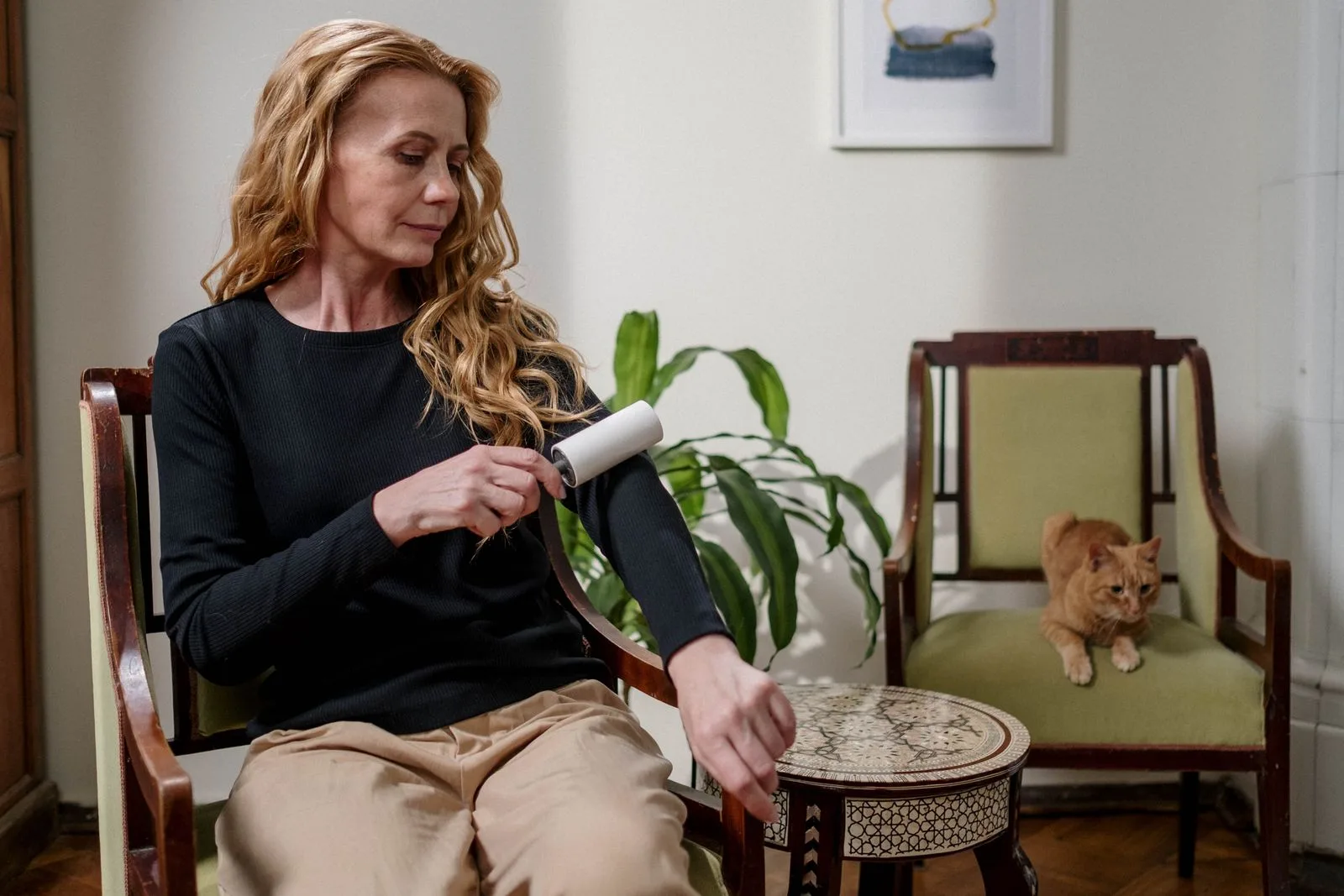
- A woman in a black sweater using a lint roller on her sleeve while a ginger cat sits on the chair beside her — cottonbro studio (Pexels License)
- A pile of felted wool dryer balls in gray, teal, orange and pink in a shop display under a sign about wool dryer balls — Christine Rondeau (BY)
- Two green spiked plastic dryer balls lying in the drum of a white tumble dryer — Reg Natarajan (BY)
- A suri alpaca with long hanging locks standing in a farmyard in front of a mud-brick wall, with a fluffy cream huacaya alpaca in the foreground — Shiwa Yachachin (Pexels License)