Wool and Felt Slippers in Australia: Local Makers and Sizing
3 min read
Australia grows a fifth of the world's wool and imports most of its slippers. What is actually made locally, why merino is the wrong fibre for a hard-wearing slipper, and how the sizing converts.
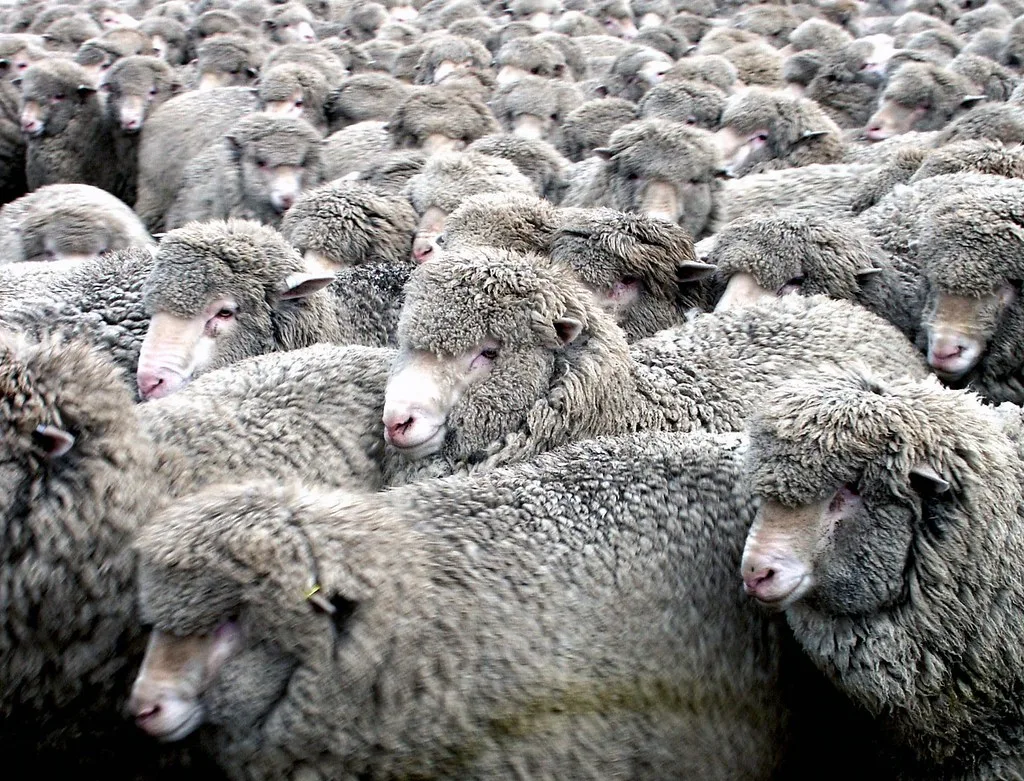
Australia produces an enormous amount of wool and very little wool footwear. Most of the clip is fine merino sold into apparel, and most slippers sold locally are imported — which makes buying a genuinely hard-wearing wool slipper here a matter of knowing what to look for rather than where to look.
The merino problem
The wool Australia is famous for is the wrong wool for a slipper sole:
- Merino is fine (17–22 micron), which makes it soft against skin and quick to compress.
- Under a heel, fine fibre packs down and stays packed. The slipper goes flat and thin at the ball of the foot.
- Coarse, longer-stapled wool — Corriedale, Romney, crossbred, or northern European breeds — resists that and makes a springier, harder-wearing felt.
The best construction uses both: a coarse felt body with a merino or sheepskin lining. If a listing says "100% merino slipper" and nothing else, expect comfort and a short life. The fibre comparison in full is in best wool for felting and merino wool for felting.
What is available locally
- Sheepskin slippers — the dominant local product. Ugg-style boots and scuffs from Australian tanneries, warm and soft, with the sheepskin doing the insulating rather than felt.
- Imported European felt — Danish, German and Finnish boiled wool slippers, carried by wool and homeware shops at a considerable markup. Worth it for stitched leather soles; see Scandinavian wool slippers.
- Small-studio felted slippers — wet felted, seamless, usually from Corriedale or a local crossbred, sold at fibre festivals, craft markets and direct online. The best value for genuine hand-made felt in Australia.
- Supermarket and department-store slippers — almost all polyester "felt", regardless of the description. The burn test works on slippers as well as hats.
Sizing
- Australian sizing matches UK sizing for both men's and women's shoes.
- EU 37 ≈ AU 4, EU 39 ≈ AU 6, EU 42 ≈ AU 8, EU 45 ≈ AU 10.5.
- US women's runs about 2 sizes above AU (AU 6 ≈ US 8); US men's runs about 1 size above.
- Felt slippers stretch about half a size and then stop. Buy snug at the heel.
Climate notes
Wool moves moisture as vapour and keeps insulating when slightly damp, which is why a wool slipper is comfortable across a much wider range than a fleece one. Practically:
- Melbourne, Hobart, Canberra — a full boiled wool slipper with a rubber sole earns its keep for five months of the year.
- Sydney, Perth, Adelaide — a thinner open-backed felt scuff is usually enough.
- Brisbane and north — wool is mostly for tiled floors and air conditioning rather than for cold.
- Moths are a real problem in Australian summers. Wash, dry thoroughly and store wool slippers sealed with cedar or a lavender sachet over summer, not loose in a wardrobe.
Making your own
This is the one place where Australia has an outright advantage: fleece is cheap and local. Corriedale, Polwarth and crossbred rovings sell from Australian fibre suppliers for a fraction of European prices, and a pair of wet-felted slippers uses around 100–150 g.
The resist template is drawn about 40% larger than the finished foot, then shrunk to fit — the full method in felted slippers, the shrinkage numbers in how much wool shrinks when felted. For a first attempt, coarse crossbred felts faster and more forgivingly than merino.
Care
- Air daily; wash rarely.
- Hand wash cool with wool detergent, press dry in a towel, dry flat out of the sun. Australian sun fades and embrittles wool quickly.
- Never machine wash — that process is felting, and it is not reversible.
- Store sealed over summer against moths.
Frequently asked questions
Are wool slippers made in Australia?
A small number are. Most Australian sheepskin and wool footwear brands design locally and manufacture offshore, and only a handful of workshops still make felted or boiled wool slippers domestically — usually small studios selling direct or through markets.
Is merino the best wool for slippers?
No. Merino is fine and soft, which makes it comfortable and quick to compress flat under a heel. Coarser, longer-stapled wool wears far better in a slipper. Merino is better as a lining than as the structural felt.
Are wool slippers too warm for an Australian winter?
Wool regulates rather than simply insulating, so a felt slipper is comfortable across a much wider temperature range than a synthetic fleece one. In a Queensland winter a thin boiled wool slipper with an open back is usually enough.
How do Australian slipper sizes convert?
Australian women's sizing matches UK sizing; Australian men's runs the same as UK men's. European makers use EU sizes — EU 39 is AU 6, EU 42 is AU 8. Half sizes are rare in felt, so size down rather than up.