Danish and Scandinavian Wool Slippers: What Makes Them Different
3 min read
Nordic slippers are built around coarse, long-staple wool and a hard-wearing sole, not softness. The result is a slipper that survives a decade of concrete-cold floors.
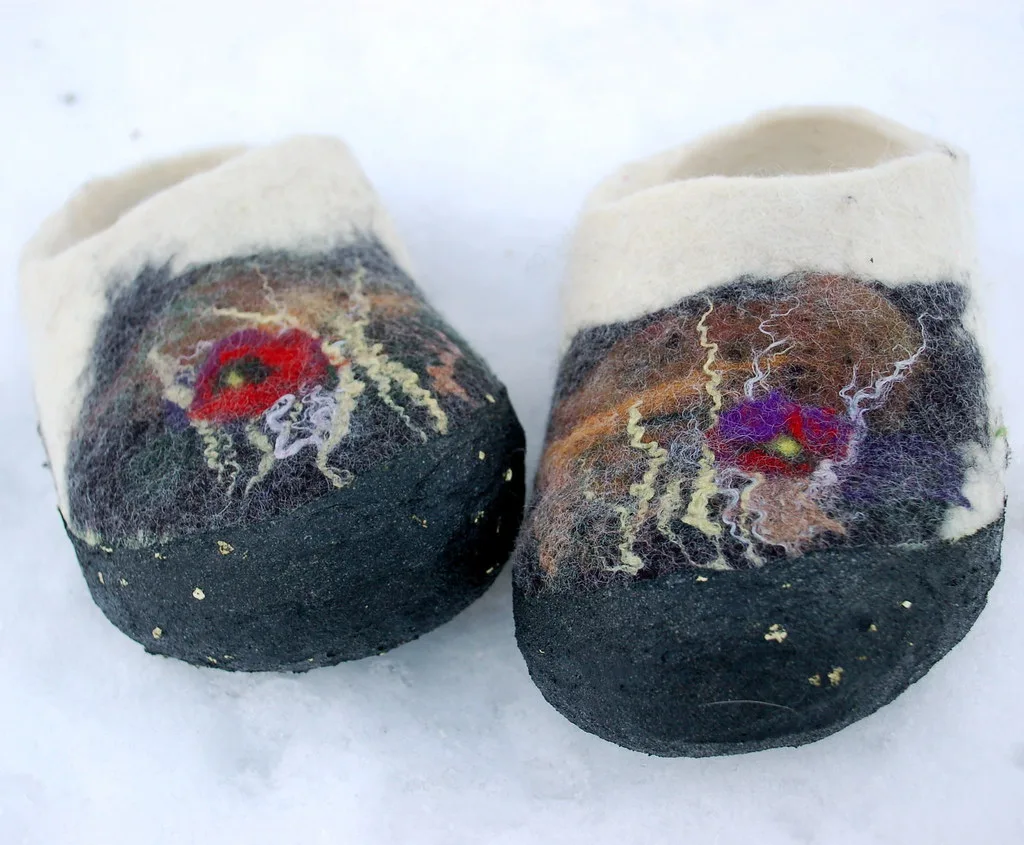
Nordic slippers exist for a specific climate problem: cold floors in a house that is otherwise warm. That shapes every decision in them, and it is why they feel firmer and heavier than a fleece-lined slipper from a high street.
The wool
Danish, Norwegian, Icelandic and Finnish slippers are usually made from coarse native breeds — Gotland, Spelsau, Icelandic and Finnsheep among them — rather than fine merino. The trade-offs are consistent:
- Coarser fibre resists compression, so the slipper keeps its loft under a heel for years.
- Long staple length makes a felt that resists pilling and abrasion.
- More lanolin retained in some traditional makes, which repels light moisture.
- Less soft against skin. These are sock slippers, not bare-foot slippers.
The same fibre logic applies when you felt your own — see best wool for felting for why merino makes a soft felt and a coarse breed makes a hard-wearing one, and is merino wool itchy for what micron count actually predicts.
Construction
- Boiled wool uppers. Knitted, then fulled in hot water until dense enough to cut without fraying. Slightly elastic, so it moulds to the foot.
- Wet felted uppers. Seamless, made over a resist in one piece. Denser again, and the traditional method behind Finnish and Russian felt boots.
- Stitched soles. Leather or rubber sewn on rather than glued. This is the single detail that separates a ten-year slipper from a two-year one — and it means a cobbler can replace the sole.
- Contrast stitching and toggles — decorative, and the toggles let the slipper open enough to get a wide foot in.
The country differences
- Denmark — clean modern shapes, boiled wool, leather soles, often with a leather heel counter. Sold as house shoes rather than slippers.
- Norway — heavier, often with a rubber outsole; the traditional patterned Selbu motifs turn up on knitted-then-fulled versions.
- Finland — the huopatossut tradition of thick wet-felted slippers and boots, some still made on wooden lasts. The warmest of the four.
- Iceland — Icelandic fleece has a dual coat, giving a felt that is both hard-wearing and warm; often left undyed in natural greys and browns.
Sizing
Continental sizing, and half sizes are rare:
- EU 37 ≈ UK 4, EU 39 ≈ UK 6, EU 42 ≈ UK 8, EU 45 ≈ UK 10.5
- Boiled wool stretches about half a size in the first month.
- Wet felted uppers barely stretch — buy your actual size.
- Size for socks, since that is how they are meant to be worn.
Care
- Air them daily rather than washing them. Wool self-freshens better than any other fibre.
- Brush off dried mud with a stiff brush once it has dried.
- Hand wash only when necessary: cool water, wool detergent, no agitation, no wringing.
- Roll in a towel to remove water, then reshape and dry flat, away from radiators.
- Never machine wash. Agitation plus heat is exactly the process used to felt wool in the first place — see felting in knitting for what that does to a knitted item.
What they cost, and the alternative
Expect to pay several times what a mass-market synthetic pair costs, and more again for Finnish felt boots. Against a cheap pair replaced every year, they pay for themselves in about four years and are still going at ten.
The alternative is to make them: a seamless wet-felted pair uses about 100 g of coarse wool and one afternoon. Method in felted slippers, and the traditional pair is worn indoors on wooden floors, so what goes underneath matters as much as the felt — see slipper soles. If it is cork footbeds and orthopaedic support you are after instead, see wool slippers with arch support.
Frequently asked questions
What are Danish wool slippers made of?
Usually boiled or fulled wool from coarse northern European breeds, with a stitched leather or rubber sole. The wool is chosen for durability and springiness rather than softness, so it is firmer against the skin than merino.
Why are Scandinavian slippers so expensive?
Heavier wool, more of it, and construction that is stitched rather than glued. A 400 g pair of stitched boiled wool slippers uses several times the material of a thin needled-felt slipper and lasts several times as long.
Are Nordic wool slippers itchy?
Coarser wool can prickle against bare skin, particularly around the ankle. Most people wear them with socks, which is how they are designed to be worn in Nordic homes.
Can you wash Danish wool slippers?
Hand wash only, in cool water with wool detergent, pressed dry in a towel and dried flat away from heat. A machine wash fulls the wool further and shrinks them by a size or more, permanently.