What Is Felted Fabric? Felt, Felted Wool and Boiled Wool
3 min read Beginner
Three materials, three processes, one confusing set of names. How felted fabric is made, how it differs from felt, and why boiled wool is neither exactly.
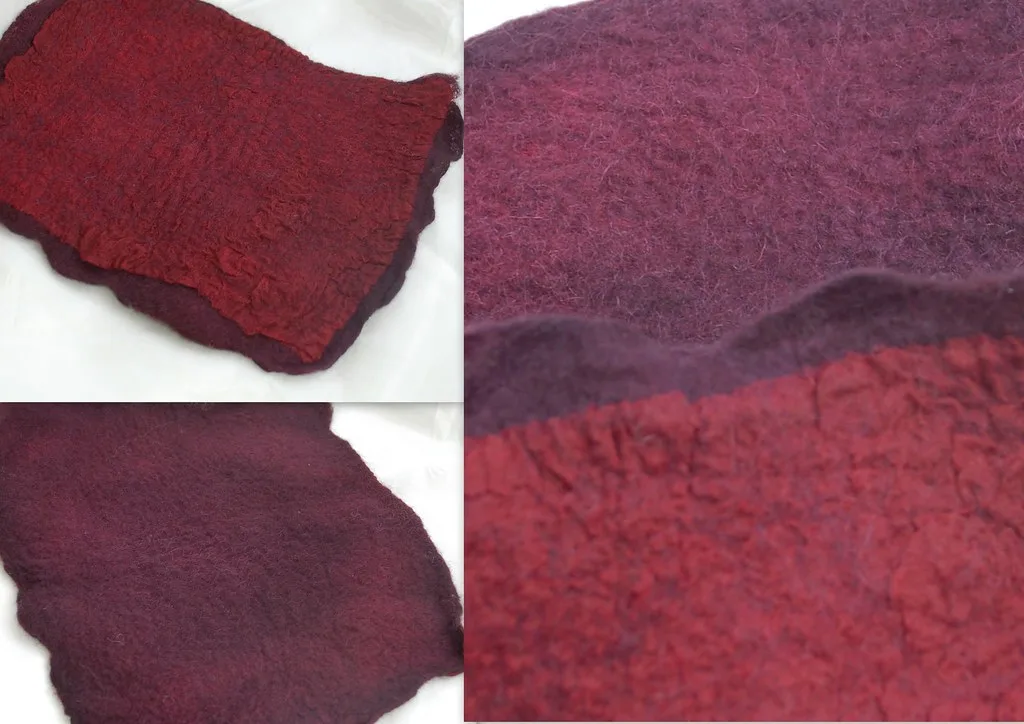
"Felted fabric", "felt" and "boiled wool" get used as if they meant the same thing. They do not, and the difference determines whether a piece frays, stretches, keeps its shape or survives being cut.
Felted fabric
Start with a woven or knitted wool cloth — a blanket, a jumper, a length of tweed. Wash it hot with agitation and the fibres in every yarn migrate into their neighbours and lock. The cloth shrinks, thickens and firms up.
What you get is a fabric with two identities: a textile structure underneath and a matted fibre surface over the top. Cut it and it does not fray, because the fibres now hold each other rather than relying on the weave. Look closely and you can still see the stitches through the fuzz.
Craftspeople call this fulling. The wider process, including what happens to your work in progress, is covered in wool shrinkage when felting.
Felt
Felt never was cloth. Loose fibre is layered, wetted, heated and worked until it becomes a solid sheet. There is no yarn in it, no weave, no direction and no grain.
It is the oldest textile there is — older than weaving, because it needs no equipment at all. Everything on this site made by wet felting or needle felting is felt in this sense, and so is the commercial wool felt fabric sold by the sheet.
Boiled wool
Boiled wool is knitted first, then felted commercially under controlled heat and agitation. It stops short of full felting, so the knit structure survives and the fabric keeps some stretch and drape.
That is why boiled wool coats and jackets exist and felt ones mostly do not. Felt is stiff and has no give; boiled wool bends with the body while behaving like a dense, windproof cloth. It also does not fray, so seams can be left raw.
Telling them apart
- Stretch it. Felt does not stretch. Felted knitwear gives a little. Boiled wool gives noticeably and springs back.
- Look at a cut edge. Felt is uniform fibre all the way through. Felted fabric shows rows or a weave under the surface.
- Look for a wrong side. Felt has none — both faces are identical. Fulled knitwear usually does.
Why anyone felts fabric on purpose
- No fraying. Cut edges can be left raw, which removes hems entirely — the reason felted wool is a favourite for appliqué and toys.
- Warmth and wind resistance. A fulled fabric traps far more air than the knit it came from.
- Density and structure. Bags, slippers and hats can be knitted loose and fast on big needles, then shrunk into something that holds a shape. This is the trick behind almost every felted slipper pattern.
- Rescue. A charity-shop jumper felted deliberately becomes good material rather than a shrunken jumper.
How to felt fabric at home
- Check it is untreated wool. Superwash and machine-washable labels rule it out entirely.
- Put it in a pillowcase or laundry bag so shed fibre does not reach the pump.
- Wash at 60 °C with a little detergent and something abrasive — a pair of jeans or a towel.
- Check part way through. Felting is not reversible and cannot be undone by a cold rinse.
- Pull into shape while damp and dry flat.
Expect 20 to 40% shrinkage, mostly in length. Repeat cycles shrink further, so it is better to under-run and go again than to overshoot. The full method, including how to hit a target size, is in felting in knitting.
What will not felt
Superwash wool, most machine-washable merino, wool blended heavily with acrylic or nylon, and anything plant-based or synthetic. Cotton, linen, viscose and polyester have no scales to lock. A blend with 20% nylon in the sock yarn will felt, but less and unevenly. The diagnostics are in why wool will not felt.
Frequently asked questions
What is felted fabric?
Woven or knitted wool cloth that has been deliberately shrunk with heat, moisture and agitation until the fibres lock together. It becomes thicker, denser and windproof, and it stops fraying when cut.
Is felted fabric the same as felt?
No. True felt is made straight from loose fibre with no yarn involved. Felted fabric starts as cloth and is shrunk afterwards, so it still has stitches or a weave visible under the fuzz.
What is boiled wool?
Knitted wool fabric that has been felted commercially in hot water. It sits between the two: denser than a knit, softer and more elastic than felt, and it still stretches slightly because the knitted loops are still there.
Can any wool fabric be felted?
Only untreated animal wool. Superwash wool, wool blends with much synthetic content, and anything labelled machine washable will not felt, because the scales that make it work have been removed or coated.