Felt Bottle Bag: A Seamless Sleeve Felted Round the Bottle Itself
4 min read Beginner
A wine bottle is its own resist. Wrap it in wool, felt it in place, and you get a sleeve that fits exactly — one evening, no pattern, no sewing.
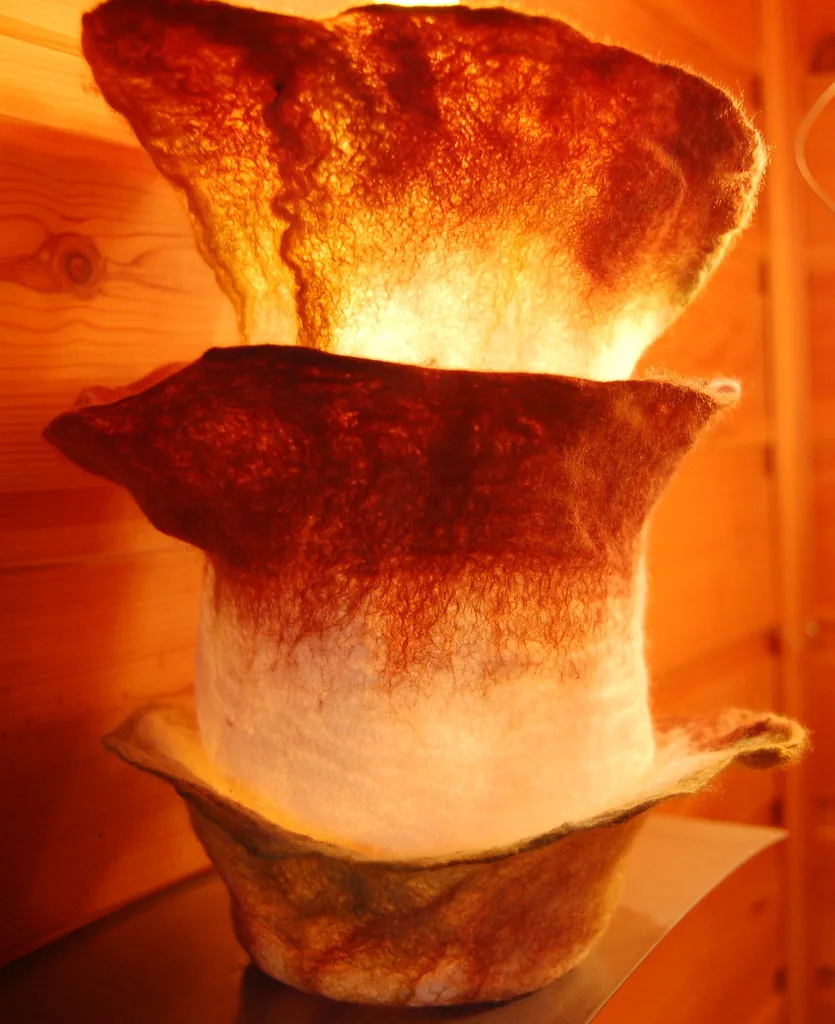
Most felted vessels need a resist cut from foam and a lot of geometry. A bottle bag needs neither, because the bottle is already the shape you want the felt to take. It is the best first three-dimensional project there is.
What you need
- 40–50 g merino wool tops, in one or several colours
- A clean bottle — 750 ml wine bottle, or whatever you are making it for
- Cling film to wrap the bottle
- Hot water, washing-up liquid, a bowl
- Netting or fine curtain fabric, bubble wrap
- An old towel
Method
- Wrap the bottle in two turns of cling film, smoothing out the wrinkles. This keeps the sleeve from gripping the glass and gives you a clean release.
- Layer one — vertical. Pull fine tufts from your tops and lay them from the base up over the shoulder, overlapping like roof tiles, all the way round. Let 3 cm hang past the base.
- Layer two — horizontal. Wrap tufts round the bottle at right angles to layer one, again overlapping.
- Layers three and four — repeat, alternating direction. Four thin layers make a firmer, more even sleeve than two thick ones.
- Close the base. Fold the overhanging fibre from layer one onto the bottom of the bottle, and add a small circle of wool over it. This is what makes the base seamless.
- Wet out. Cover with netting and sprinkle hot soapy water over the whole thing, pressing gently until the wool is soaked and lying flat. Squeeze out excess air and water.
- Rub. Through the netting, with flat hands, all over, ten minutes. Lift the netting occasionally to make sure it is not felting into the wool.
- Roll. Wrap the bottle in bubble wrap and roll it back and forth on a towel, 100 rolls, then turn it end for end and repeat.
- Loosen it. Once the felt holds together, slide the sleeve up and down the bottle a few centimetres. Do this every few minutes from here on.
- Full it. Slide the sleeve off, work it in hot water — rub, squeeze, throw it against the sink — until it shrinks to a firm, dense fabric. Try it back on the bottle regularly. Stop when it is a snug fit.
- Rinse in cold water, squeeze in a towel, and dry it on the bottle so it keeps the shape.
Total time: two to three hours, most of it rubbing.
Handles and closures
- Felted cord — roll a length of roving between soapy palms into a firm cord (the method is in wool roving dreads), then needle or stitch both ends to the sleeve at the shoulder.
- Felted-in handle — lay the cord into the wool layers before wetting out and it becomes part of the sleeve. Stronger, and harder to place accurately.
- Drawstring — pierce eyelets round the top of the finished felt with a leather punch and thread a cord through.
- Cuff — leave the top 3 cm thinner and fold it down over the neck.
Decoration
- Surface colour — lay a design in contrasting wool as the final layer before wetting. It fuses in and becomes part of the fabric.
- Prefelt shapes — cut motifs from thin prefelt and place them on the last layer; see prefelt wool.
- Curly locks laid on the surface for texture.
- Needle felted detail added after drying, which is the easiest way to get a crisp shape.
- Stitching and beads — see how to sew beads on felt.
Sizing for other bottles
- 750 ml wine bottle — 40–50 g wool, four layers
- 500 ml water bottle — 30 g
- 1 litre flask — 60 g, and consider five layers for insulation
- Two-bottle carrier — felt each sleeve separately and join them with a stitched felt strap
Because you felt directly onto the object, there is no shrinkage calculation to do — you simply stop when it fits. That is what makes this the easiest possible introduction to three-dimensional felting, and a good rehearsal before attempting a bag over a resist or a bowl.
Care
Hand wash cool with wool detergent if it needs it, and dry back on the bottle. Never machine wash — it will shrink further and stop fitting. And if the sleeve does come out slightly too tight, wet it, stretch it back onto the bottle and let it dry there; felt gives a little while damp.
Frequently asked questions
How do you make a felt bottle bag?
Wrap wool in crossed layers directly around the bottle, wet it with hot soapy water, rub through netting until the fibres hold, roll the bottle to full the felt, then slide the sleeve off, rinse and dry it back on the bottle to keep the shape.
How much wool does a wine bottle sleeve take?
About 40 to 50 g of merino tops for a standard 750 ml wine bottle in four layers. Coarser wool needs slightly more.
Will the felt shrink onto the bottle and get stuck?
It can, which is why you loosen and slide the sleeve up and down the bottle several times during fulling. Wrap the bottle in a layer of cling film first and the sleeve comes away cleanly every time.
Does a felt sleeve keep a bottle cold?
It slows warming noticeably — wool is a genuine insulator, and 4 to 5 mm of dense felt keeps a chilled bottle cool for an hour or two longer than bare glass. It will not chill anything on its own.