Wool Dryer Balls and Essential Oils: How to Scent Them Safely
9 min read Beginner
We may earn a commission from links on this page, at no extra cost to you. As an Amazon Associate I earn from qualifying purchases. Learn more.
Oil on wool in a hot dryer needs a little care: how many drops, when to add them, which oils stain, and why undiluted oil on hot fabric is worth avoiding.
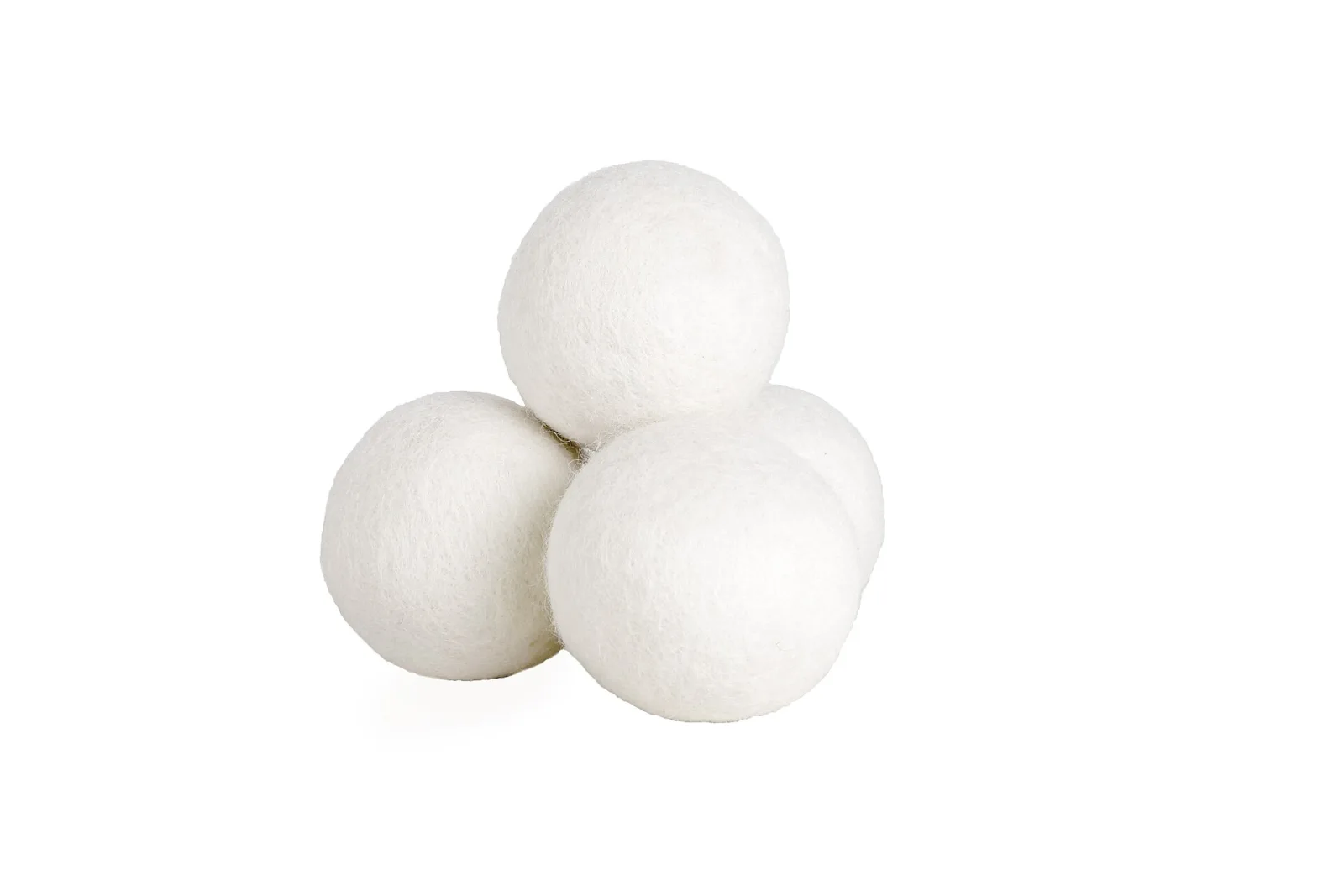
Wool dryer balls do everything dryer sheets do except leave your laundry smelling of something. Essential oils are the usual fix, and they work — with a few practical limits worth knowing before you tip half a bottle into the drum.
How many drops
Three to five drops per ball, on no more than two or three balls. Fifteen drops total is plenty for a full load.
People routinely use far more, on the reasonable assumption that more oil means more scent. It does not — the wool can only hold so much, and the rest either evaporates immediately or transfers to fabric as oil rather than fragrance, which is where stains come from.
When to apply
Ten to fifteen minutes before the load goes in, if you can plan that far ahead. The oil needs time to absorb into the wool.
Oil applied to the surface of a ball and put straight into a hot drum is still liquid when it first touches fabric. That is exactly how you get small dark spots on a white shirt.
A practical routine: scent the balls while the wash cycle is running, so they have twenty minutes to soak.
How to safely add essential oils to wool dryer balls
Put 3 to 5 drops on each of one to three balls, wait at least 15 to 30 minutes until the surface feels dry, and dry the load on low or medium heat. In order:
- Use pure essential oil from a dropper bottle, not a roll-on blend. Roll-ons are diluted in a carrier oil that never evaporates (more on that below).
- Count the drops into the centre of the ball, pressing the tip of the bottle into the wool so the oil goes in rather than running over the outside. For a single ball, 3 to 5 drops is the whole dose; for peppermint or another strong oil, 2.
- Leave it to absorb. Fifteen minutes is the minimum. Half an hour is better, and dark or thick oils such as patchouli and cedarwood are best added the night before.
- Touch test. If the ball leaves a damp or greasy mark on a paper towel, it needs longer.
- Dry on low or medium heat. Lower heat keeps more of the scent and keeps the drum well away from the temperatures where oil starts to matter.
- Keep oiled balls out of loads that already contain oily items such as kitchen cloths, massage towels or anything with cooking oil on it.
How often should you add essential oil to dryer balls?
Add fresh drops before every load you want scented. The scent that reaches your clothes comes from oil evaporating during that one cycle, so by the second load there is very little left to give, even if the ball itself still smells faintly when you sniff it.
Topping up every load does not mean more oil overall: stick to the same 3 to 5 drops each time rather than a big dose meant to last a week. A large single dose is the one that marks fabric, and most of it is gone after the first hot cycle anyway. If you only want scent occasionally, say on towels and bed linen, keep a separate scented pair and leave the rest plain.
Which oils
- Lavender — the classic, mild, and it lasts marginally better than most.
- Lemon, sweet orange, grapefruit — fresh and clean, but citrus oils are among the most likely to mark fabric and they fade fastest.
- Eucalyptus and tea tree — strong and clean-smelling. Both are toxic to cats and dogs, which matters if pet bedding goes through the same dryer.
- Peppermint — very strong. Two drops is enough, and it is also unsafe around cats.
- Cedarwood, sandalwood, patchouli — heavier base notes that hold on longest, and the darkest, most staining oils.
Dark or resinous oils stain more than pale ones. If you use them, put them on balls that are already dark, and never on brand-new white wool.
Safety, honestly
Essential oils are flammable — most have flash points between 50 and 80 °C, and a domestic dryer runs at roughly 60 to 70 °C. Three drops absorbed into a dense wool ball is not a realistic ignition source, and this is not a reason to avoid the practice.
What genuinely matters:
- Keep quantities small. Saturated wool, or an oil-soaked cloth going through a dryer, is a different proposition entirely.
- Never put oil straight onto the drum or the filter.
- Clean the lint filter regularly. This matters far more for dryer fire risk than the oil does.
- Pets. Tea tree, eucalyptus, peppermint, citrus and pine are toxic to cats, and cats sleep on clean laundry. If you have one, use lavender sparingly or nothing at all.
- Skin sensitivity. Undiluted oil on fabric against skin can irritate. If anyone in the house has sensitive skin, this is the wrong technique for them.
What do dryer manufacturers say about essential oils?
No major dryer maker endorses putting essential oils in the drum. What dryer manuals do warn about, consistently, is oil on fabric. Maytag's manuals, for example, tell you not to dry items spotted or soaked with vegetable or cooking oil, because they can still hold enough oil after washing to heat up on their own, and other makers list oil-soiled items as a fire hazard to be washed in hot water with plenty of detergent first.
Those warnings are about fabric carrying a real quantity of oil, not a few drops soaked into a wool ball, but they explain the sensible limits: small amounts, oil fully absorbed before the load starts, low or medium heat, and no oily laundry in the same load. If your own dryer's manual says anything specific about scent products, follow it over any general advice, this page included.
Are fragrance oils safe on dryer balls?
Treat them with more caution than pure essential oils. "Fragrance oil" covers a wide range of products made for candles, soap or diffusers, and most come with no laundry guidance at all. Two things are worth checking on the label or the maker's data sheet:
- A carrier oil. Many fragrance oils, and every "ready to use" or roll-on essential oil, are diluted in a vegetable carrier such as fractionated coconut, jojoba or sweet almond oil. A carrier does not evaporate in the dryer. It stays in the wool, collects lint, transfers to fabric as greasy marks, and puts exactly the kind of oil the dryer manuals warn about into the drum.
- Vanillin and other colour-changing ingredients. Vanilla-type fragrances are known to turn soap brown over time, and they can darken a wool ball and the fabric it touches in the same way.
If a fragrance oil's maker says it is suitable for laundry or for dryer balls, follow their quantities. If they say nothing, use a pure essential oil instead.
Why the scent fades so fast
Because nothing holds it there. Dryer sheets deposit a waxy film that fragrance clings to; wool and essential oil deposit nothing. The scent sits on the surface of the fibre and evaporates.
Expect noticeable scent when you unload, faint scent by evening, and nothing by the next day. On synthetics it goes faster still. This is a real limitation and no technique fixes it — the comparison is set out in dryer balls vs dryer sheets.
Things that work better than more oil
- Add the oil to a damp cloth thrown in with the load rather than to the balls. More contact with the fabric, less concentration in one spot.
- Scent at the end. Add scented balls for the last ten minutes of the cycle, when the drum is cooler and the oil evaporates more slowly.
- Scent the drawer, not the dryer. A lavender sachet in with folded laundry outperforms anything you can do in a hot drum.
Does essential oil on wool dryer balls stain clothes?
It can, and the stain is almost always a small, darker, slightly translucent spot the size of a fingertip where a still-wet ball pressed against the fabric. Three things make it far more likely: more than about 5 drops on one ball, putting the ball in before the oil has soaked in, and dark or citrus oils. Pale cotton and polyester show it most.
If you find a spot, do not put the garment back in the dryer, because heat sets oil stains. Work a drop of dish soap into it, leave it for 10 minutes, then wash it in the warmest water the care label allows and let it air dry so you can check the spot has gone before it sees heat again.
Why do wool dryer balls turn black?
Usually because oil on the surface acts like glue for everything else in the drum. Wool balls go grey with use anyway, and oil speeds it up a great deal. The usual causes, often several at once:
- The oil itself. Patchouli, vetiver, cedarwood, sandalwood and other resinous oils are dark to begin with and leave a brown tint. Old oils of any kind thicken and darken as they oxidise, and citrus oils do this fastest.
- Lint and dust. An oily ball picks up fluff and grime from every load, and dark lint from towels and jeans shows first.
- Dye. New dark jeans and towels shed dye in their first few loads, and pale wool takes it up readily.
- Fabric softener and dryer sheet residue. If softener or sheets are still being used alongside the balls, their waxy film builds up on the wool and holds dirt.
- Mildew. Black or green specks, often with a musty smell, mean the balls were stored damp. Let them dry fully before putting them away.
Darkening on its own does no harm to the balls. A ball that feels sticky or greasy, or smells stale even with fresh oil on it, is the one to clean.
Refreshing and cleaning the balls
Oil accumulates over months and eventually the balls smell of a muddle of everything you have ever used. Run them through a hot wash on their own and they come out clean and refelted at once — the same cycle that made them, described in wool dryer balls.
Keep one or two balls unscented and dedicate the others to oil. Then a load of towels can go through unscented while the scented balls sit out.
How to remove essential oil stains from wool dryer balls
Wash the balls on their own in hot water with a little detergent, let them dry completely, and roll them firmly between your palms to bring the shape back. For heavy, sticky buildup:
- Degrease. Rub a few drops of dish soap into each ball and leave it for 10 minutes. Dish soap breaks down oil far better than laundry detergent alone.
- Soak. Put the balls in a bowl of the hottest tap water with about 1 cup (240 ml) of white vinegar and leave them for 30 minutes to an hour, pressing them under now and then.
- Wash hot. Run them through a hot machine wash, inside a tied pillowcase or mesh bag so they do not unwind. They will felt a little tighter and shrink slightly, which does no harm.
- Dry them right through. Tumble them on high heat with no oil on them, or leave them somewhere warm for a day or two. The centre dries last, so squeeze one before storing it.
- Re-fluff. Roll each ball hard between your palms or tug the surface gently to raise the fibres again after washing.
The vinegar and hot water lift oil and residue, not dye, so a ball that has taken up dye from jeans will come out cleaner but not white again. Once it is dry and no longer greasy, it can go back to work.
Frequently asked questions
How many drops of essential oil on a dryer ball?
Three to five drops per ball, on two or three balls at most — so up to about fifteen drops for a full load. More does not make the scent last longer and does make oil stains more likely.
When should you add essential oil to dryer balls?
Before the load goes in, ideally ten to fifteen minutes earlier so the oil soaks into the wool rather than sitting on the surface. Oil applied straight before starting the dryer is the main cause of spotting on clothes.
Are essential oils in a tumble dryer a fire risk?
Essential oils are flammable, but a few drops absorbed into wool in a domestic dryer is not a realistic ignition risk. Saturating balls with oil, or drying oil-soaked cloths, genuinely is — so keep quantities small.
Why does the scent not last on my laundry?
Because nothing is bonding it to the fabric. Dryer sheets leave a chemical film that holds fragrance; wool and oil do not. Expect a day at most, and less on synthetics.
How often should you add essential oil to dryer balls?
Before every load you want scented, at the same 3 to 5 drops per ball. Almost all the oil evaporates in one cycle, so a big dose meant to last several loads only raises the risk of spots.
Why did my wool dryer ball turn black?
Oil on the surface traps lint, dust and dye from new dark clothes, and dark resinous oils such as patchouli and cedarwood tint the wool themselves. Black specks with a musty smell are mildew from storing the balls damp.
How do you get essential oil out of wool dryer balls?
Rub in a little dish soap, soak the balls for 30 to 60 minutes in hot water with about 1 cup (240 ml) of white vinegar, run them through a hot wash, then dry them right through and roll them firm again.
Topics
Image credits
- White felted wool dryer balls — KaSchn79 (BY SA 4.0)