Felted Soap Benefits: Why It Lasts Longer and Whether It Is Hygienic
5 min read Beginner
We may earn a commission from links on this page, at no extra cost to you. As an Amazon Associate I earn from qualifying purchases. Learn more.
A bar of soap wrapped in felt is a flannel and a soap dish in one. What it actually does for the bar, for your skin, and the hygiene question people always ask.
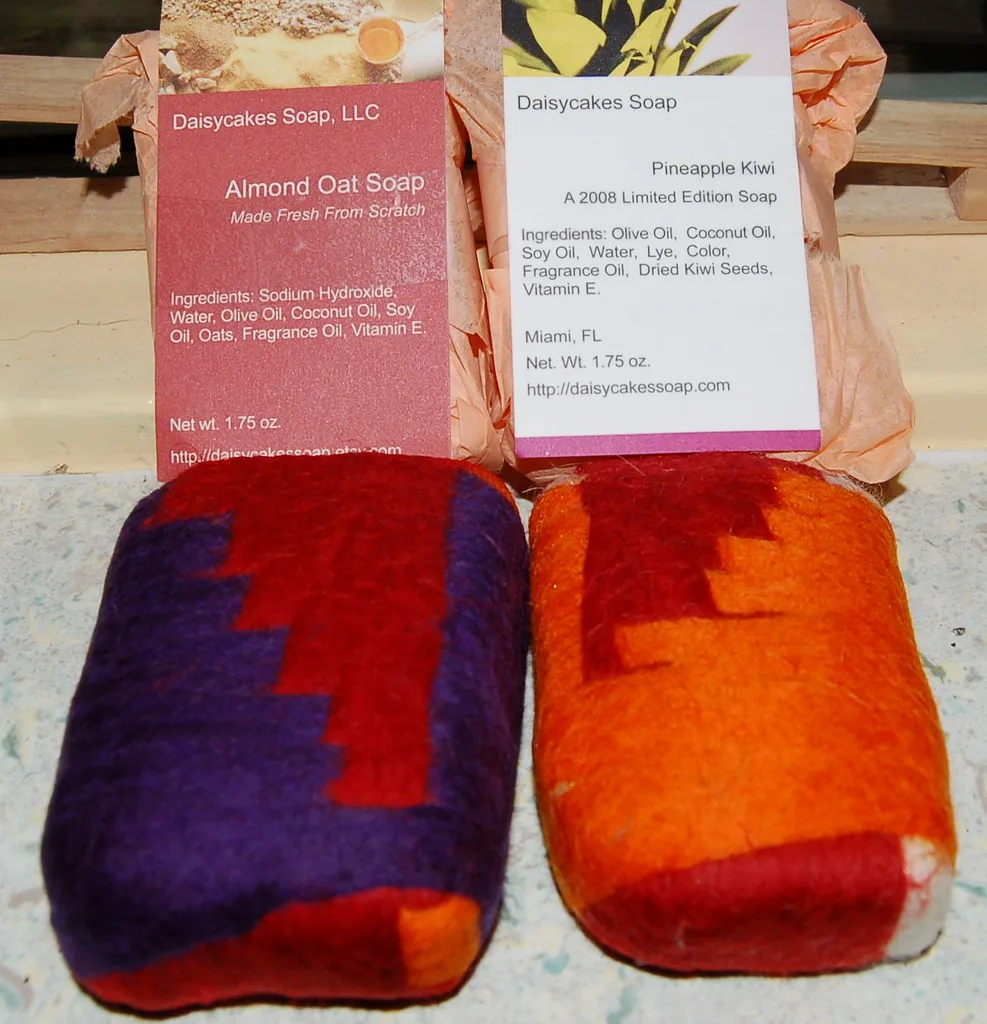
Felted soap sounds like a novelty and is one of the few handmade objects that genuinely outperforms the thing it replaces. A bar of soap inside a snug wool jacket is a flannel, an exfoliator and a soap dish at once, and it makes the soap last longer.
How to make it is covered in how to wet felt soap. This is what it does once made.
It makes the bar last
Most of a bar of soap is not used — it dissolves. A bar sitting in a puddle in a dish softens, slumps and turns to slime, and a quarter of it goes down the drain without ever touching anyone.
Felt fixes that in two ways. The wool holds the bar clear of standing water, and it wicks moisture away from the surface so the outside is not permanently saturated. How much longer the bar lasts depends almost entirely on how it is kept: stood on its edge to dry between uses, noticeably longer than a bare bar in a dish; left lying wet, hardly at all.
It replaces the flannel
The felt surface is mildly abrasive — enough to lather quickly and to give gentle exfoliation, not enough to be scratchy if you used merino. It lathers far faster than a bare bar because the wool holds air and water against the soap.
That means one object in the shower instead of three: no dish, no flannel, no scrunched net puff that needs replacing every few months.
It shrinks as the soap does
This is the part that surprises people. As the bar is used the felt continues to shrink very slightly with every wash, so the cover stays close to the soap rather than becoming a loose bag. A well-made felted bar is as snug at the end of its life as at the start.
It does not slip
Wet soap in wet hands is a hazard, particularly for anyone with limited grip. A felted bar has texture and stays where your fingers put it — a small practical benefit that matters more to some people than everything else on this page.
The hygiene question
The concern is reasonable: a damp piece of wool in a bathroom sounds like something that will go mouldy.
In practice it rarely does, for a simple reason: the wool is rinsed through with lather every time it is used, and the job of soap is to lift dirt and microbes so that water can carry them away. Soap does not sterilise anything, so what matters is that the felt then dries. Wool also resists odour better than cotton and dries faster than a folded flannel.
The conditions where it does go wrong are the obvious ones:
- It never dries. Sitting in a sealed corner of a shower with no airflow, it will eventually smell musty.
- It sits in water. A felted bar in a puddle is a wet cloth in a puddle.
- It is shared between people — the same consideration as a shared flannel.
Stand it on end somewhere with air around it and none of this arises. If it does start to smell, a hot rinse and a proper dry usually resolves it.
How long felted soap lasts
The felted bar lasts as long as the soap inside it, and three things decide that:
- The soap. A hard, well-cured bar outlasts a soft, freshly made one by a wide margin, felted or not. Bars sold as long-lasting or triple-milled are the ones to felt.
- How often it is used, and by how many people. A bar at the kitchen sink used twenty times a day disappears faster than one in a guest bathroom.
- How well it dries. This is the one the felt changes. A bar that dries out between uses loses very little except what is lathered off; one that sits wet keeps dissolving all day.
The felt usually outlives the soap. As the bar wears, the cover shrinks with it, and when the soap is finally gone the shell can be cut open and refilled with a new bar once or twice before the wool is too thin to bother with.
How to dry felted soap
Drying is the whole trick, both for how long the bar lasts and for whether the wool stays fresh.
- Squeeze it after use. Press the water out between your palms, as you would a sponge.
- Stand it on its edge on a slatted or wire soap dish, so air reaches both faces. A flat, solid dish keeps the underside wet.
- Or hang it. A small mesh bag on a hook, or a loop of cord felted into the wool when it is made, lets it drip and dry from every side.
- Keep it out of the spray and away from the corner of a shower that never dries.
If it ever starts to smell musty, rinse it under hot water, squeeze it hard, and let it dry completely somewhere warm and airy, in the sun if you can; a splash of white vinegar in the rinse helps. Then change where it lives. Making it with the right amount of wool helps too, because a thick coat holds water: the amounts are in how to make felted soap.
It is a good gift, honestly
Felted soap is quick to make, uses about 10 g of wool, needs no equipment and looks considerably more impressive than the effort involved. A set of three in a paper wrap is a present that gets used rather than admired.
For children it is also the ideal introduction to felting: no needles, warm water, and a result in twenty minutes. See how to felt without a felting needle.
Which soap works best
Any bar works. Hard, well-cured soaps last longest — a soft, freshly made cold process bar dissolves faster inside felt just as it does outside it. Avoid bars with a heavy exfoliant already in them; the felt is doing that job.
At the end
When the soap is nearly gone, either cut the felt open along one edge and slide a fresh bar in, or leave the last fragment where it is and keep the whole thing as a small scrubbing pad for hands after gardening. Neither the wool nor the soap needs to be thrown away, which is a small thing and quietly satisfying.
Frequently asked questions
What is felted soap?
An ordinary bar of soap with a layer of wool felted tightly around it. The wool acts as a flannel, and as the soap is used up the felt shrinks with it, so the cover stays snug to the end.
Does felted soap really last longer?
Usually, if it dries between uses. The wool holds the bar out of standing water and stops the surface turning to mush, which is where most of a bar is lost. How much longer depends almost entirely on how it is kept: a felted bar left lying wet lasts hardly longer than a bare one.
Is felted soap hygienic?
Yes, provided it dries between uses. Soap does not sterilise anything, but every wash rinses the wool through with lather and water, and a cover that dries out in between gives little chance for anything to grow. Left permanently wet in a sealed shower corner, it will go musty like any damp cloth.
What do you do with the felt when the soap runs out?
Cut the pouch open and put a new bar in, or leave the last sliver inside and use the whole thing as a small scrubbing pad. Nothing needs to be thrown away.
How do you dry felted soap?
Squeeze the water out after each use, then stand it on its edge on a slatted or wire soap dish, or hang it in a small mesh bag, somewhere with moving air and out of the shower spray. Used once a day in a dry spot, it is dry again by the next morning.
How long does felted soap last?
As long as the bar inside, which depends on the soap, how often it is used and above all how well it dries. A hard, well-cured bar dried on its edge between uses lasts noticeably longer than the same bar sitting in a wet dish. The felt usually outlives the soap and can take a new bar.