Why Leaves Fall: The Trigger, the Timing and Why It Looks Early This Year
4 min read
A tree does not lose its leaves — it drops them, deliberately, by building a layer of cells that cuts each leaf off at the stem. Day length starts it, and weather decides how it looks.
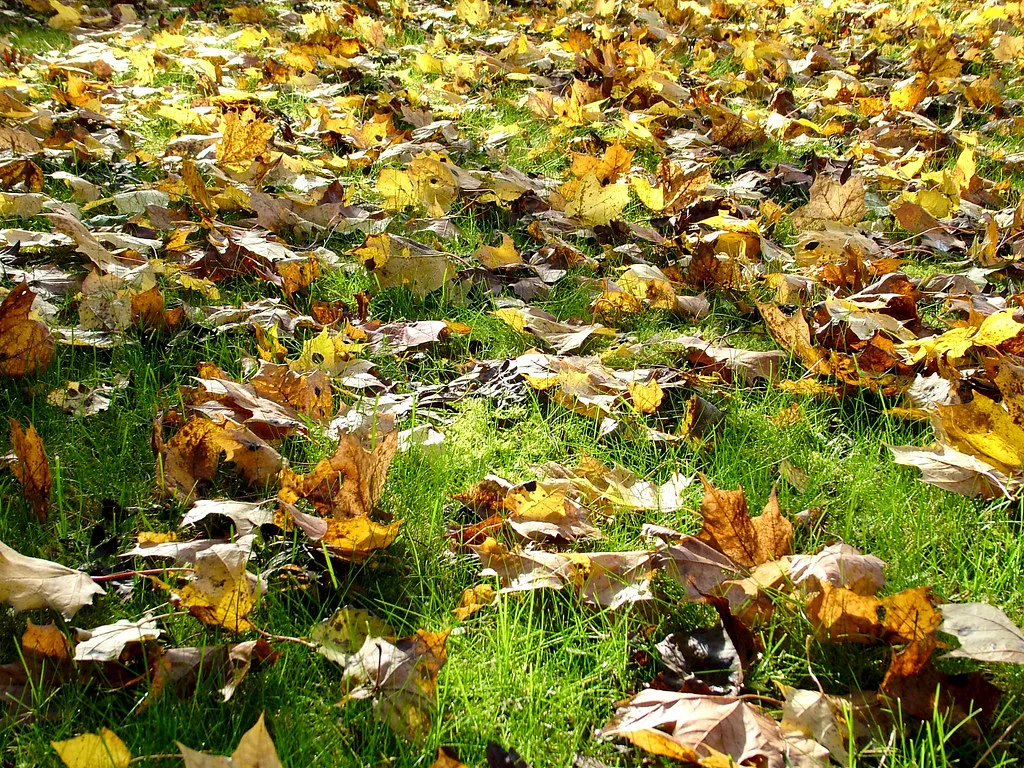
Leaf fall is not decay and it is not the wind. It is a controlled demolition the tree carries out on its own leaves, on a schedule it starts setting months in advance.
Why drop them at all
A leaf is a water-losing device. It is thin, flat and covered in pores, and it evaporates a great deal of water in exchange for taking in carbon dioxide. Through the growing season that trade is worth making. In winter it is not:
- Frozen ground means the roots cannot replace lost water, so a tree in full leaf in January would dry out.
- Low light and cold mean photosynthesis nearly stops, so the leaf earns almost nothing.
- Frost bursts the thin cells of a broad leaf.
- Snow load on a full canopy breaks branches.
Shedding is the cheaper option. The tree spends the autumn dismantling its own leaves and reclaiming what is valuable.
The mechanism: the abscission layer
At the base of every leaf stalk, where it meets the twig, the tree builds a band of specialised cells called the abscission zone. Through the season it stays inert. In autumn:
- Shortening days — measured by the length of the dark period, not the light one — trigger hormonal change. Auxin from the leaf falls; ethylene rises.
- Chlorophyll production stops. The green pigment breaks down fast and the yellows and oranges already present in the leaf become visible. Reds are mostly made fresh, from sugars trapped in the leaf.
- Nitrogen, phosphorus and potassium are withdrawn back into the twigs and roots. A tree recovers roughly half the nitrogen in its leaves this way.
- The abscission cells weaken, digesting the walls between them until the leaf is held by little more than the vascular strands.
- A protective corky layer seals the scar on the twig side.
- Wind, rain or the leaf's own weight finishes it.
That last step is why a still, mild autumn leaves trees in colour for weeks, and one windy night strips them.
When it normally happens
- Early September — first colour in stressed or shallow-rooted trees; horse chestnut often looks scorched by now, usually from leaf miner rather than season.
- Late September to mid-October — ash, lime, birch, cherry and rowan colour and drop.
- Mid-October to early November — the main event: maple, sycamore, hornbeam, most garden trees.
- November to December — oak, and beech last of all.
- All winter — young beech and hornbeam hedges hold dead brown leaves until spring. This is marcescence, and it happens where the abscission layer never fully forms.
Latitude and altitude shift the whole sequence: roughly a week earlier for every 150 km north, and earlier again on high ground.
Why leaves fall early
Early leaf drop is nearly always stress, and the giveaway is the colour. A proper autumn leaf turns yellow, orange or red on the tree over days. A stressed leaf goes from green to brown, or falls green.
- Summer drought — the most common cause by a wide margin. The tree sheds leaves to cut water loss, sometimes from July onwards.
- Heat stress — often combined with drought, and worst on trees in paving or containers.
- Root damage or compaction — building work near a tree shows up as early leaf fall one or two seasons later.
- Disease and pests — horse chestnut leaf miner and apple scab both brown the canopy well before autumn.
- A heavy fruit or mast year — a tree that has put everything into seed sheds leaves early.
- Transplant shock — newly planted trees drop leaves in their first two autumns much earlier than established ones.
A single early autumn is not a problem. Early drop three years running, on the same tree, is worth investigating.
Why the colours differ year to year
The best displays need a specific run of weather: a wet growing season, then a dry, sunny autumn with warm days and cold — but not freezing — nights. Cold nights trap sugars in the leaf, and those sugars are what the red anthocyanin pigments are made from. A warm, wet autumn produces a muted year, and an early hard frost ends the display abruptly by killing the leaves outright.
What to do with them
Fallen leaves are not waste. Piled in a wire cage or bagged with a few holes punched in, they rot down over 12 to 18 months into leafmould, the best soil conditioner available for nothing. Leave some in beds and under hedges over winter — that is where hedgehogs, queen bumblebees and a great many overwintering insects go.
And if you want the shapes without the raking, both knitted leaves and needle felted ones keep their colour indefinitely; the seasonal makes are collected in the autumn leaves pattern and wool roving crafts.
Frequently asked questions
Why do some leaves fall each year?
Broadleaf trees drop their leaves because keeping them through winter costs more than it earns. Leaves lose water the tree cannot replace from frozen ground, and they are vulnerable to frost damage, so the tree withdraws the useful nutrients and cuts each leaf off at a purpose-built weak layer.
When should leaves start falling?
In most of temperate Europe and North America, colour change begins in late September and the main fall runs through October into early November. Individual species differ by weeks — ash and horse chestnut go early, oak and beech hold on into December.
Why are leaves falling early this year?
Almost always summer drought. A tree short of water sheds leaves early to cut its losses, and those leaves usually go straight to brown rather than colouring. Late frost, heat stress, disease and a heavy fruiting year all do the same thing.
Why do evergreens keep their leaves?
Conifer needles are built for the trade-off: a thick waxy cuticle, few stomata and antifreeze compounds in the sap. They lose so little water that keeping them through winter is cheaper than regrowing them. They still shed needles, just gradually over several years.