How to Make Fake Cobwebs: Four Methods That Look Convincing
3 min read Beginner
Stretched wadding, hot glue strings, a spinning drill and a hairspray-and-cotton trick. Which one to use depends on whether the web needs to hang, stick or survive rain.
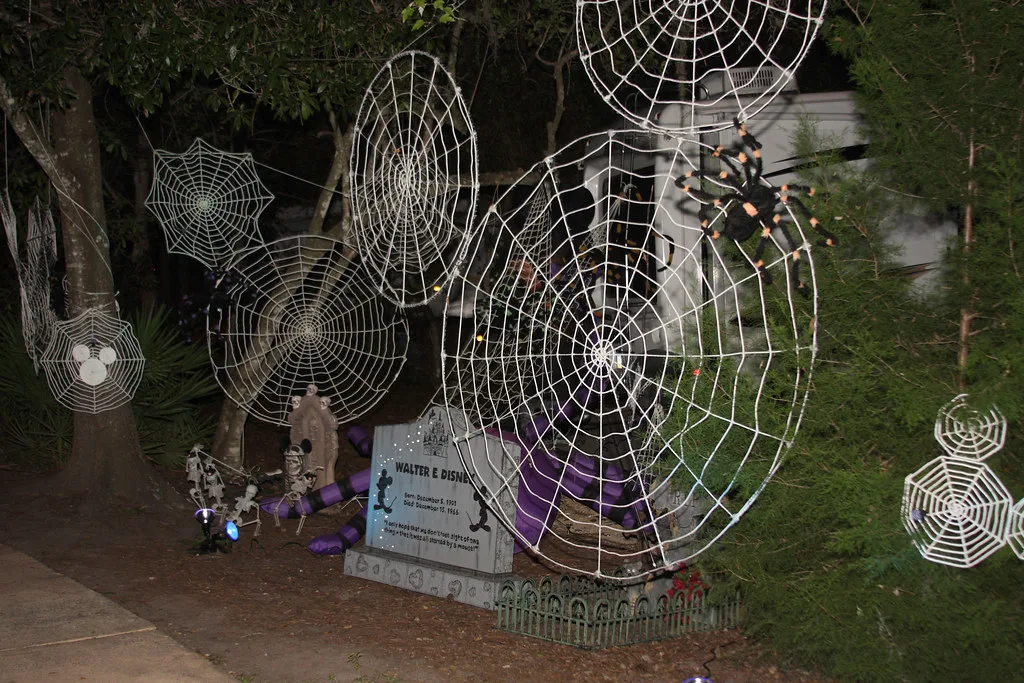
The bagged stretch webbing sold every October works, but everyone recognises it — it comes out too white, too even and too obviously synthetic. All four methods below look better, and three of them use material you probably already have.
Method 1: stretched wadding
The workhorse for large areas.
- Take a handful of polyester toy stuffing or cotton wadding and pull it apart between both hands.
- Keep pulling. Most people stop at four or five times the original size; go to ten or twelve, until it is nearly transparent.
- Anchor a corner on a hook, nail or picture frame, then stretch it across to a second and third anchor at irregular angles.
- Pick out individual strands from the sheet and pull them further to make the long lines between anchor points.
Grey or ecru wadding beats bright white. If all you have is white, a dusting of grey eyeshadow or a light haze from a spray can knocks the glare off it.
Method 2: hot glue web
For a web that holds its own shape — over a mirror, on a window, or hanging free.
- Draw the web on paper, then tape a sheet of baking parchment or a silicone mat over the drawing.
- Run hot glue along the radial lines first, from the centre outwards.
- Add the spiral between them, letting each run sag slightly rather than pulling it straight.
- Leave it 15 minutes to cool completely, then peel it off the parchment in one piece.
It comes away as a flexible sheet you can stick to glass with a dab of glue or a loop of tape. A low-temperature glue gun gives thinner, more web-like strands than a high-temperature one.
Method 3: the drill trick
The fastest way to fill a large corner, and the most fun.
- Clamp a cheap paintbrush or a bundle of wadding into a drill chuck.
- Warm a glue stick in the gun and touch the nozzle to the spinning bundle at low drill speed.
- The glue draws out into fine floating filaments — like candy floss — that you catch on a stick and drape.
Do this outdoors or over newspaper, wear eye protection, and keep the speed low. The strands go everywhere.
Method 4: wool roving
The finest and most realistic of the four, and the only one that looks right in daylight indoors.
- Take white or pale grey wool roving and split it lengthways into the thinnest strands you can pull.
- Draft each strand out until it is almost gone, so the fibres separate rather than staying as a rope.
- Anchor with a pin, a spot of tacky glue or a single stab of a felting needle where the web meets fabric.
Because it is real fibre it catches light exactly as silk does, and it will not shine like polyester under a lamp. If you want the web to be a permanent object rather than a decoration, cobweb felting turns the same roving into an open lacy fabric you can hang year after year.
What makes a fake web read as fake
- Too thick. The single most common error. Real silk is nearly invisible.
- Too symmetrical. Even an orb weaver's web is irregular, and indoor tangle webs have no pattern at all — see cobwebs vs spiderwebs for the shapes each spider actually builds.
- Too clean. Old webs are grey and carry debris. A few flecks of dust or a dead leaf caught in a strand sells it.
- Too flat. Anchor at different depths so the web occupies space rather than sitting on one plane.
Outdoors: two warnings
Stretch webbing in gardens and on hedges traps birds, bats and pollinators, and the wildlife rescues that deal with the aftermath ask people not to use it. Keep webbing on porches and inside enclosed spaces, away from planting and feeders, and take it down as soon as the season ends.
Second, wadding and hot glue both fail in rain — the first sags into a grey rope, the second peels off wet glass. Nothing on this page is a genuinely weatherproof outdoor decoration.
Frequently asked questions
Can you make cobwebs yourself?
Yes. The convincing methods are stretched cotton wadding for volume, hot glue strings for structural webs that hold their shape, and teased wool for fine indoor work. All four take minutes rather than hours.
What is the best material for fake cobwebs?
Polyester toy stuffing or cotton wadding for large stretched webs, and hot glue drawn into strings for webs that need to stand up on their own. Wool roving gives the finest, most realistic strands but is not weatherproof.
How do you make fake cobwebs look realistic?
Stretch far thinner than instinct suggests, anchor the strands at irregular points rather than symmetrically, and stop before it looks finished. Real webs are patchy, sagging and mostly invisible except where light catches them.
Do fake cobwebs harm wildlife?
Outdoor stretch webbing is a known trap for birds, bats and insects. If you decorate outside, keep webbing away from bushes and feeders, use it low and enclosed, and take it down promptly.