Are Cobwebs Dangerous? Dust, Allergies and Swallowing Silk
3 min read
Spider silk is a protein, not a venom. What is in an old cobweb that can affect you is everything else it has caught — and for a small number of people, that matters.
Web silk and venom are two different products of the same animal, made in different glands and used for different jobs. The silk is spun as structure and glue. The venom stays in the fangs. Touching, breathing near or even swallowing a web does not expose you to venom at all.
What a cobweb is actually made of
Fresh silk is a fibrous protein — mostly chains of glycine and alanine — closer in character to hair or wool than to anything toxic. Some capture threads carry a sticky aqueous coating, which is also protein and salts.
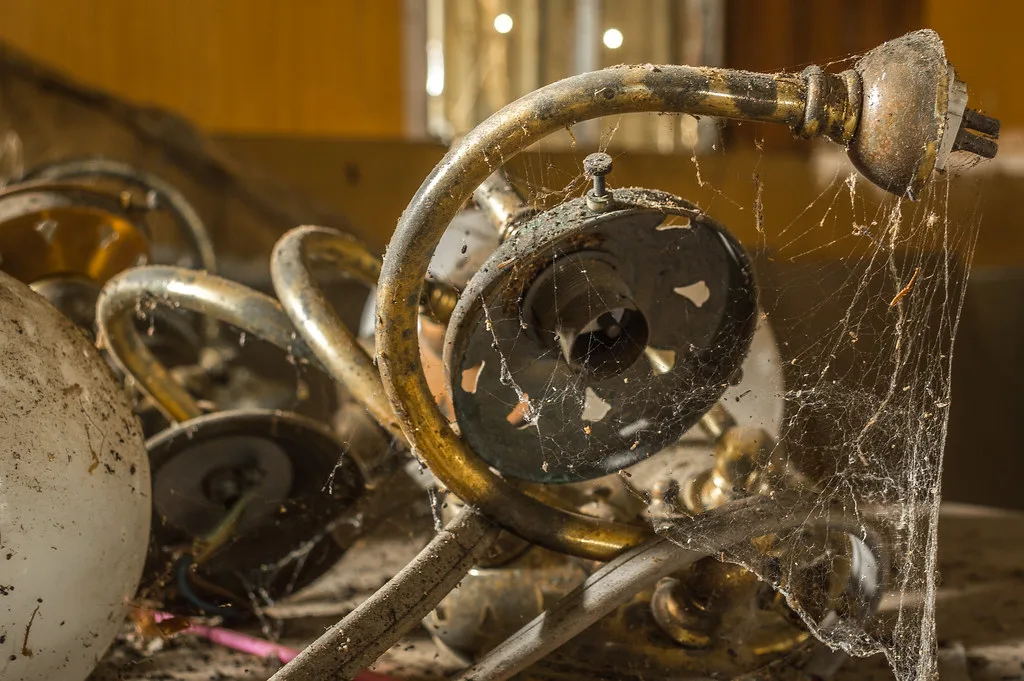
An old cobweb is a different object. Over weeks or months it accumulates:
- Household dust: skin flakes, textile fibres, soil particles
- Dust mites and their droppings, which live on those skin flakes
- Mould spores, especially in damp cellars and bathrooms
- Fragments of dead insects, plus spider droppings and moulted skins
Everything with a plausible claim to make you feel unwell is in that second list, not the first.
Can they make you sick?
For most people, no. Clearing webs from a ceiling corner is no more hazardous than dusting a shelf.
Where it can matter:
- Existing dust or mite allergy. A heavy web load is a reservoir of exactly the allergen you already react to, and pulling it down puts it into the air.
- Asthma. Any large dust disturbance in an unventilated space can trigger symptoms.
- Damp, mould-heavy buildings. Here the spores are the concern, and webs are simply where they have collected.
- Long-neglected spaces — lofts, crawl spaces, derelict rooms — where webs may also carry rodent droppings and dander.
The practical answer in those cases is not to fear the silk but to handle the dust sensibly: open a window, use a vacuum with a brush attachment or a damp cloth rather than a dry duster that flings it around, and wear a mask for a whole loft rather than one corner.
Allergy: to the web, or to what is in it?
Genuine allergy to spider silk is not a recognised common allergy, and silk protein is not a standard item on allergy test panels. What is well documented is allergy to house dust mites, mould and insect debris — all of which concentrate in an undisturbed web.
If your eyes stream and you start sneezing every time you clear cobwebs, the likely reading is a dust or mite allergy that web-clearing happens to stir up. That is worth mentioning to a GP, because the treatment is the same as for any dust allergy and does not involve the spiders at all.
What if you swallow one?
Nothing happens. It digests. There is no venom, no sting and no meaningful quantity of anything else. Walking face-first into a web outdoors and getting silk in your mouth is unpleasant and entirely harmless.
The one sensible caveat: a web from a filthy surface may carry bacteria along with the rest of the debris, exactly as any dusty object would. Rinse your mouth if it bothers you and move on.
The persistent claim that people swallow several spiders a year in their sleep is fiction, invented as an example of how easily an untrue "fact" spreads.
Are the spiders themselves a problem?
In the UK, most of northern Europe and the majority of North America, common house spiders cannot meaningfully bite through human skin, and the species that can are few and geographically specific. Encountering a web is not encountering a bite risk.
A better reason to clear webs regularly is simply that a clean corner does not accumulate an allergen reservoir in the first place. If it is the seasonal look you want without the dust, fake cobwebs give you the effect on demand, and the difference between cobwebs and spiderwebs explains why the old ones go grey in the first place.
If you came here for the craft rather than the spider: cobweb felting is the wet felting technique that makes a lacy, web-like wool fabric, and it has nothing to do with dust.
Frequently asked questions
Can cobwebs make you sick?
Not the silk itself, which is an inert protein. An old cobweb holds household dust, dust-mite debris, mould spores and dead insect fragments, and disturbing a large accumulation of that can irritate airways in the same way any dusty corner does.
Can you be allergic to cobwebs?
Reactions blamed on cobwebs are almost always to what the web has trapped — dust mite allergen, mould spores or insect debris — rather than to the silk. True allergy to spider silk protein is not a recognised common allergy.
What happens if you eat a cobweb?
Essentially nothing. Silk is a protein your stomach digests like any other, and the quantity involved is tiny. The theoretical risk is bacteria on trapped debris, which is the same risk as eating anything picked up off a dusty surface.
Are spider webs poisonous to humans?
No. Venom is produced in a spider's glands and delivered through fangs; it is not spun into the web. Web silk carries no venom, and handling a web cannot poison you.