Knitting Needle Sizes: UK, US and Metric, and How to Use a Needle Sizer
3 min read
UK numbers run backwards, US numbers run forwards, and only the millimetre measurement means anything. A cheap needle gauge settles every argument in ten seconds.
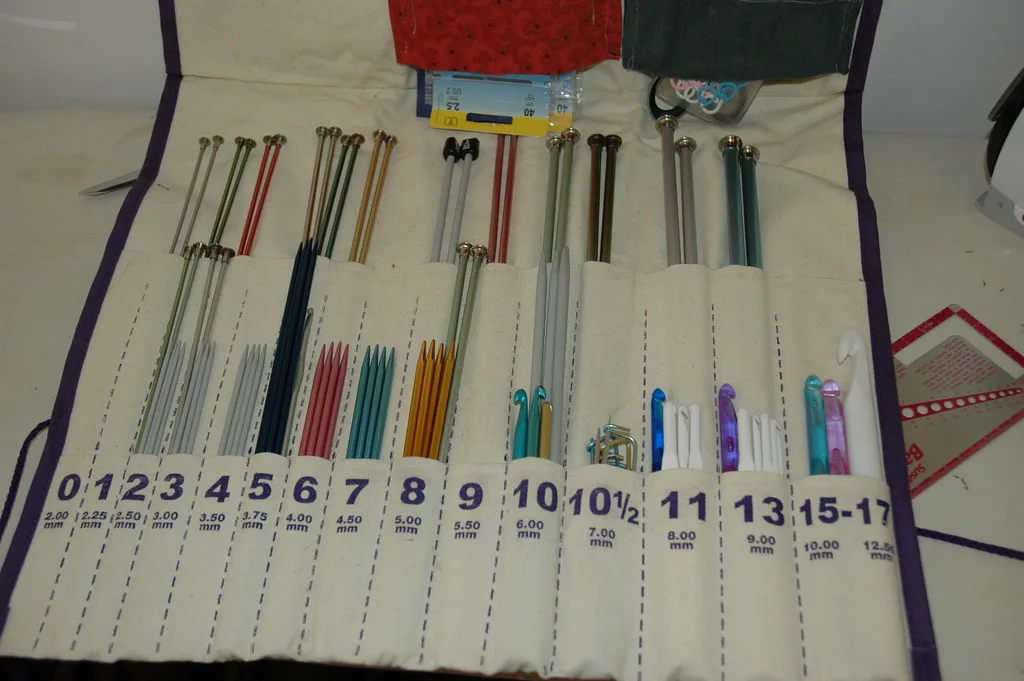
There are three numbering systems in circulation and only one of them describes the needle: the diameter in millimetres. Every conversion problem in knitting comes from a pattern quoting one of the other two.
The conversion chart
- 2.00 mm — UK 14 — US 0
- 2.25 mm — UK 13 — US 1
- 2.75 mm — UK 12 — US 2
- 3.00 mm — UK 11 — (no US size)
- 3.25 mm — UK 10 — US 3
- 3.50 mm — (no UK size) — US 4
- 3.75 mm — UK 9 — US 5
- 4.00 mm — UK 8 — US 6
- 4.50 mm — UK 7 — US 7
- 5.00 mm — UK 6 — US 8
- 5.50 mm — UK 5 — US 9
- 6.00 mm — UK 4 — US 10
- 6.50 mm — UK 3 — US 10½
- 7.00 mm — UK 2 — (no US size)
- 7.50 mm — UK 1 — (no US size)
- 8.00 mm — UK 0 — US 11
- 9.00 mm — UK 00 — US 13
- 10.00 mm — UK 000 — US 15
- 12.75 mm — US 17
- 15.00 mm — US 19
- 19.00 mm — US 35
- 25.00 mm — US 50
Note the gaps. Neither the UK nor the US scale covers every millimetre size, which is why modern needles are sold and patterns increasingly written in millimetres alone.
The size 12 question
It comes up constantly because the same number means two completely different needles:
- UK 12 = 2.75 mm. A fine needle, right for 4-ply and sock yarn.
- US 12 does not exist in the standard scale. US sizes run 11 (8 mm), then 13 (9 mm), with nothing between.
So if a pattern says "size 12 needles" with no millimetre figure, it is a British pattern — probably pre-1990s — and it means 2.75 mm. The context confirms it: 4-ply yarn and a tension of 28 stitches to 10 cm is a 2.75 mm fabric, not a chunky one.
A very small number of manufacturers have labelled 8 mm needles as "12" in their own house numbering. Measure rather than trust the label.
Why UK sizes run backwards
The UK numbers come from the Standard Wire Gauge, where the number counted how many times a wire had been pulled through a drawing die. More passes meant thinner wire and a higher number. That is why UK 14 is a 2 mm needle and UK 000 is a 10 mm one, and why the scale runs out of numbers at the thick end and has to resort to zeros.
US sizes were built the opposite way round — bigger number, bigger needle — but with no consistent step between sizes, which is where the missing 12 comes from.
Using a needle sizer
A needle gauge is a flat plate or card drilled with holes, usually with a ruler along one edge for measuring tension swatches.
- Use the shaft, not the tip. Every needle tapers; the tip will pass through a hole two sizes too small.
- Start small and work up. The correct size is the smallest hole the shaft slides through without force.
- Never force it. A wooden needle jammed in a metal gauge can split.
- For circulars, measure well away from the join, where the metal is often slightly thicker.
- For double-pointed needles, measure the middle of the shaft — both ends taper.
Metal gauges are more accurate than plastic ones, which flex and wear at the hole edges. A gauge that also has a 10 cm window cut into it doubles as a tension counter, which is the more useful of its two jobs.
Choosing a size for a yarn
- Lace / 2-ply — 2.0–3.0 mm
- 4-ply / fingering — 2.75–3.5 mm
- DK — 3.75–4.5 mm
- Aran / worsted — 4.5–5.5 mm
- Chunky — 6.0–8.0 mm
- Super chunky — 9 mm and up
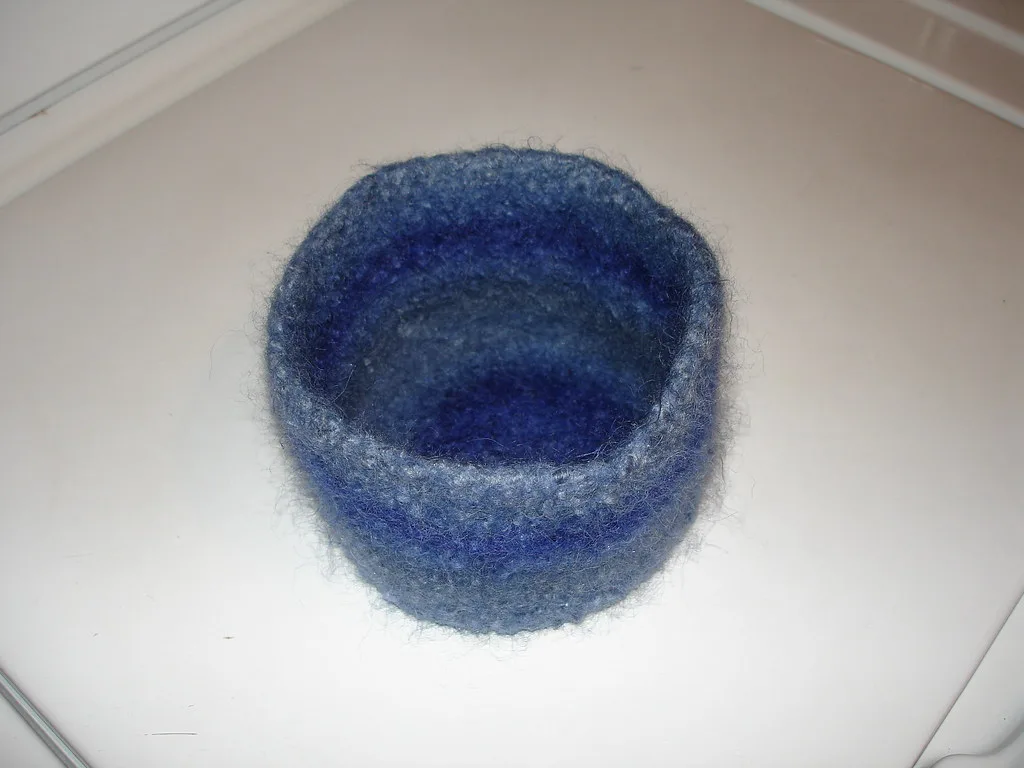
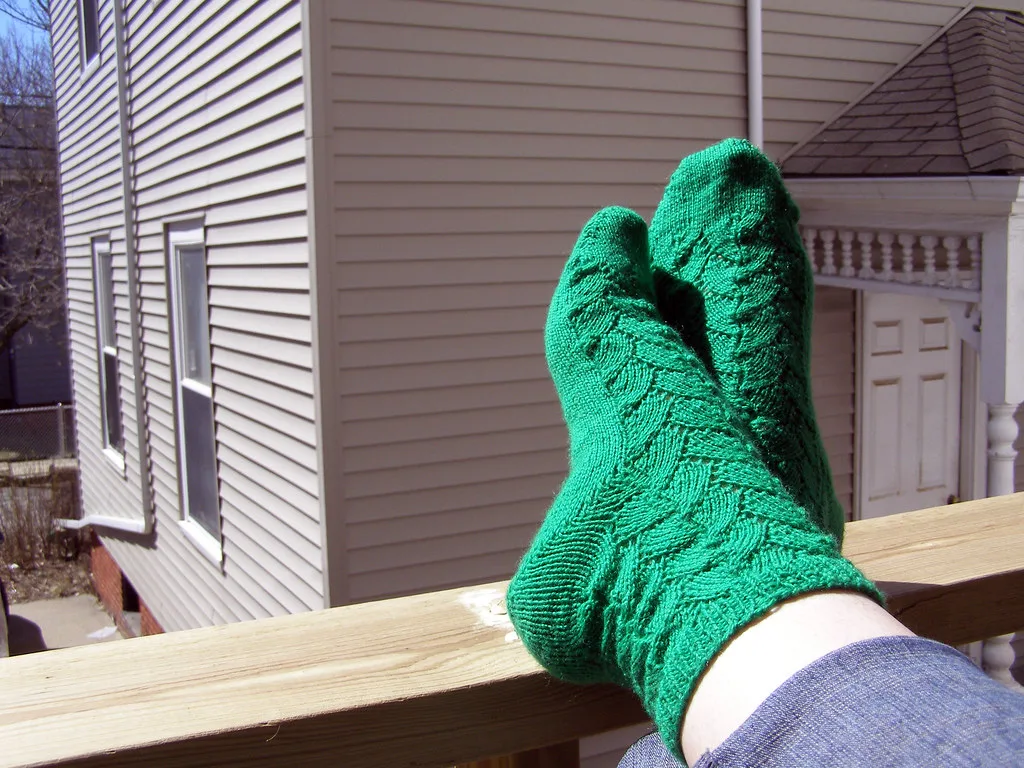
Two deliberate exceptions to the ball band: go a size or two up for lace, so the eyelets open — the leaf patterns in autumn leaves and falling leaves both assume this. Go two or three sizes up for anything you intend to felt, because fulling needs a loose fabric to shrink into; see felting in knitting.
Tension beats the chart
The needle size in a pattern is whatever gave the designer the stated tension. If your swatch has too many stitches to 10 cm, go up a size; too few, go down. A garment knitted "correctly" at the wrong tension comes out the wrong size, and no conversion chart will save it.
Frequently asked questions
Is there a size 12 knitting needle?
In UK sizing, yes — a UK 12 is 2.75 mm, a fine needle for 4-ply. In standard US sizing there is no 12: the scale jumps from 11 (8 mm) to 13 (9 mm). A pattern calling for a size 12 is therefore almost always British and means 2.75 mm.
How do you use a knitting needle sizer?
Push the needle through the holes, smallest first, without forcing. The size is the smallest hole the shaft passes through cleanly. Measure the shaft, not the tip, and always on a bare section away from any join.
Why do UK needle sizes go down as the needle gets bigger?
They descend from an old wire gauge, where the number counted how many times the wire had been drawn through a die. More drawing meant thinner wire and a higher number, which is why UK 14 is 2 mm and UK 000 is 10 mm.
Do I have to use the needle size on the ball band?
No. The ball band is a starting point. What matters is matching the tension stated in the pattern, and reaching it may mean going a size or two either way.