Pumpkin Guts: Stock, Seeds and Four Other Things to Do With Them
4 min read
The stringy handful you scoop out and bin is sweet, gelatinous and full of flavour. It makes a better stock than the flesh does — and the seeds in it only crisp properly if you boil them first.
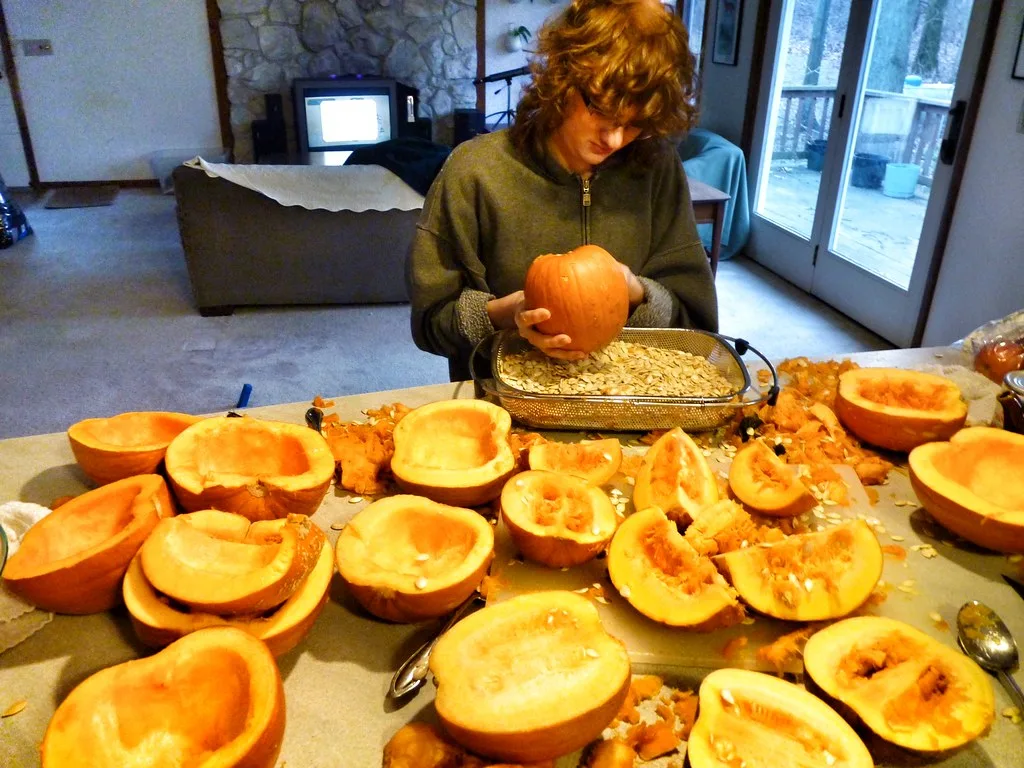
The wet, stringy centre of a pumpkin is where most of the sugar and a lot of the flavour sits. It is fibrous, which is why it is not eaten whole, but everything you would use flesh for as a background flavour, the guts do better and for nothing.
First: separate the seeds
- Tip the whole scooped mass into a large bowl of cold water.
- Work it with your fingers. The seeds sink; most of the pulp floats or breaks free.
- Skim the pulp off the top into a second bowl — that is your stock material.
- Lift the seeds from the bottom, rinse in a sieve, and pick off any remaining strings.
A 2 kg pumpkin gives roughly 100 g of seeds and 200–300 g of pulp.
1. Pumpkin gut stock
The best single use. Makes about 1.2 litres.
- Put all the pulp in a pan with any peel and trimmings from the flesh.
- Add 1 onion halved, 1 carrot, 1 stick of celery, 2 bay leaves, a few peppercorns and a thyme sprig.
- Cover with 1.5 litres of cold water and bring slowly to a bare simmer.
- Simmer uncovered 45 minutes. Do not boil hard — it turns the stock cloudy and slightly bitter.
- Strain through a fine sieve, pressing the solids firmly with a ladle to get everything out.
- Season lightly, or leave unsalted so it can be reduced later.
It is a light, faintly sweet stock, and it is what you want for pumpkin soup and pumpkin risotto — using pumpkin stock in a pumpkin dish doubles the flavour without adding anything.
Keeps five days in the fridge, six months frozen. Reduce it to a quarter of its volume and freeze it in an ice cube tray for concentrated cubes that take no space.
2. Roasted seeds, done properly
- Boil the cleaned seeds in well-salted water for 10 minutes. This is the step that matters.
- Drain and dry thoroughly on a tea towel — wet seeds steam instead of roasting.
- Toss with 1 tbsp oil and salt per 100 g.
- Spread in a single layer and roast at 160°C / 140°C fan for 20–25 minutes, stirring twice, until pale gold. They crisp further as they cool.
Flavourings to add with the oil: smoked paprika and cayenne; soy sauce and sesame oil; cinnamon and a teaspoon of sugar; garlic powder and grated Parmesan added for the last five minutes.
Store airtight for two weeks. They soften in a damp kitchen — a few minutes back in a warm oven fixes it.
3. Pumpkin gut soup
Rather than straining the stock, blend it. Simmer the pulp with onion, garlic and stock for 30 minutes, blend thoroughly, then pass through a sieve to remove the fibres. What comes through is a thin, sweet base — build it up with roasted pumpkin flesh, cream and acid. It is a soup that costs the part you were going to throw away.
4. Strained purée
Simmer the pulp in a little water for 20 minutes, blend, and push through a fine sieve. You will get 100–150 g of smooth purée from a large pumpkin. It is thinner and sweeter than flesh purée — good in smoothies, porridge and pancake batter, less good in baking, where the water content is a problem. The baking-grade version is in the pumpkin loaf recipe.
5. Smoothies and porridge
Freeze the raw pulp in ice cube trays after picking out the seeds. Two cubes go into a smoothie with banana, cinnamon and oats, straight from frozen. No cooking involved.
6. Garden and compost
If you have more than you can use:
- Compost it. It is high in moisture and nitrogen, so mix it with plenty of dry brown material.
- Do not put quantities of raw seeds in the compost unless you want volunteer pumpkins next summer — which some people do deliberately.
- Chickens will eat the lot, pulp and seeds together.
- Left whole in a garden in autumn, cut pumpkin feeds birds and small mammals; it disappears within days.
The one safety line
Everything above assumes a fresh pumpkin cut the same day. A jack-o'-lantern that has stood outside overnight, warm from a candle and open to the air, is not food — the cut surfaces grow mould fast, and a lit one is effectively a small incubator. Cook the flesh and the guts on carving day, and let the lantern be a lantern afterwards.
For the flesh itself, see fresh pumpkin recipes — and if you want a pumpkin that never needs composting, felted pumpkins last for years.
Frequently asked questions
Can you eat pumpkin guts?
Yes. The stringy pulp around the seeds is edible and mildly sweet. It is too fibrous to eat as it is, so it is used as a base — simmered into stock, blended into soup, or strained into a purée.
How do you make pumpkin gut stock?
Simmer the pulp and any trimmings with an onion, carrot, celery, bay and peppercorns in water for 45 minutes, then strain through a sieve pressing the solids. It gives a light, faintly sweet stock, best in risotto and pumpkin soup.
Why boil pumpkin seeds before roasting?
Ten minutes in salted water softens the hull and seasons the seed through. Roasted straight from raw the hull stays leathery and only the outside gets salt. Boiling first is the difference between crisp and chewy.
Are the guts of a carving pumpkin safe to use?
Yes, if you use them on the day you carve it and before a candle has been burning inside. Once a pumpkin has stood out lit and warm overnight, treat the whole thing as compost.