Wool Dryer Balls vs Dryer Sheets: What Actually Changes
3 min read Beginner
One softens fabric by beating it, the other by coating it in a waxy film. That single difference decides which is better for towels, sportswear and your dryer.
Both go in the tumble dryer, both claim to soften laundry, and they do it by completely different means. Understanding the difference makes the choice straightforward for most households.
How each one works
Dryer sheets are non-woven fabric coated with fabric softener and fragrance. Heat melts the coating and the tumbling transfers it onto your clothes as a thin waxy film. That film makes fibres feel smooth and lie flat, and it is also mildly conductive, which is why static disappears.
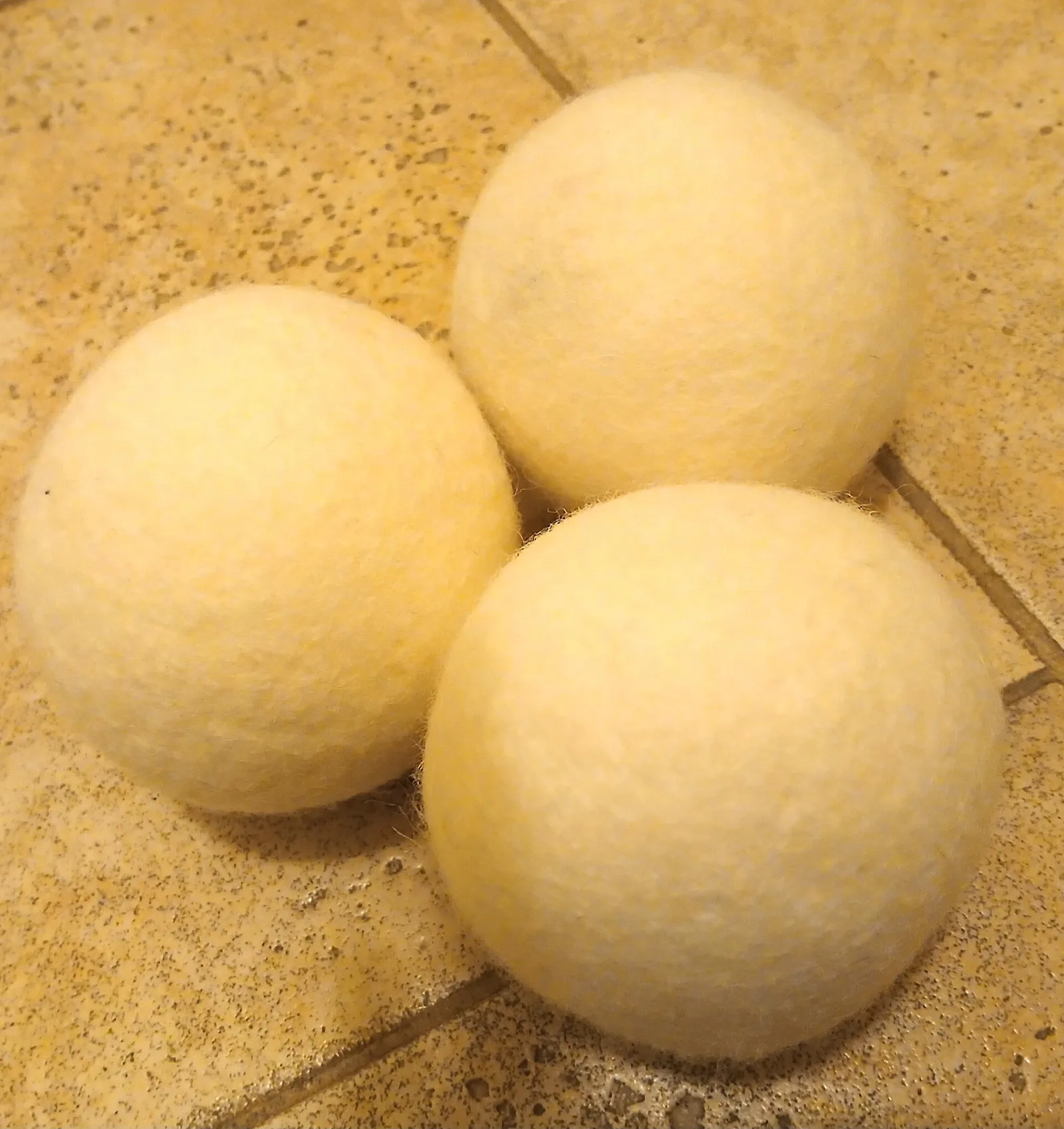
Wool dryer balls are dense felted wool that separates the load so air circulates, and beats the fabric mechanically as it tumbles. Nothing is added to the laundry at all. Making them is covered in wool dryer balls.
Where the film matters
The coating is the crux of the whole comparison. It is why sheets work well, and why they are the wrong choice for several common items.
- Towels lose absorbency. A towel treated with sheets for a year pushes water around rather than soaking it up.
- Sportswear loses its wicking. Technical fabrics work by moving moisture along fibres, and a waxy coating stops that.
- Microfibre cloths stop cleaning properly for the same reason.
- Flame-retardant children's sleepwear can have its treatment compromised — most manufacturers advise against softeners for exactly this.
- Cloth nappies become water-repellent, which is a serious problem.
Dryer balls have none of these effects, because they leave nothing behind.
Head to head
- Softening: sheets feel softer immediately. Balls give a fluffier, more natural result that does not accumulate.
- Static: sheets win outright. Balls reduce static in most loads but can worsen it with over-dried synthetics.
- Drying time: balls cut 10 to 25%. Sheets do nothing here.
- Scent: sheets are strong and lasting. Balls need essential oils and hold scent only lightly — see wool dryer balls and essential oils.
- Cost: balls are far cheaper per load, and cheaper still if you make them.
- Waste: sheets are single-use. Balls last years and are compostable at the end.
- Sensitive skin: unscented balls add nothing. Sheets add fragrance and softener by design.
- Noise: sheets are silent. Balls thud.
- Lint filter: sheet residue gradually clogs the filter mesh, which reduces airflow and can be a fire risk if never scrubbed.
Which to use for what
- Towels, bedding, sportswear, nappies, microfibre — dryer balls, without qualification.
- Wool and delicates — dryer balls on low heat, or line dry.
- Bulky loads, duvets, coats — dryer balls. The separation effect matters most here.
- Synthetic-heavy loads in a dry climate — sheets, if static is genuinely a problem you cannot solve by under-drying.
- Where strong lasting fragrance is the point — sheets.
Fixing the two things balls do worse
Static: it is caused by over-drying. Take the load out slightly damp and it stops. If it does not, push a large safety pin into one or two of the balls — the metal discharges the build-up and it works well.
Scent: a few drops of essential oil on the balls before the cycle, or on a damp cloth thrown in with the load. It fades within a day, unlike the fragrance in sheets, which is a genuine trade-off rather than a fixable flaw.
The overall picture
For most households, six wool dryer balls replace dryer sheets entirely, dry laundry faster, cost less over time and leave towels working as towels. The one case for sheets is severe static in a dry climate with a lot of synthetics — and even then, drying slightly less does most of the same job.
Frequently asked questions
Are wool dryer balls better than dryer sheets?
For towels, sportswear and anything that needs to absorb or breathe, clearly yes — dryer sheets coat fibres in a film that reduces absorbency. For maximum static control and strong scent, sheets still win.
Can you use dryer balls and dryer sheets together?
You can, but it partly defeats the point. The balls cannot soften mechanically through a coating of softener, and the film they help spread ends up more evenly distributed rather than reduced.
Do dryer balls save money compared with dryer sheets?
Yes. A set of six lasts around 1,000 loads for the price of roughly two boxes of sheets, and the reduced drying time saves electricity on top.
Which is better for sensitive skin?
Wool dryer balls, if you use them unscented. They add nothing to the fabric at all, whereas dryer sheets leave fragrance and softening agents behind by design.